

There is really only one wedding guest color rule you have to get right: do not wear white, ivory, cream, or anything that photographs like white. After that, most color advice is about judgment, context, and not looking like part of the wedding party. This guide separates the hard rules from the outdated myths, including black, red, metallics, and bright colors, then gives you a practical phone-camera test before you commit to the outfit.
Colors to avoid wearing to a wedding: the short version
The one color family guests should avoid is white and near-white: white, ivory, cream, champagne, pearl, pale beige, and ultra-pale blush that reads bridal in photos. The second rule is to avoid matching the wedding party's colors, because it can make you look like an extra bridesmaid in group shots. Everything else, including black, red, and metallics, depends on the wedding style, culture, time of day, and how the color is styled.
The reasoning is simple: your outfit should not pull focus from the couple or confuse the photos. A color is wrong at a wedding when it either reads as bridal, matches the wedding party too closely, or visually shouts louder than the event itself. Use that lens and the disputed colors become much easier to judge.
Quick reference
What to skip, why, and what to wear instead
| Color | The verdict | Wear instead |
|---|---|---|
| White / ivory / cream | Hard no - too close to bridal | Navy, wine, emerald, dusty rose |
| Champagne / pale blush | Avoid - can photograph white | Mauve, rose, berry, terracotta |
| Wedding-party colors | Avoid - it confuses group photos | A different color family or a print |
| Neon / fluorescent | Avoid - too distracting | The deeper version of the same color |
| Black | Usually fine, especially evening | Add softer accessories for daytime |
| Red | Fine in deep tones; check culture | Wine, burgundy, berry |
| Gold / silver / sequins | Best as accents, not head-to-toe | Metallic clutch or shoes with a matte dress |
White, ivory, cream, and the shades that secretly photograph white
White and near-white shades are off-limits for guests at most Western weddings because they read as bridal. That includes ivory, cream, ecru, pearl, champagne, pale beige, and the palest blush tones. Even when the shade looks slightly colored in person, flash photography and bright editing can make it appear much whiter in the final gallery.
The easiest check is a phone photo. Take a picture of the outfit in bright daylight and look at the thumbnail on your phone. If the dress reads white, bridal, or washed-out at thumbnail size, choose a deeper color. This catches most borderline shades, especially pale blush, champagne, icy blue, and light mint.
Prints are different. A dress with small white elements on a clearly colored ground, such as white flowers on navy or green, is usually fine because the overall impression is colored rather than bridal. The rule is about what the dress reads as from across the room, not whether the fabric contains any white at all.
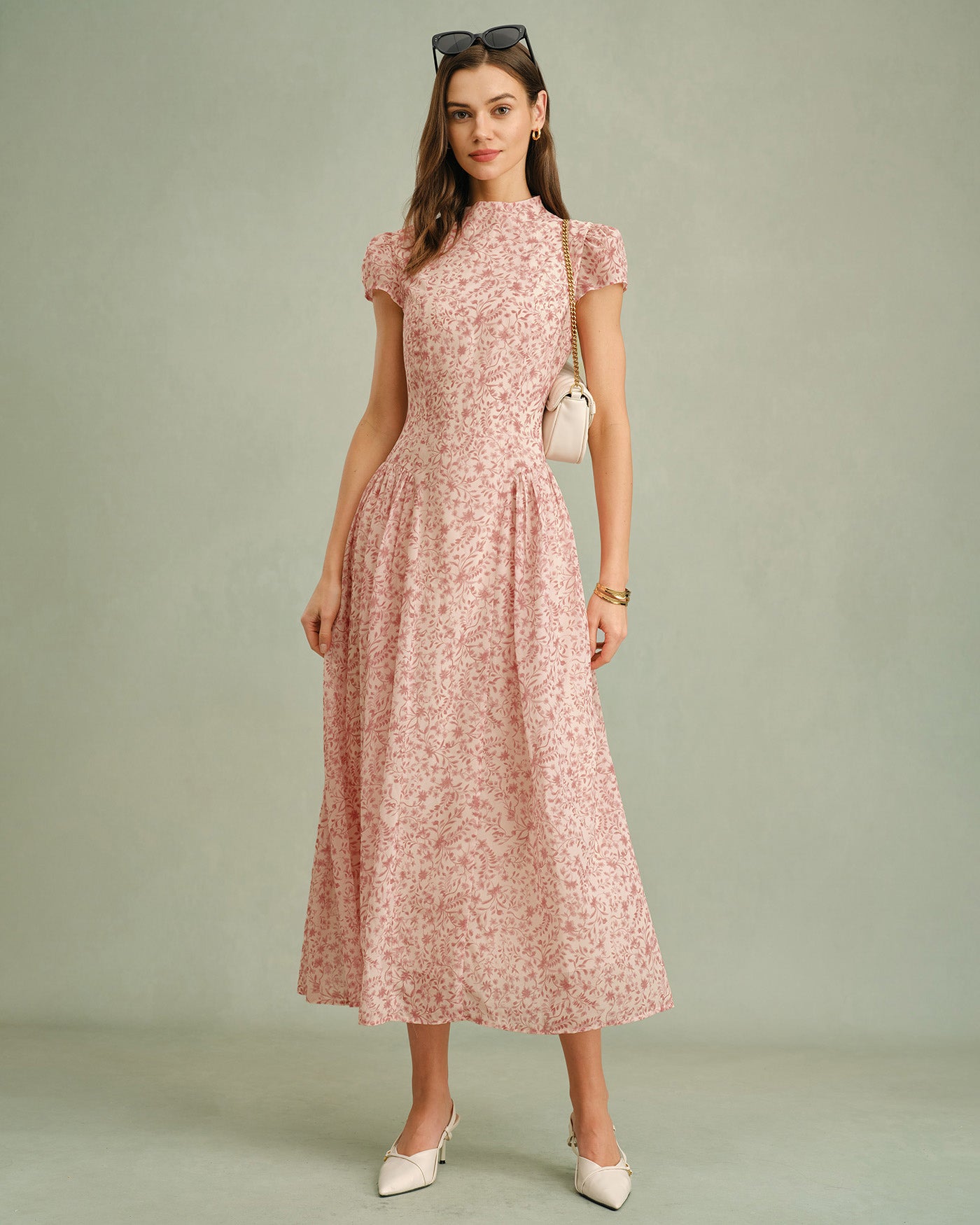
Blush alternative
A floral pink that does not read bridal
The Pink Mock Neck Floral Maxi Dress is a better answer than ultra-pale blush because the floral pattern gives it a clearly colored impression. RIHOAS lists it as a mock-neck chiffon maxi with a natural waist, no stretch, polyester fabric, and lining. It works best for spring, summer, garden, or daytime weddings where soft color feels natural.
The wedding-party color trap
The second real rule is to avoid matching the bridesmaids or groomsmen. Matching the wedding party can make you look like part of the lineup and muddle group photos. Common bridesmaid colors include dusty blue, sage, blush, mauve, dusty rose, lavender, burgundy, and navy, so do a quick check before buying if the wedding palette is visible.
Look at the invitation, wedding website, save-the-date design, and bridal party photos if they have been posted. If those do not answer it, it is normal to ask a member of the wedding party. When you cannot find out, the safest choice is a multi-color print or a less common jewel tone. For broader outfit guidance by event type, RIHOAS has a full wedding guest dress ideas guide.
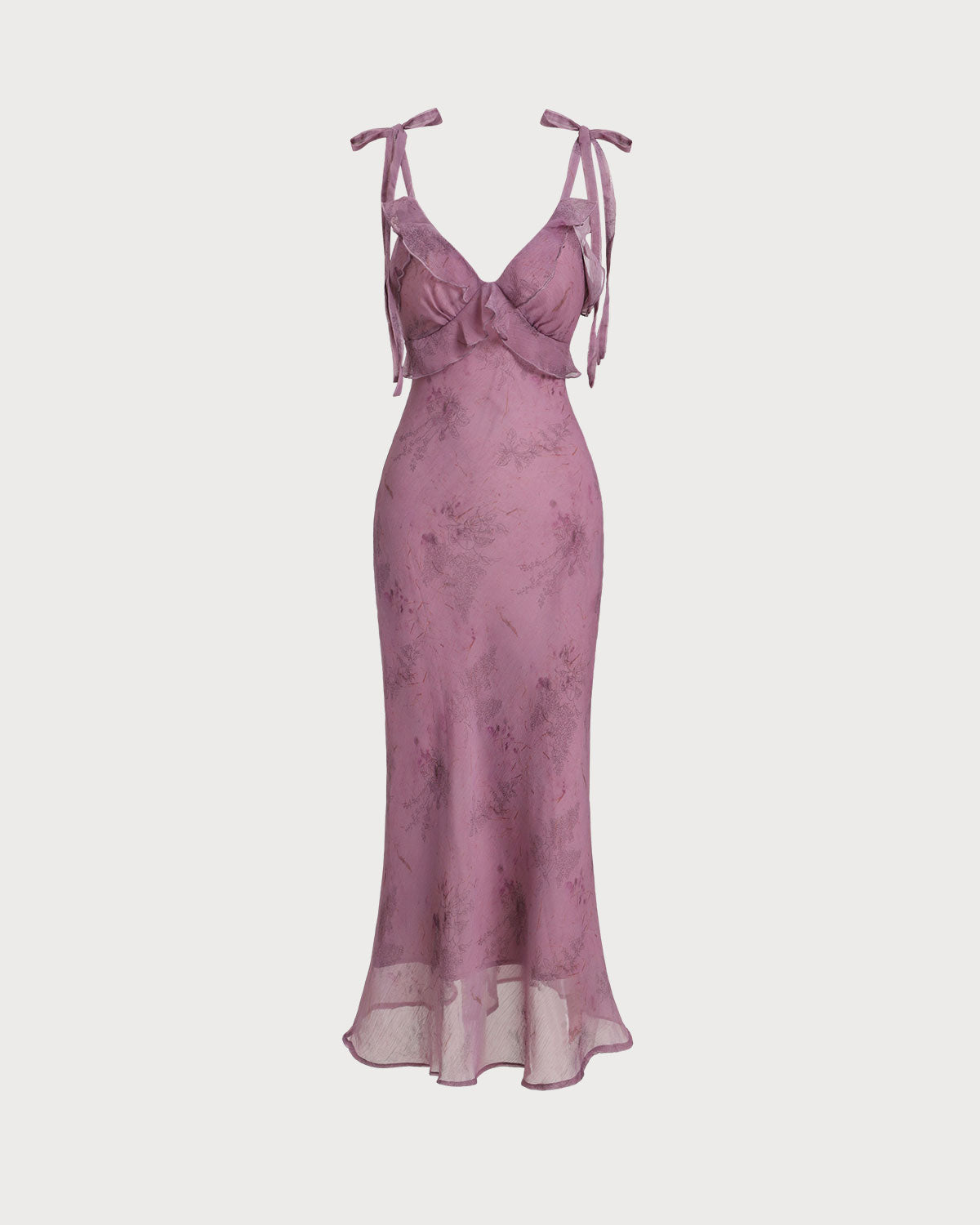
Unknown palette pick
A purple floral that avoids the lineup problem
The Purple Floral Ruffle Tie Strap Midi Dress is useful when you do not know the wedding-party colors, because the print mixes color instead of landing on one bridesmaid-like shade. RIHOAS lists it as a floral midi with tie straps, a square neckline, a natural waist, slight stretch, polyester fabric, and lining.
Is black okay? Is red? The colors that depend on context
Black, red, and metallics are not automatic bans. They need the right wedding context and balanced styling.
Black wedding guest dresses are acceptable for most modern weddings, especially evening, city, formal, and black-tie celebrations. Black can feel too heavy for a beach, garden, or bright daytime wedding, so soften it with colored accessories or choose navy instead.
Red is acceptable in deep tones such as wine, burgundy, and berry. Bright fire-engine red is the version to reconsider because it draws attention, and in some Chinese and Indian weddings red is traditionally associated with the bride. When in doubt, choose wine rather than vivid red.
Metallics and sequins work best as accents. A metallic clutch, gold sandal, or subtle shimmer is appropriate, especially at an evening wedding. A fully sequined gold or silver dress can compete with the couple in photos, so save the all-over shine for another event.
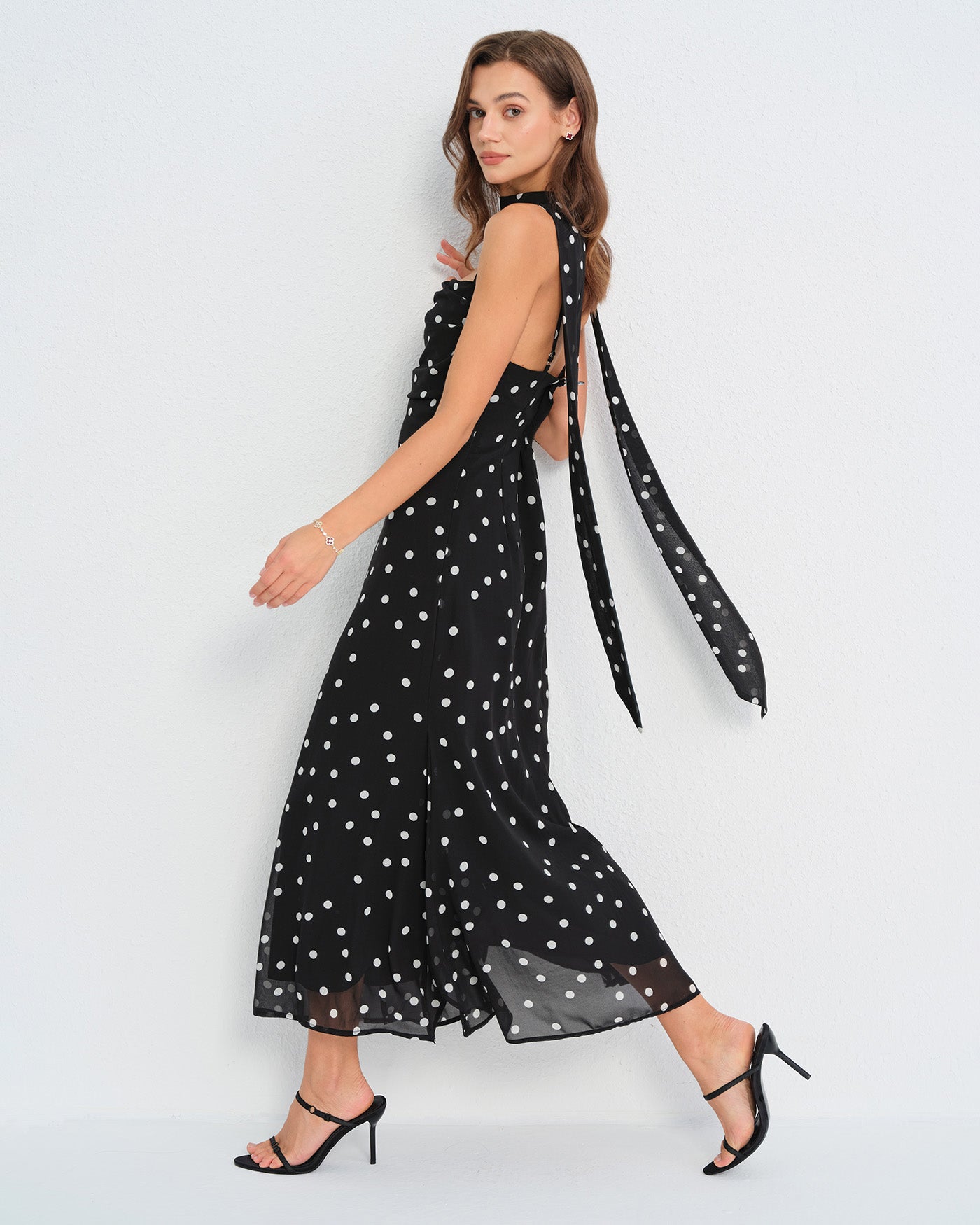
Evening black pick
Black softened with a small print
The Black Polka Dot Slip Maxi Dress is a good way to wear black without the look feeling too severe. RIHOAS lists it as a V-neck slip maxi with an A-line shape, natural waist, no stretch, polyester fabric, lining, and an open-back detail. Keep it for evening or formal weddings, and use lighter accessories if the setting is not very dressy.
Neon and ultra-bright colors
Neon wedding guest outfits are risky because they photograph harshly and pull focus in group pictures. The fix is not to give up color; it is to choose the deeper, more refined version of the same shade. Swap electric blue for navy or sapphire, lime for emerald, hot pink for rose or berry, neon yellow for mustard or gold, and bright orange for rust or terracotta.
If you love a very bright color, move it into one accessory instead of the whole dress. A bright shoe, clutch, or earring can look intentional; a fluorescent full outfit usually looks louder than the occasion.
Cultural color considerations
Color meaning changes by culture, so confirm before assuming. In many Chinese weddings, red is strongly associated with the bride and celebration, while white and black can carry funeral associations. In many Indian and Hindu weddings, red is often bridal, white may be associated with mourning, and jewel tones are usually welcome. At many Jewish weddings, guests generally avoid white and cream for the same bridal reason, while black is often acceptable for evening.
These are broad patterns, not rules for every family. If the wedding is outside your own tradition, follow the invitation, wedding website, or direct guidance from the couple. A mid-tone jewel color in a modest cut is usually a respectful safe choice when you do not know the customs well.
Safe colors that always work for wedding guests
If you want to stop second-guessing, build your outfit around safe wedding guest colors: navy, blue, emerald, wine, burgundy, berry, deeper florals, and mid-tone romantic shades that do not read pale or bridal. For a broader shop-by-occasion edit, start with wedding guest dresses, then narrow by color. The products below are chosen for color logic first, not just because they are dresses. Each one avoids the white problem and gives you a clear role in the palette.
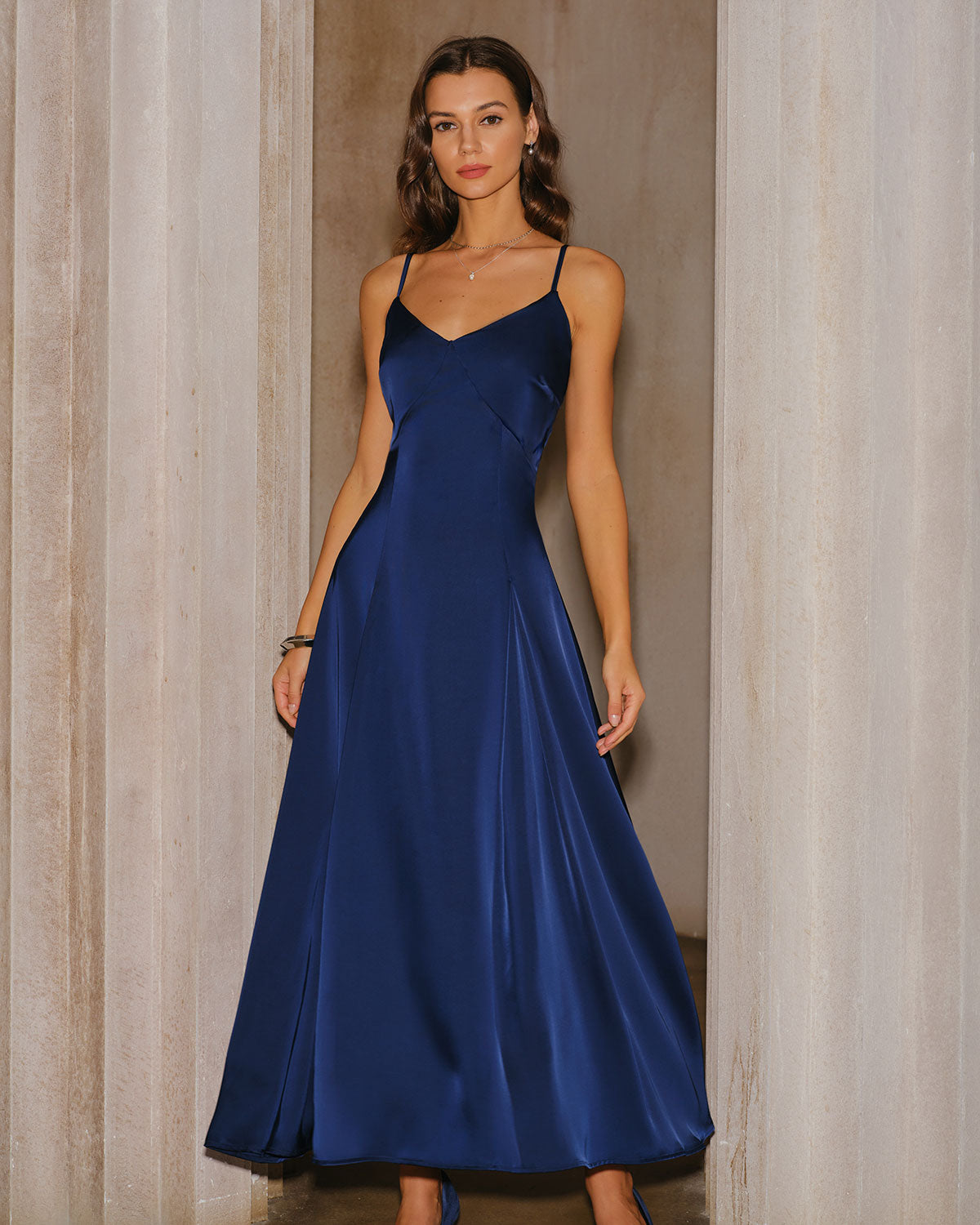
The universal safe color
Navy: the color that rarely causes problems
The Navy A-Line Slip Maxi Dress is a low-risk wedding guest choice because navy photographs cleanly, works across dress codes, and does not read as bridal. The product page lists a slip style, V neckline, A-line silhouette, natural waist, no stretch, polyester fabric, and lining, which keeps the long shape polished.
The jewel tone
Emerald green: rich without looking bridal
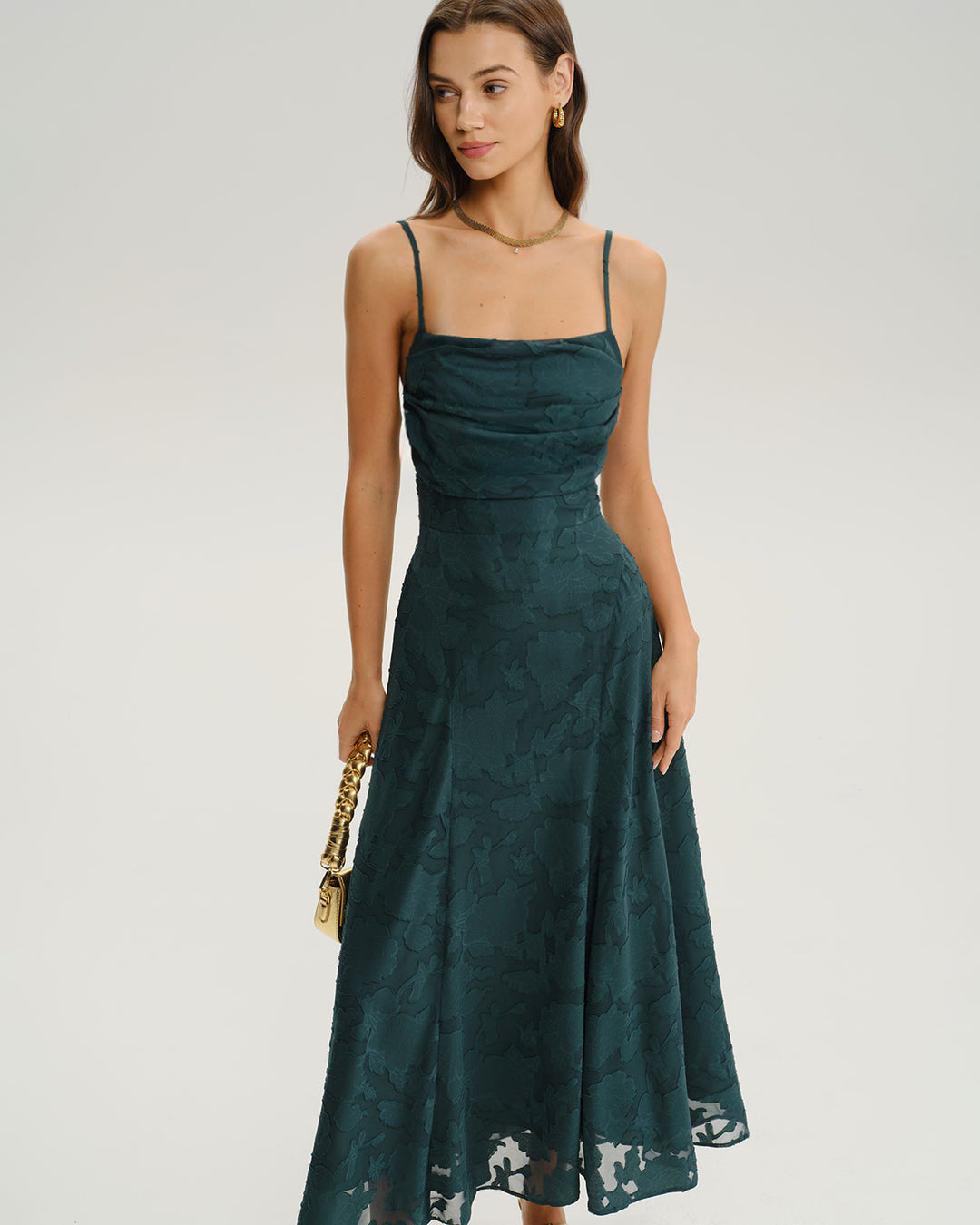
The Green Jacquard A-Line Slip Maxi Dress fits the jewel-tone recommendation well. RIHOAS lists it as a jacquard slip maxi with a V neckline, A-line shape, natural waist, no stretch, polyester body, and lining. The saturated green avoids the pale-color risk while still feeling formal enough for an evening reception.
Red, the safer way
Wine instead of fire-engine red
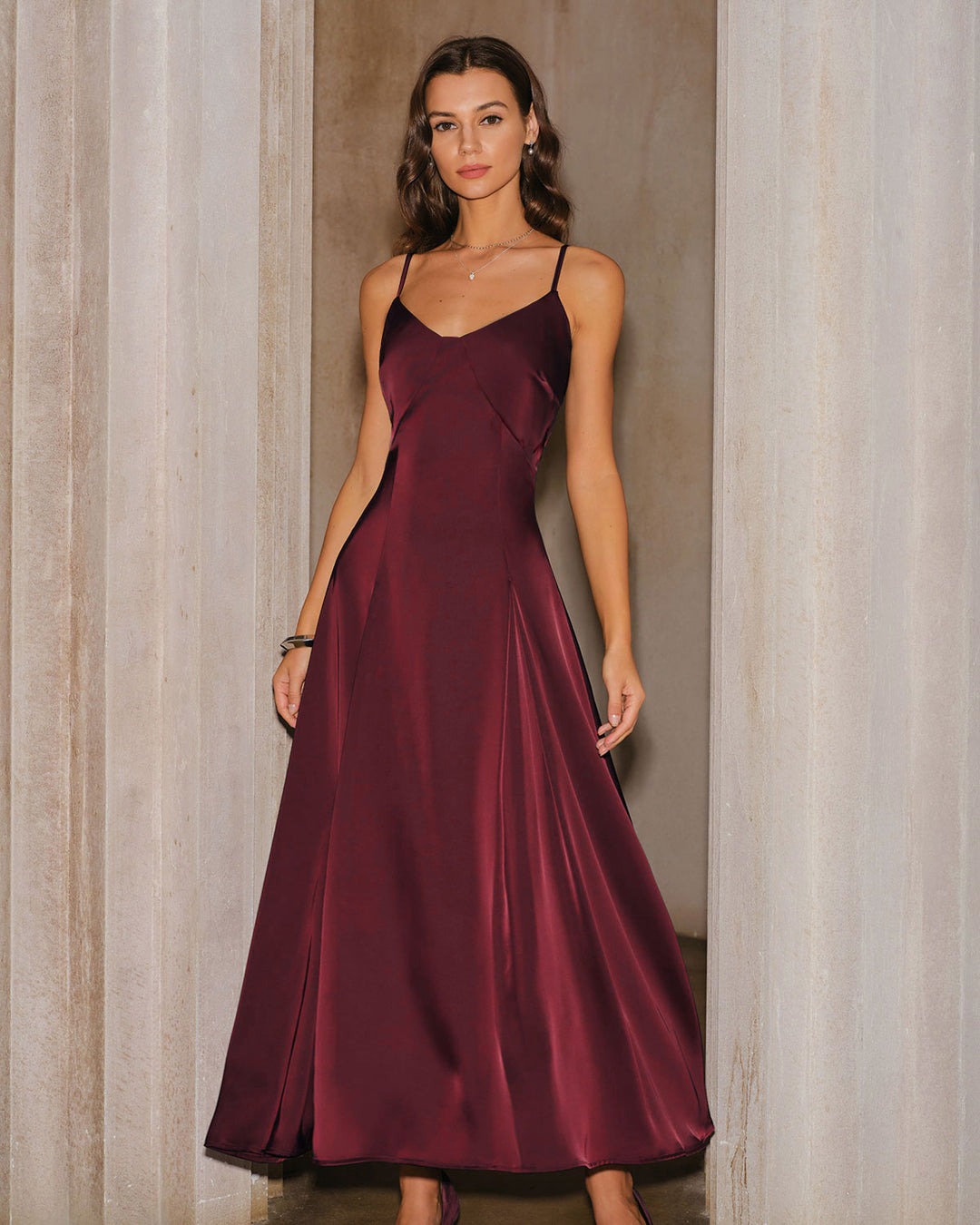
The Wine Red Satin A-Line Slip Maxi Dress is the better way to wear red as a guest: deep, evening-ready, and much less attention-grabbing than bright red. The page lists an A-line shape, natural waist, no stretch, polyester fabric, zipper closure, and lining. Skip this color only when the couple's tradition reserves red for the bride.
When the palette is unknown
A blue floral for spring or daytime weddings
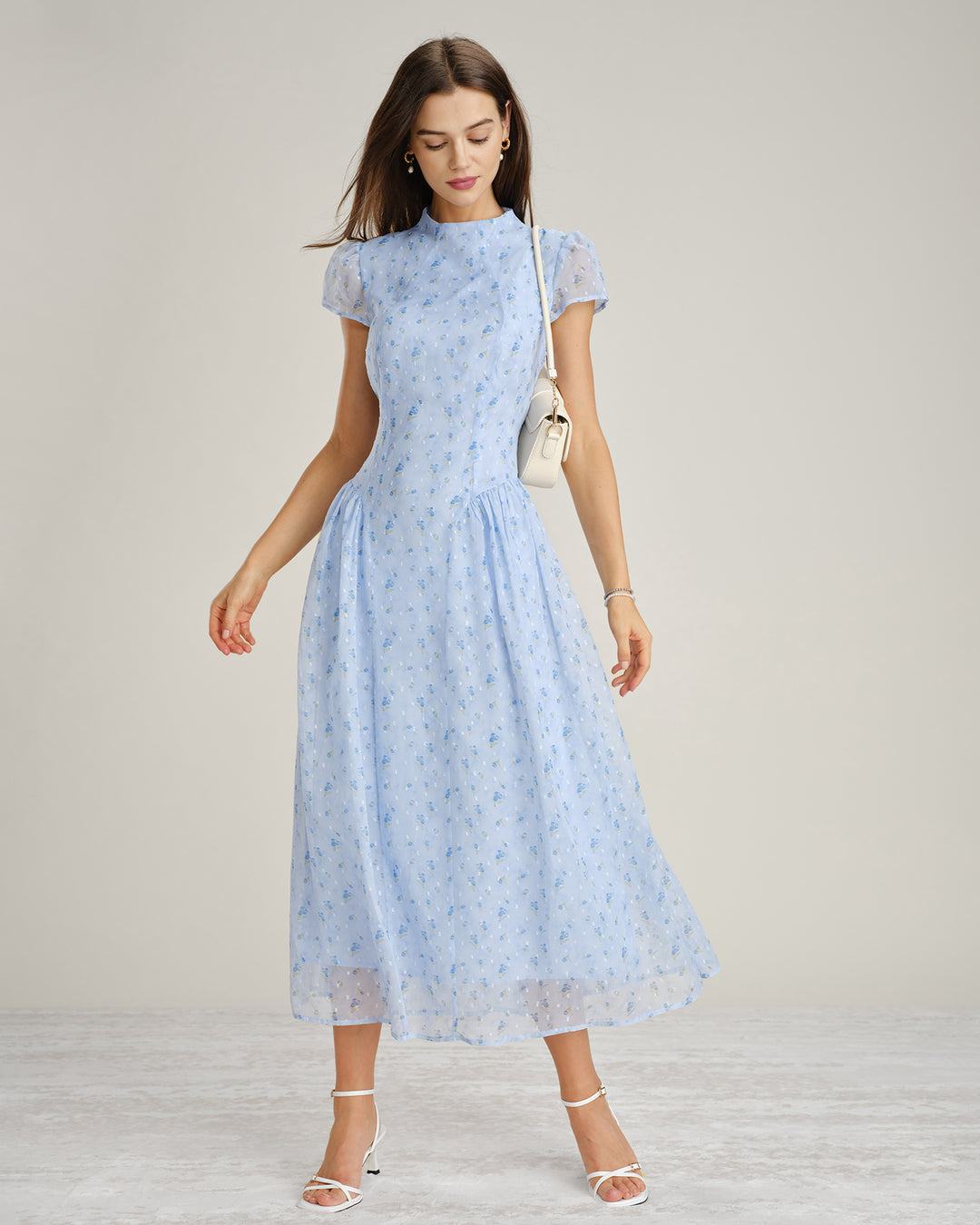
The Blue Mock Neck Floral Chiffon Maxi Dress works best for spring, summer, garden, and daytime weddings where a soft print feels natural. RIHOAS lists it as a mock-neck chiffon maxi with a natural waist, no stretch, polyester fabric, and lining. Because the base reads blue rather than white, it avoids the bridal-color problem; for more print-led options, browse floral dresses.
Season changes the shade, not the rule. Lighter florals work better for spring and daytime, while navy, wine, emerald, and deeper jewel tones work better for fall, winter, evening, and formal weddings. For seasonal styling, see the summer wedding guest dress guide; for a broader dress-code view, use the wedding guest dress style guide.
How to color-check any outfit before the wedding
Before you commit, run three quick checks. First, the white test: photograph the dress in daylight and check whether it reads white at thumbnail size. Second, the lineup test: compare it to the wedding website, invitation, or party palette. Third, the volume test: imagine the dress in a group photo. If the color would pull the eye before the couple does, choose a deeper or softer version.
RIHOAS carries white, ivory, and champagne pieces, and those shades can be beautiful for other events. For a wedding guest outfit, leave them out unless the couple has specifically requested a white dress code. Start from a colored palette first, then use accessories to shift the mood.
Frequently asked questions
Can I wear a dress with white in the pattern to a wedding?
Yes, as long as the dress reads as a real color from a distance. Small white details on a navy, green, blue, or floral ground are usually fine. If the dress looks mostly white in a daylight phone photo, choose something with less white.
Is blush or light pink too close to white?
Very pale blush can be too close because it may photograph as white, nude, or champagne. Deeper dusty rose, mauve, berry, and true pink are safer. If the thumbnail photo reads bridal, go darker.
Is it rude to wear black to a wedding?
No. Black is widely accepted at modern and evening weddings. It can feel heavy for daytime, beach, or garden weddings, so soften it with color or choose navy for those settings.
Can I wear red to a wedding?
Deep red, wine, burgundy, and berry are generally safe at Western weddings. Bright red is the version to reconsider, especially for Chinese and Indian weddings where red may be culturally reserved for the bride.
What if the bridesmaid color is similar to mine?
If your dress could be mistaken for a bridesmaid dress at a glance, switch. A clearly different shade is usually fine, but a near-match can look awkward in photos. A print is the easiest way out when you are unsure.
What color is safest if I know nothing about the wedding?
Navy is the safest single color. A multi-color floral is also reliable for spring, summer, and daytime weddings because it rarely matches the wedding party exactly and does not read bridal if the base color is clear.
Are gold or metallic dresses okay?
Metallic accessories are fine, especially for evening weddings. A fully gold, silver, or sequined dress is riskier because it can compete for attention. Keep shine to one element unless the dress code clearly invites glamour.
Final color check
Choose color that supports the celebration
Avoid white and near-white first, avoid the wedding-party palette second, then choose a color that fits the season, time of day, and culture of the wedding. Navy, emerald, wine, and grounded florals are the safest places to start.


