

A summer wedding guest outfit has one job: look appropriate for the ceremony and still feel manageable after an hour in the heat. Start with the invitation, then let the venue and time of day make the final call. A polished midi or maxi dress in a breathable woven fabric is the safest choice for most summer weddings because it reads as occasion-ready without feeling heavy.
If season is not the main uncertainty, start with the broader wedding guest dress-code guide and return here once heat, outdoor ground, or destination travel becomes the deciding factor.
If you are ready to browse rather than compare dress codes, start with RIHOAS’s summer wedding guest dresses. This guide is for the decisions that come first: how formal to go, which hemline works on grass or sand, when black is appropriate, and how to avoid buying a dress that looks good standing still but is hard to wear all day.
First, read the invitation for formality—not just the word “summer”
The dress code sets the floor; the weather only changes how you meet it. For a black-tie or formal evening wedding, choose a full-length dress or a refined maxi in satin, chiffon, or another fluid woven fabric. For cocktail attire, a midi dress with deliberate details—an architectural neckline, a textured fabric, or a controlled slit—will look more appropriate than a casual sundress. For a daytime garden, vineyard, or restaurant wedding, an A-line midi, floral maxi, or polished slip dress is usually the most reliable direction.
When the invitation gives no dress code, use the ceremony setting as the tie-breaker. A 5 p.m. ceremony at a hotel calls for more polish than an 11 a.m. garden ceremony, even if both happen in July. A simple rule works well: the more structured the venue and later the start time, the cleaner the fabric, darker the color, and longer the hem can be.
For a summer cocktail wedding, a midi is better than a casual mini because it stays polished in ceremony photos and still lets you move through a reception. For an evening wedding, a maxi is the more dependable choice when the venue, invitation, or guest list suggests formal dressing.
If the invitation explicitly says cocktail, browse cocktail dresses; if it asks for formal attire, use the formal dresses edit instead of trying to make a casual dress work with accessories.
What to wear to a garden or outdoor summer wedding
For a garden wedding, choose a midi or maxi with movement, but keep the hem off the ground. An A-line skirt, a softly pleated shape, or a dress that falls from the natural waist will sit better through a lawn ceremony than a narrow, clingy column. A square neckline, V-neckline, or light sleeve gives the outfit enough structure for photographs without the closed-in feeling of a high, heavy bodice.
Floral prints are the easiest way to make a summer daytime dress feel intentional, but scale matters. A medium floral on a clear background is more versatile than a tiny all-over print that can read overly casual from a distance. Blue, green, soft apricot, and deeper botanical tones work especially well in daylight because they photograph as color without competing with the wedding party.
For a garden ceremony, a block heel under three inches or a dressy flat is better than a thin stiletto because it will not sink into grass. Bring a small wrap only if the reception is likely to move indoors or continue after sunset; do not choose long sleeves solely for an outdoor daytime ceremony in peak heat.
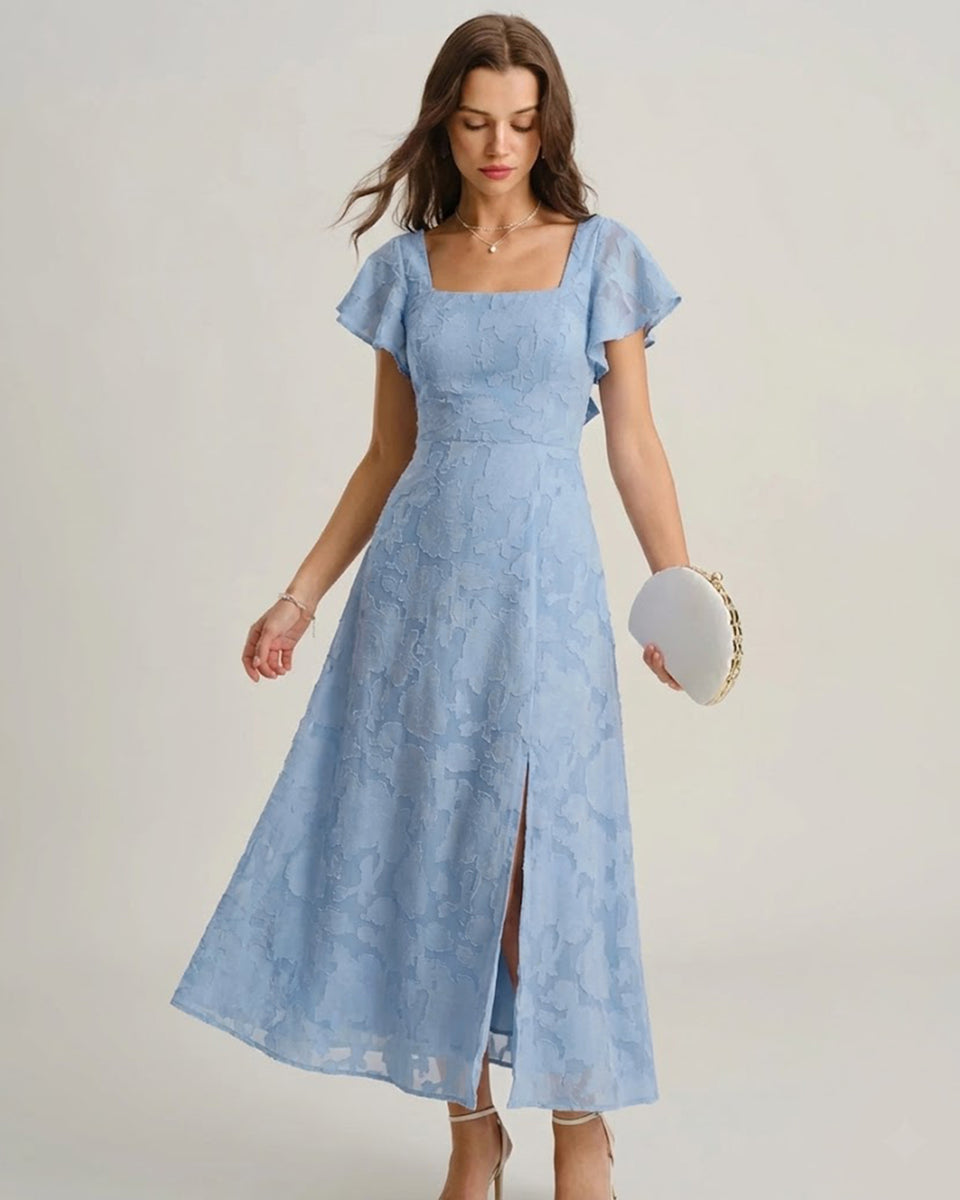
Garden wedding pick
A floral midi that keeps the setting in view
The Blue Floral Square Neck Midi Dress gives a daytime ceremony a defined neckline, cap sleeves, and a midi length that works with grass-friendly shoes. It is available in XS–XL and has a 100% polyester jacquard shell and lining. The fabric has no stretch, so use your largest measurement when choosing between sizes rather than sizing down for a closer fit.
What to wear to a beach or destination wedding
For a beach wedding, lightness matters more than formality theatre. A flowy maxi or midi in chiffon, a light polyester weave, or another lined woven fabric is easier to wear than a dense bodycon shape. Look for straps you can adjust, a secure zipper, and a skirt that moves without needing to be held in place every time the wind picks up. A floor-length hem can work on a boardwalk or resort terrace, but a midi is more practical when the ceremony is directly on sand.
A destination wedding also changes what you need from the dress. The best option is not necessarily the most delicate one; it is the dress you can pack, sit in during travel, and wear through a long reception. A floral or softly colored maxi makes sense for a warm-weather venue, while a strong solid color looks sharper for a resort dinner or sunset reception. Skip a heavy train, a stiff corset you have not tested before, and shoes that require a hard, level surface.
For a beach ceremony, a lightweight A-line maxi is safer than a very narrow skirt because it gives you room to walk over uneven ground and sit through dinner. Pair it with flat sandals for sand, then change into a low block heel only if the reception moves to a firm surface.
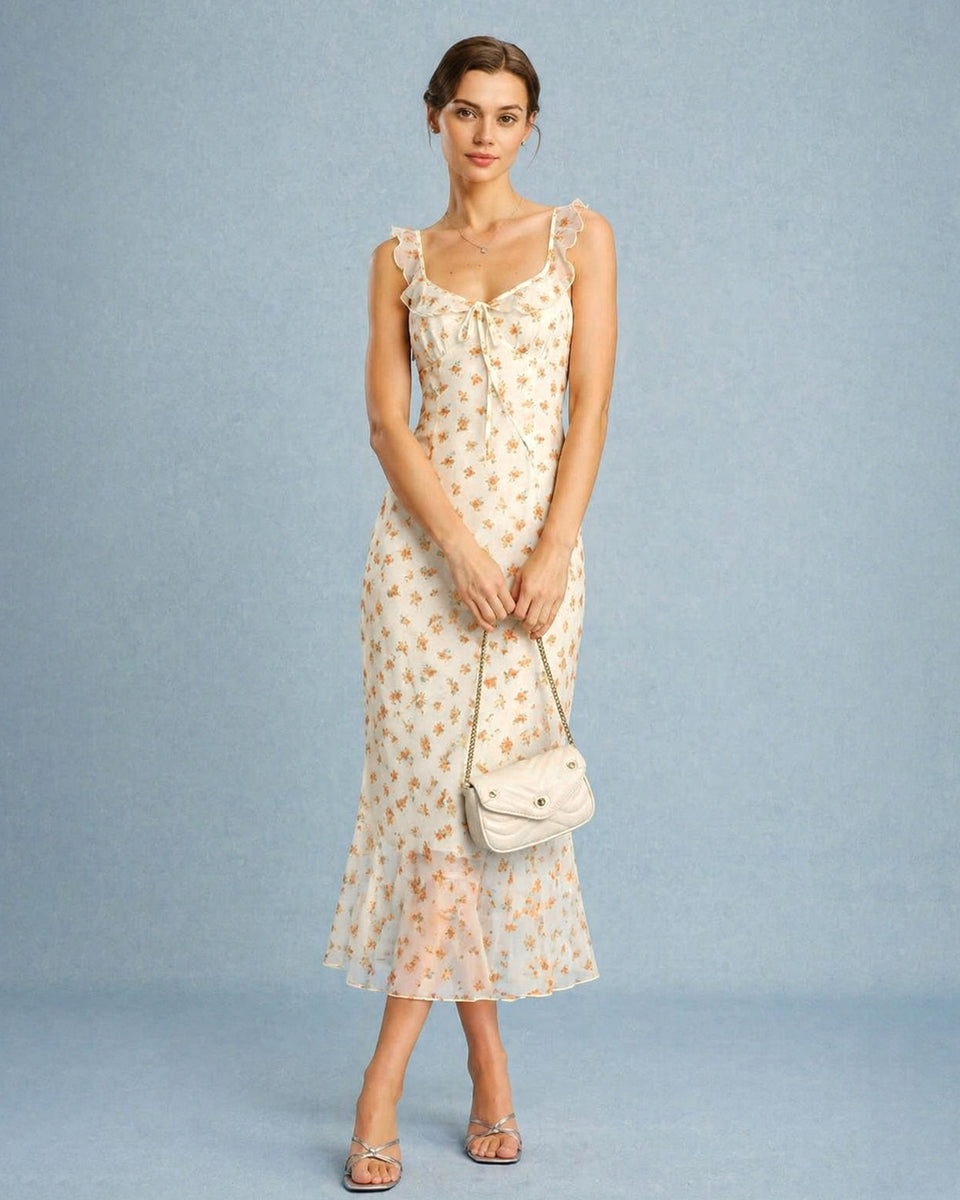
Destination wedding pick
A floral maxi with room to move
The Apricot Floral Ruffle Slip Maxi Dress brings a light floral print, tie detail, ruffles, and an A-line slip shape to a beach or destination plan. It is available in XS–XL and is lined in polyester. It has no stretch, so do not treat the slip silhouette as forgiving through the bust or hips; check the size chart and select for the widest measurement.
What to wear to a formal summer evening wedding
For an evening ceremony, treat the heat as a fabric question, not a reason to dress down. Satin, chiffon, and fluid lined polyester can look formal while still feeling lighter than velvet, thick crepe, or a heavily embellished gown. A one-shoulder neckline, a clean cowl, a controlled slit, or a long A-line skirt gives a simple dress an evening signal without requiring a large amount of jewelry.
Blue, deep green, plum, navy, and black are particularly useful after sunset. They carry more formality than a pale daytime floral and look deliberate under indoor or evening lighting. If the invitation says black tie, choose a maxi, keep the bag compact, and avoid an exposed casual sandal. If it says formal but not black tie, a satin maxi or elevated midi can work when the venue is less ceremonial.
For a formal summer wedding, a one-shoulder satin maxi is more reliable than a short party dress because the full-length silhouette does most of the dress-code work. That lets you keep jewelry simple and avoid adding a heavy layer simply to make the outfit feel formal enough.

Formal evening pick
A clean neckline for a more formal invitation
The Blue One Shoulder A-Line Satin Maxi Dress uses a one-shoulder neckline, tie detail, and A-line shape to make a simple color feel event-ready. It is available in XS–XL with a polyester shell and lining. The fabric has no stretch, so this is not the dress to order tighter for a bodycon effect—leave room to sit and move comfortably through dinner.
Choose fabric for the part of the day you will actually spend outside
Do not choose a summer wedding dress by fiber name alone. Look at the construction: a lined chiffon or satin weave can feel polished and move easily, while a lined jacquard midi can hold a more structured shape for a garden or restaurant setting. The key question is where you will be during the warmest hour. A dress that feels fine in air conditioning may feel restrictive during an outdoor ceremony, group photos, and a walk between venues.
For direct sun, a light woven fabric with an A-line or gently flared skirt is the safest choice because it creates air around the legs without looking casual. For an evening reception, satin gives more shine and definition, but it also shows fit more clearly, so make sure the bodice lies smooth rather than pulling across the bust or hips. Chiffon is useful for movement, but test the lining and hem before committing: a very sheer or overly long skirt can become impractical outdoors.
Every verified product recommended here is listed as no stretch. That does not make it unsuitable for a wedding; it makes fit discipline important. Take your bust, waist, and hip measurements before ordering, compare them with the product size chart, and choose for the largest measurement. A comfortable fit is more elegant than a dress that photographs well only before dinner.
Black-tie-leaning pick
Chiffon movement for a later reception
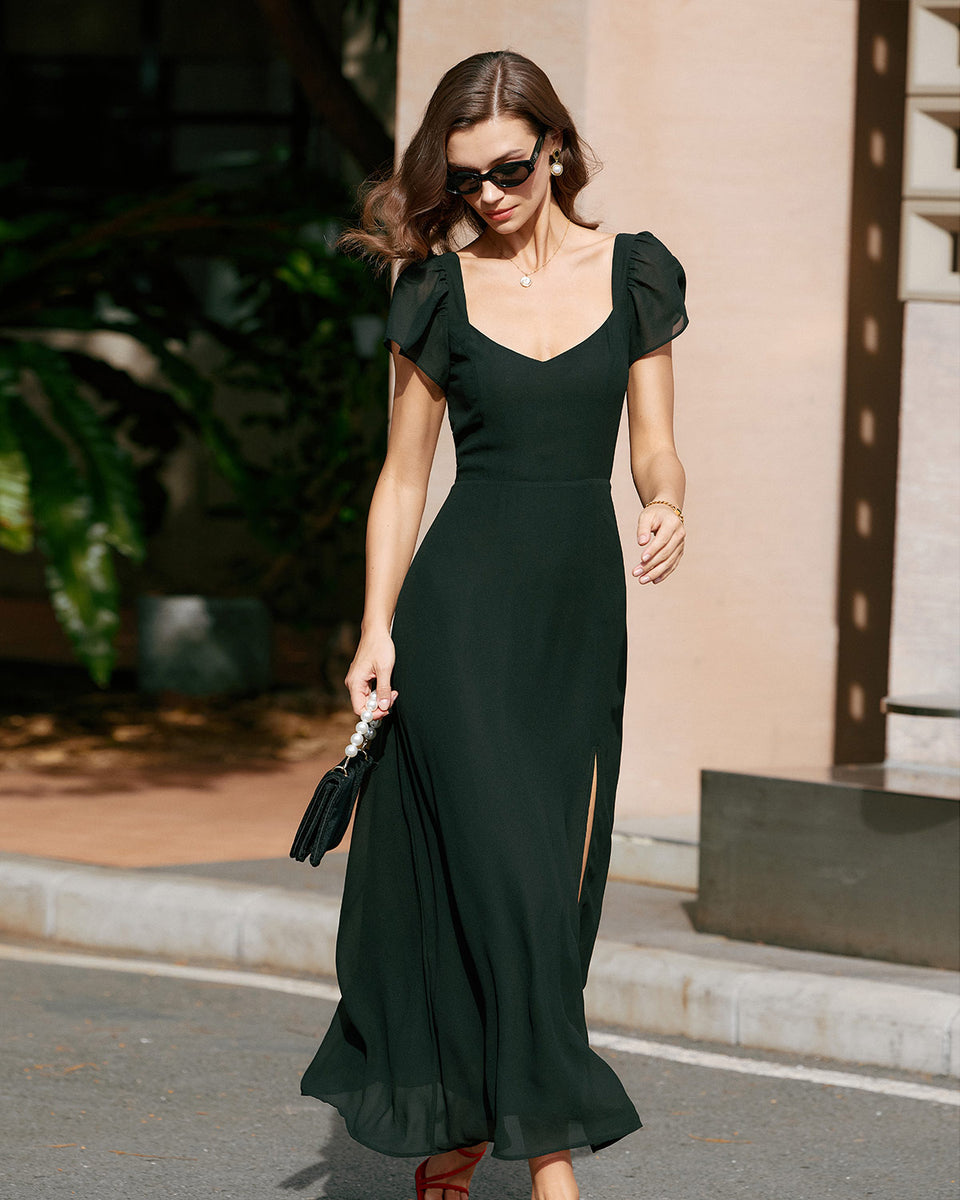
The Black Sweetheart Neck Chiffon Maxi Dress has a sweetheart neckline, circular cap sleeves, a slit, tie detail, and an open back. It is available in XS–XL and has no stretch. The open-back construction means a standard bra may not work; plan supportive adhesive cups or a compatible low-back option before the event.
Summer wedding guest dress colors: what is safe and what needs context
Do not wear white, ivory, cream, or a print that reads mostly bridal from a distance unless the couple specifically requests it. This rule matters more than whether a color is technically seasonal. Once white is off the table, choose the palette by setting: floral blue, green, apricot, and soft pink suit daytime gardens; cobalt, emerald, dark green, navy, and black feel stronger for a formal reception; and a muted print is often the easiest choice when you do not know the wedding-party colors.
Black is appropriate for many summer weddings, especially cocktail, formal, city, and evening events. It is less natural for a very casual daytime beach ceremony, where a deep green, navy, or floral pattern gives the same polish with a lighter visual effect. The invitation and venue should overrule old blanket rules about black; what matters is whether the dress looks appropriate for the event rather than funereal or club-ready.
For a formal outdoor wedding after sunset, dark green is better than a pale pastel because it keeps its depth in lower light while still feeling seasonal. For a daytime garden wedding, a floral print is better than a dark solid when the dress code is relaxed because it signals celebration without needing extra accessories.

Evening color pick
A dark green alternative to black
The Dark Green One Shoulder Maxi Dress brings a solid dark color and A-line skater silhouette to a formal or evening guest outfit. It is available in XS–XL, with a 100% polyester shell and lining, and it has no stretch. Its one-shoulder back means it needs a compatible strapless or adhesive support solution rather than an ordinary bra.
Use the neckline and hem to solve fit and movement problems
Choose the neckline based on the support you need, not only how it looks on a hanger. A square neck gives structure and works well with a standard bra. A sweetheart neckline creates a softer, more formal line but needs a bodice that sits flat across the bust. A one-shoulder dress is useful when you want a dressed-up silhouette without a heavy necklace, but it demands the right undergarment plan. Slip straps and X-cross backs can be comfortable in heat, though they are less forgiving if the size is too small.
Hem length should match both your shoes and the ground. A midi that ends between the knee and ankle is the most adaptable length for grass, patios, and city sidewalks. A maxi works for formal settings and evening photos, but check it while wearing the shoes you will actually use. If the hem catches under your heel or drags when you walk, it will become the focus of the night.
For a wedding with a long ceremony and dancing, a midi with adjustable straps is more practical than a very tight formal dress because it gives you more room to sit, eat, and move. If you choose a no-stretch fitted bodice, the largest measurement should always control the size decision.
For more detail on bust, waist, hip, sleeve, and woven-fabric sizing decisions, use the plus-size wedding guest guide.
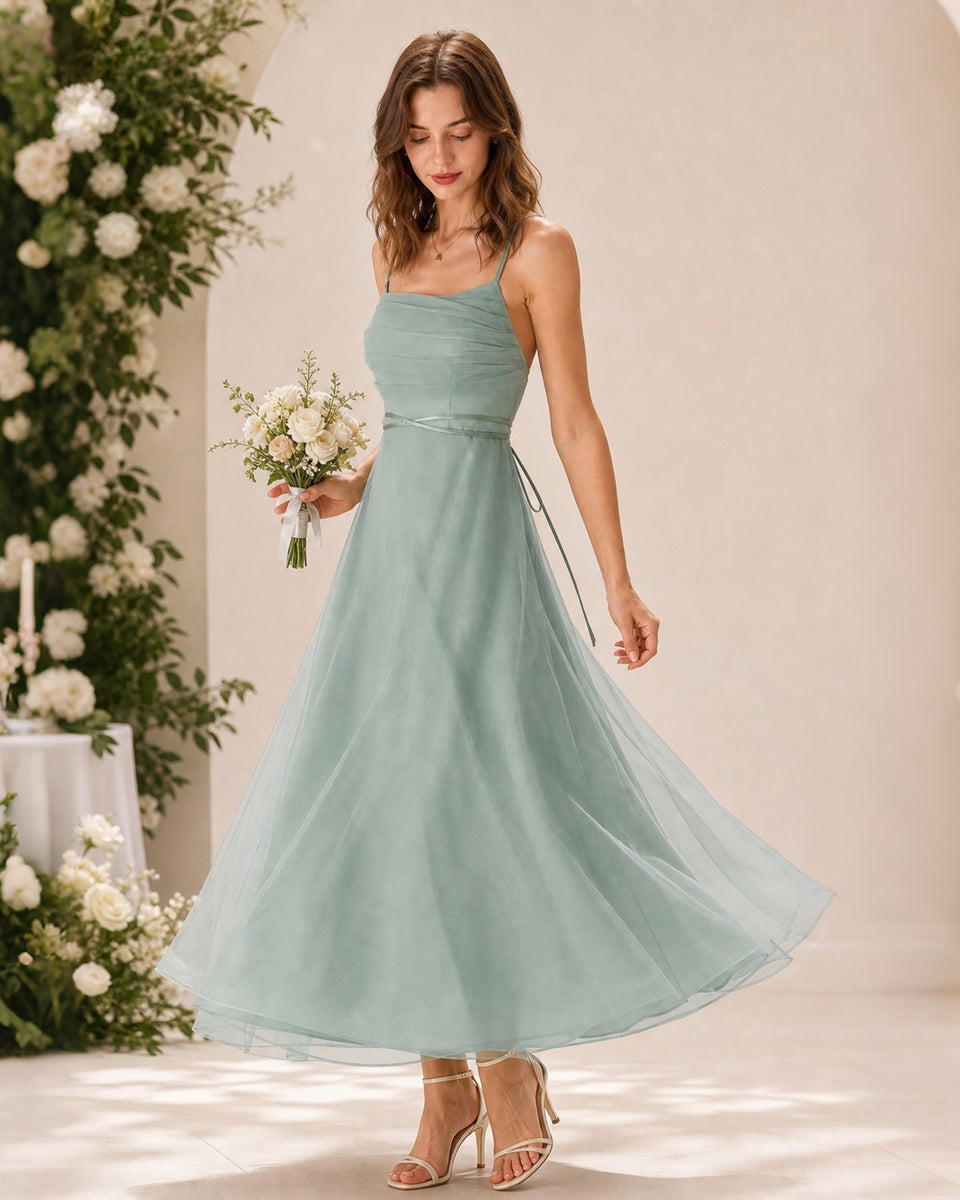
Movement-focused pick
A pleated midi for ceremony-to-dance-floor plans
The Green Mesh Flowy Slip Midi Dress has a pleated, flowy midi silhouette, X-cross back, straps, and a mesh-and-satin construction. It is available in XS–XL. Although the fabric includes 5% spandex, the product is listed as no stretch, so fit it by measurements; the adjustable straps help fine-tune length and shoulder placement but do not add room through the bodice.
Finish the outfit for heat, photos, and a long reception
Choose shoes before deciding the final hem length. A low block heel, wedge, or polished flat is the safest option when you will be on grass, gravel, cobblestone, or sand. Keep the bag small enough for the ceremony but large enough for blotting papers, fashion tape, and a compact pair of foldable flats if you expect a long night. If you need a layer, choose a light wrap or a tailored jacket you can remove; a heavy cardigan changes the tone of a wedding outfit quickly.
Keep jewelry in proportion to the neckline. One-shoulder and sweetheart dresses usually need earrings and a bracelet more than a necklace. A square neck can carry a short pendant if the neckline leaves enough space. For floral dresses, pick one metal finish and let the print stay visible. The aim is not to build a second outfit on top of the dress; it is to make the original choice work for the weather and the venue.
Before the wedding, wear the complete outfit at home for at least 20 minutes. Sit down, raise your arms, walk on a non-carpeted floor, and check the dress in daylight. That small test exposes a dragging hem, shifting strap, visible bra, or too-tight bodice before it becomes a reception problem.
If the outfit plan is settled and price is the remaining constraint, compare the affordable wedding guest dresses under $100 guide.
Summer wedding guest dress FAQ
Can I wear black to a summer wedding?
Yes—black works especially well for cocktail, formal, city, and evening summer weddings. Make the dress feel seasonal with a fluid fabric, an open neckline, lighter accessories, or a floral detail. For a casual daytime beach ceremony, a floral, blue, green, or other colored dress is usually a more natural first choice.
What is the best length for an outdoor summer wedding guest dress?
A midi is the most adaptable length for an outdoor summer wedding because it looks polished, keeps the hem clear of grass and sand, and works with flats or block heels. Choose a maxi for a formal venue or evening ceremony, but test the hem with your actual shoes before the event.
What fabric is best for a hot summer wedding?
A lined woven midi or maxi in chiffon, satin, or a lighter polyester construction is the most reliable choice because it can look formal without the weight of velvet or thick structured fabric. Check how the dress fits through the bust and waist: a breathable fabric cannot compensate for a bodice that is too tight to sit in comfortably.
Can I wear a floral dress to a formal summer wedding?
Yes, if the print, fabric, and silhouette meet the venue’s formality. A floral maxi in a darker ground color or refined fabric works better for an evening event than a casual cotton mini. If the invitation says black tie, a solid formal maxi is usually the safer decision.
How should I size a no-stretch wedding guest dress?
Choose the size that fits your largest measurement on the product size chart, then tailor only if needed. Do not size down on a no-stretch bodice to create a closer silhouette; it can pull in photos and become uncomfortable during dinner. This matters most for fitted busts, zip backs, and slip dresses.
Find your wedding guest look
Shop by the invitation you received
Start with the summer edit, then narrow by setting: florals for garden ceremonies, cocktail styles for dressier receptions, and formal maxis for evening plans.
Summer Wedding Guest Dresses Wedding Guest Dresses Garden Party Dresses


