

You bought three new shirts last month and still feel like you have nothing to wear. Before you buy a fourth, try the cheapest styling upgrade there is: tucking the shirt you already own a different way. How you tuck a shirt is the styling equivalent of good lighting — the same outfit can read as polished, effortless, or like you're trying too hard, depending entirely on where the hem goes.
There are five tucks worth knowing, and each one solves a specific problem. Below is exactly what each method is, when to use it, the bottoms it needs, and the one detail that makes it look deliberate instead of accidental. Learn all five and you'll get more outfits out of the same closet.
Not sure whether the top in your hand is better treated as a shirt or a blouse? Our blouse vs. shirt guide explains the difference in structure, drape, and how each one tucks.
Why the tuck changes your whole silhouette
Tucking does one thing that matters more than keeping your shirt down: it tells the eye where your waist is. A tucked shirt creates a defined waistline even on a straight silhouette, and because it marks where your torso ends and your legs begin, it makes your legs read longer — especially over a high-rise waistband.
That's why a tucked shirt looks intentional and an untucked one can look like you grabbed whatever was on the floor. For the longest-legged effect, tuck into a high-rise waistband rather than a mid- or low-rise, because the higher the tuck point sits, the more of your lower half reads as "leg." The tuck isn't fussy detail work; it's the single fastest way to add shape to an outfit that doesn't have any.
The 5 ways to tuck in a shirt
1. The full tuck (the polished classic)
What it is: The entire hem — front, back, and sides — goes into your waistband.
When to use it: Anything that needs to look pulled together: interviews, client meetings, meeting the parents. For office and formal settings, a full tuck into a high- or mid-rise bottom is the most reliable choice because it gives the cleanest vertical line and the most defined waist of any method.
How to do it well: Put your bottoms on first, tuck the whole hem in, then use the military tuck — pinch the loose fabric at each side seam, fold it flat toward your back, and pin it under the waistband. This removes the bunching at the hips that makes a full tuck look like you're hiding something. Finish by pulling about half an inch of fabric back up over the waistband so the front isn't pulled flat and tight.
Best with: Button-ups, crisp cotton shirts, fitted knits — anything with a standard, non-cropped hem. On the bottom, high-waisted trousers, pencil skirts, A-line skirts, and tailored jeans all work. Skip the full tuck with thick sweaters or chunky knits: the bulk gathers at the waistband and reads as volume in exactly the wrong place.
Body-type note: Pear and rectangle shapes get the most from this one — it marks the waist and, on a straight figure, creates one that isn't naturally there. Apple shapes should choose a drapey fabric over a stiff one so the tuck skims rather than clings.
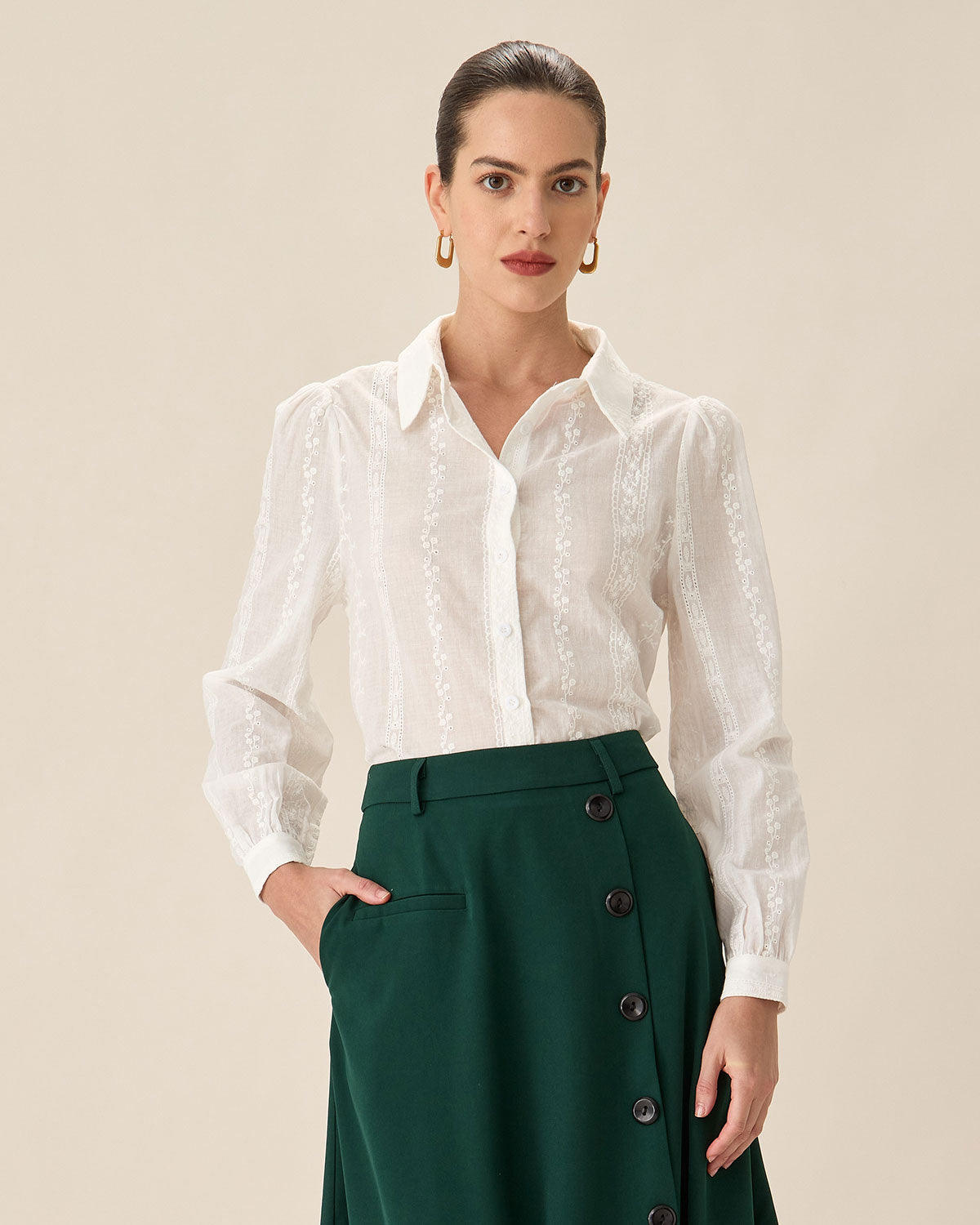
Full-tuck pick
White Jacquard Button-Up Shirt
This hip-length, non-stretch shirt has the construction a full tuck needs: a collar, button-up front, and a 70% polyester / 30% cotton jacquard that keeps a clean line. Wear it with tailored trousers or an A-line skirt when you want a more polished finish.
Shop this shirt2. The French tuck (front-only)
What it is: Only the front center of the shirt is tucked; the sides and back stay loose.
Why it works: It gives you structure without commitment — enough of a waist to look intentional, enough drape to stay casual. The French tuck works best when you tuck only the front center two to three inches and let the sides drape, because that single front anchor reveals a waist while the loose sides skim the stomach.
When to wear it: Almost anytime you want to look casually put-together — brunch, errands, travel, casual Friday. It's the most forgiving tuck for the widest range of bodies.
How to do it: Bottoms on first. Pinch two to three inches of the front center hem and tuck just that into the waistband. Leave everything else alone. It's supposed to look slightly undone, so resist the urge to neaten it.
Body-type note: For apple shapes, the French tuck is the most flattering option because it defines the waist while the open sides float past the midsection rather than gripping it. A belt is optional here — it works with or without one.
French-tuck pick
Navy Polka Dot V Neck Shirt
The regular-fit, long-length shirt gives a French tuck enough hem to anchor at the center while the sides remain loose. Its button front and V neckline keep the result polished for an easy daytime outfit.
Shop this shirt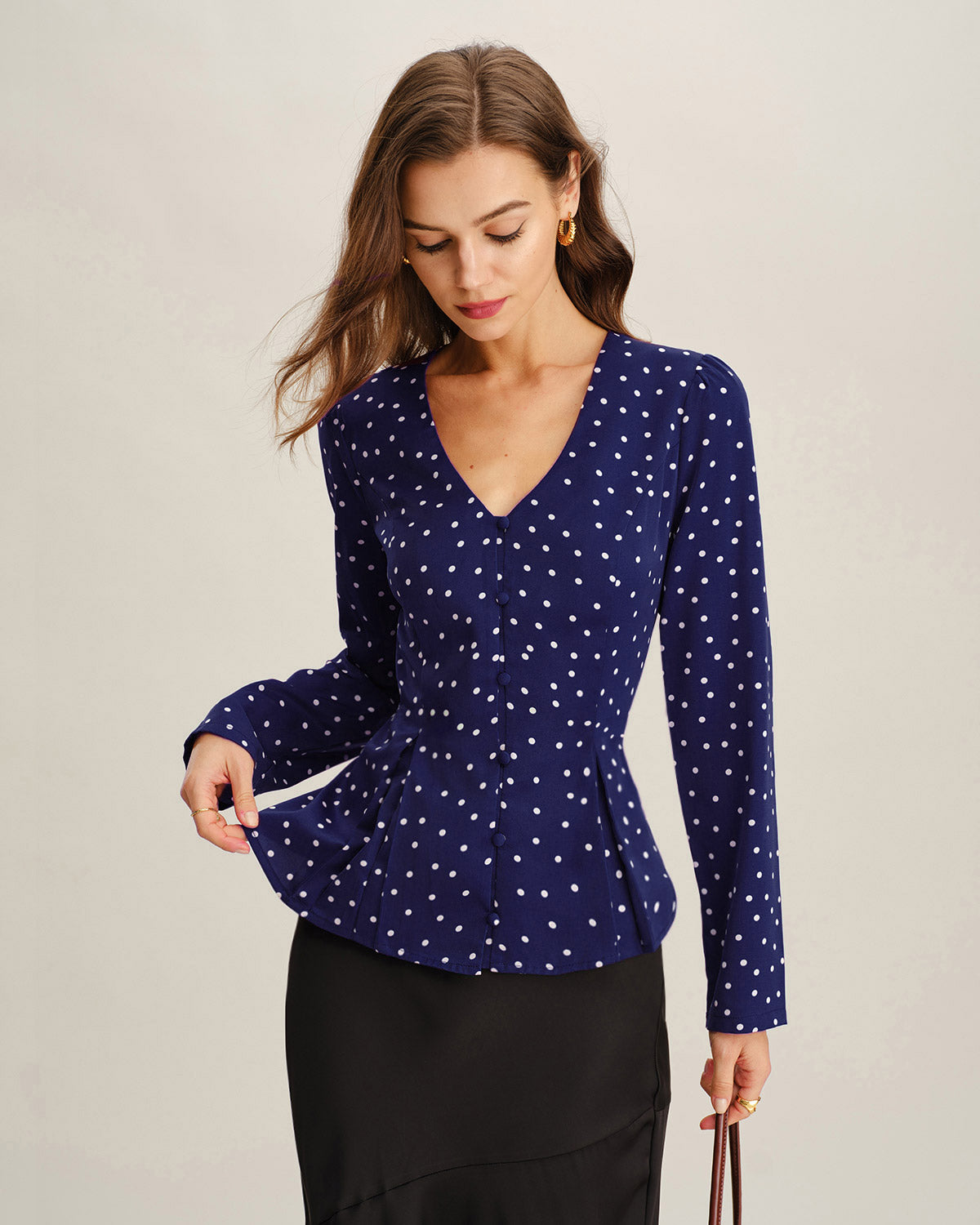
3. The half tuck (the off-duty look)
What it is: You tuck only one side of the front, leaving the other side out. It's asymmetrical on purpose.
When it works: Casual everything — coffee dates, concerts, shopping. A half tuck is better than a full tuck for loose or oversized shirts because tucking just one front side keeps the relaxed volume but adds a diagonal line that reads as deliberate rather than messy.
How to do it: Tuck about a quarter to a third of the front width into one side of your waistband. The exact amount doesn't matter; what matters is that the asymmetry looks chosen, not accidental.
Best with: Loose button-downs (try leaving the bottom button or two undone), oversized tees, and silky blouses that move. On the bottom, mom jeans, boyfriend jeans, paper-bag-waist pants, and flowy midi skirts. Finish with sneakers, loafers, or ankle boots — the half tuck has streetwear energy that fights against very dressy shoes.
Body-type note: Hourglass shapes get a curve-showing line without it being obvious; straight (H-shape) figures get visual interest that breaks up a vertical silhouette. It's relaxed enough to flatter almost everyone.
4. The back tuck (the underused one)
What it is: The reverse of the French tuck — only the back is tucked, with the front and sides loose.
When to use it: When you want a long, clean front but don't want the back hem hanging low. The back tuck is the best choice for longer shirts and tunics worn over fitted bottoms because it keeps an elongated front drape while showing the waistband and back detailing.
Best with: Longer button-downs, relaxed tunics, and shirts with front detail you want on display. Pair with high-rise jeans or structured trousers where the back view earns the attention — a defined waistband or interesting back pockets makes this tuck look like framing.
5. The twist tuck (the knot)
What it is: You gather the front hem, twist it into a small knot, and tuck the knot into your waistband — an instant cropped effect with no scissors.
When to wear it: Your playful, casual option: beach days, festivals, weekends. The twist tuck is the most effective way to add shape to a boxy tee because the knot pulls the excess fabric in at the waist and turns a straight hem into a defined one.
How to do it: Gather the front hem at the center or one side, twist until it forms a short roll, and tuck the whole knot in. The tighter the twist, the shorter the shirt sits. Honest warning: the knot adds bulk right at the waist, so if you want to minimize that area, the French tuck does the same shape-defining job without the volume.
Best with: T-shirts with some length, tanks, and lightweight knits. Silk works but slips, so the knot won't hold as well. Pair with high-waisted jeans, skirts, or shorts.
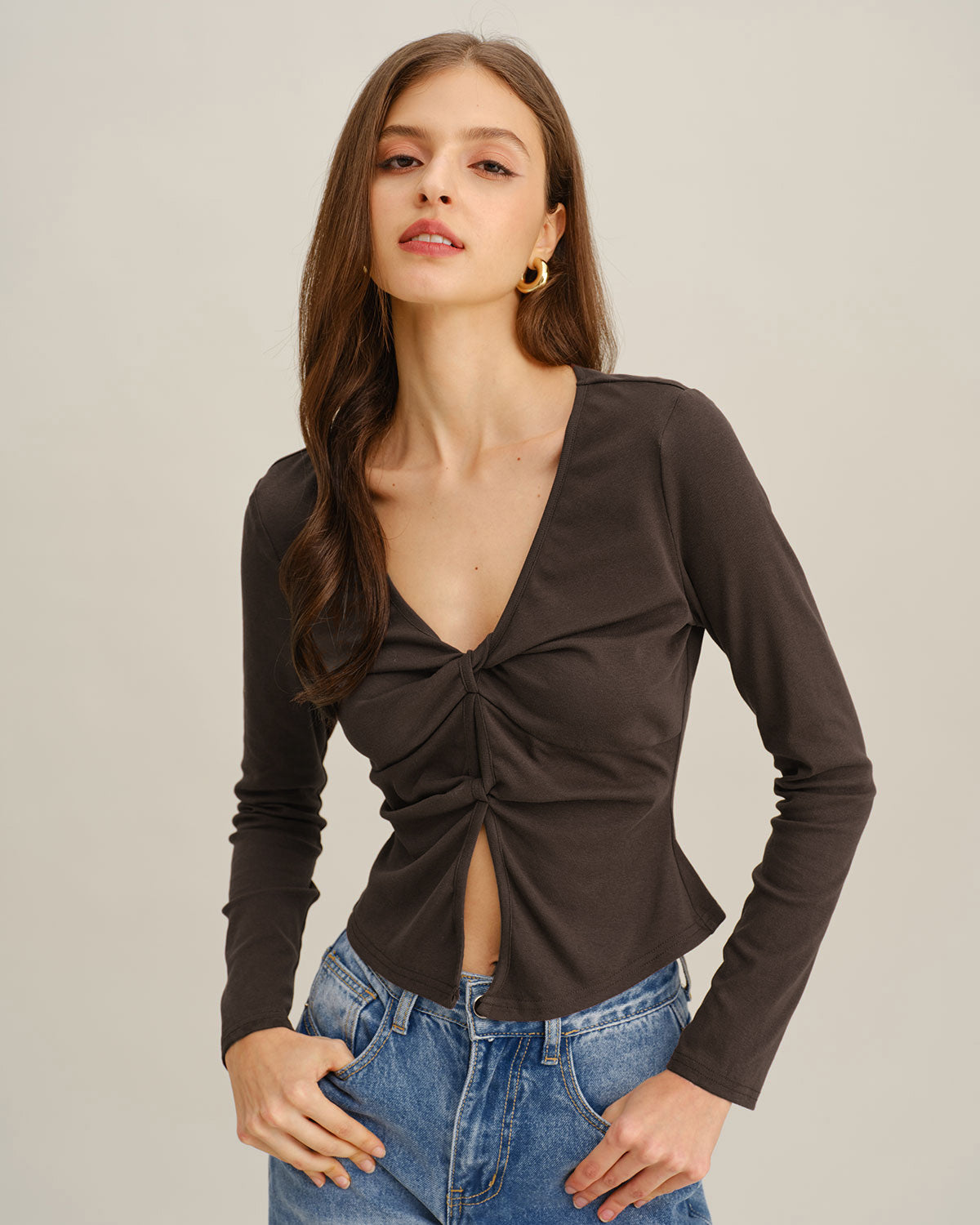
Twist-effect alternative
Coffee Twist Knit Tee
This is not a literal twist tuck: its twist detail is built into the front. It gives a similar waist-defining effect without adding a knot at the waistband. The slim, slightly stretchy knit is 93% cotton and 7% spandex, making it a clean option when you want the look with less bulk.
Shop this teeQuick reference: which tuck, when
| Method | Formality | Best bottoms | Best body types | Best occasions |
|---|---|---|---|---|
| Full tuck | Smart to formal | High/mid-rise trousers, pencil & A-line skirts | Pear, rectangle | Work, interviews, formal events |
| French tuck | Casual-smart | High-rise jeans, midi skirts | Everyone, especially apple | Brunch, smart casual, travel |
| Half tuck | Casual | Mom & boyfriend jeans, paper-bag pants | Hourglass, H-shape | Weekends, concerts, errands |
| Back tuck | Casual to medium | High-rise jeans, structured trousers | Inverted triangle | Urban casual, showing back detail |
| Twist tuck | Very casual | High-waisted jeans, skirts, shorts | All (adds volume) | Beach, festivals, fun casual |
How to keep a tuck in place all day
The most common reason a tuck fails isn't the method — it's that it comes loose by lunchtime. Three things keep it down:
1. Master the military tuck. After tucking, fold the side excess flat toward your back and secure it under the waistband. A flat-folded tuck stays put far longer than a loosely stuffed one because there's no loose fabric to creep upward when you move.
2. Use shirt stays if you stand a lot. Shirt stays are thin elastic clips that connect the shirt hem to your socks or thighs. For a full tuck you need to keep crisp through a long shift or event, shirt stays hold better than any waistband alone.
3. Match the fabric to the tuck. Thin, smooth fabrics — cotton, silk, lightweight knits — tuck flat and stay down. If a shirt feels heavy in your hands, it's too heavy to tuck cleanly, and no technique will stop it from bunching. Save chunky knits for an untucked look or a single front French tuck at most.
One finishing move regardless of method: after tucking, pull a little fabric back up over the waistband to create a soft blouson, then check yourself from the side and back. That 20-second adjustment is the difference between "styled" and "stuffed."
How to tuck for your body type
Pear (fuller hips, narrower top): A full tuck with A-line skirts or wide-leg pants emphasizes your narrow waist and balances your hips. Avoid a full tuck into tight bottoms, which can highlight the hip-to-waist difference — give the bottom half some flow.
Apple (fuller middle): The French tuck is your best friend, in a drapey fabric that skims rather than clings. The twist tuck also works if you place the knot to the side instead of dead center. Steer away from a tight full tuck in a stiff fabric.
Hourglass (defined waist): Almost everything works. A full tuck with a belt shows off the waist; a half tuck keeps it casual. The only thing to avoid is a boxy, fully untucked shape that hides the proportions you already have.
Rectangle / H-shape (straight up and down): Build a waist that isn't naturally there. A full tuck with waist detail — a belt, pleated pants, an interesting waistband — or a twist tuck both create the illusion of curve. Avoid stiff, untucked looks that reinforce the straight line.
Inverted triangle (broader shoulders, narrower hips): A back tuck or French tuck with wide-leg or flared pants adds visual weight to your lower half and balances your shoulders. Avoid a full tuck into very slim bottoms, which can make the top look heavier.
Seasonal and fabric notes
Spring and summer: Reach for cotton, linen, and silk, and lean on the French tuck — the open sides let air move, which matters when it's hot. Don't tuck anything thick or structured in heat; it traps warmth and bunches.
Fall and winter: Tuck a thin shirt, then layer an open cardigan, blazer, or coat over it. A full tuck under a sweater works only if that bottom layer is thin; otherwise switch to a French tuck, which looks especially good peeking out under an open coat.
The five mistakes that ruin a tuck
Fabric bunching at the waist. Caused by too much fabric or a too-heavy weight. Fix it with a thinner shirt and the military tuck, or switch to a French tuck that uses less fabric.
Tucking the wrong fabric. Chunky knits, heavy sweaters, and stiff materials create bulk or sit oddly. Stick to cotton, silk, linen, and lightweight knits.
Wrong rise for the tuck. A full tuck needs a high or mid rise; there isn't enough waistband on low-rise bottoms to hold it, and it looks awkward. With low-rise, skip the tuck or do a subtle half tuck at most.
Not adjusting after you tuck. Tucking isn't done when the hem is in. Pull down a little for a soft blouson, smooth the sides, and check the back for bunches.
Skipping the belt when the look needs one. A full tuck with a loose, plain waistband can look unfinished. A simple leather or woven belt defines the waist and finishes the line — keep a couple in rotation.
Outfit formulas for real days
Monday, look-pulled-together: Full tuck, crisp white button-down, high-waisted black trousers, slim belt, pointed flats.
Wednesday, professional but easy: French tuck, striped button-down, A-line skirt, loafers.
Friday, office-to-happy-hour: Half tuck, silky blouse, high-waisted jeans, ankle boots.
Saturday brunch: French tuck, oversized linen shirt, high-waisted denim, white sneakers.
Sunday market run: Half tuck, loose tee, mom jeans, canvas sneakers.
Casual dinner date: Full tuck, fitted knit or silky cami, midi skirt, heeled sandals.
Frequently asked questions
Does tucking make you look shorter if you're petite?
No — done right, it makes you look taller. A tuck into a high-rise bottom creates a clear break between torso and legs, so more of your body reads as leg. The key is a high rise; a low rise works against you here.
How do I tuck in an oversized shirt without looking sloppy?
Use a half tuck or French tuck, not a full one. A full tuck on an oversized shirt forces too much fabric into the waistband and bunches; tucking just the front center (French) or one front side (half) keeps the relaxed volume while still showing a waist.
Can I tuck in a t-shirt, or is that strange?
It's completely normal and looks great. The French tuck was practically made for tees. Just avoid t-shirts that are already cropped or very thick, which leave too little or too much to tuck.
How much of the shirt should I tuck for a French tuck?
Two to three inches of the front center, and nothing else. Tuck a small, defined section so the sides drape cleanly — over-tucking turns a French tuck into a messy full tuck.
What if I don't like belts?
Then skip them. The French and half tucks look right without a belt. For a full tuck, use shirt stays to hold the line, or choose bottoms with an interesting waistband — pleats or a detailed closure — so the waist looks finished on its own.
How do I keep my shirt tucked all day?
Combine the military tuck with the right fabric. Fold the side excess flat under the waistband, choose a thin, smooth shirt, and add shirt stays if you'll be standing for hours. A longer shirt also has more anchored fabric and stays down better than a short one.
Build the outfit
Find a shirt that's built to tuck
The right tuck starts with the right shirt and the right rise. Crisp button-ups suit a full tuck, while longer regular-fit shirts make a French or half tuck easier to control.


