

Homecoming vs prom dresses are not interchangeable, even though both nights ask you to dress up, send out group-chat photos of three contenders, and panic a little about the price tag. The dress that wins one can quietly lose the other. The fastest way to waste money is to buy a single "dance dress" and assume it stretches across both nights — it usually doesn't. This guide breaks the two apart the way they actually differ: how formal each one really is, how long the dress should be, what fabric reads right, and where it's worth spending. By the end you'll know exactly what to look for at each event, and which of your choices can pull double duty.
Homecoming vs prom: the one-sentence difference
Homecoming is a semi-formal, dance-focused fall event, so a short or mini dress in a fun, easy fabric is the right call; prom is a formal spring event, so a longer satin, lace, or jacquard dress in a richer color reads correctly. That single line settles roughly 80% of the decision. Homecoming usually happens in September or October around a football game, runs more casual, and rewards a dress you can actually dance in. Prom lands in spring, is the more formal "big night" of the year, and leans toward floor-length or polished midi looks. Everything below is just the detail underneath that sentence.
Quick side-by-side
What each night expects
Homecoming
Semi-formal, early fall, dance-first. Short and mini lengths, lighter fabrics (cotton, chiffon, light satin), brighter and playful colors. You want to move, not manage your hem. Lower spend, higher re-wear.
Prom
Formal, spring, photo-first. Long maxi or polished midi lengths, structured fabrics (heavy satin, lace, jacquard), jewel tones and champagne. The dress is the centerpiece. Higher spend, fewer but bigger occasions to re-wear it.
Formality: how dressed up each event actually is
The single most common mistake is treating the two events as the same dress code, and it goes wrong in both directions. Show up to homecoming in a floor-length gown and you'll feel like you wandered in from a different party; show up to prom in a casual cotton sundress and you'll feel underdressed in every photo. Homecoming sits in the semi-formal zone — the same level you'd dress for a nice dinner or a cocktail party, where "polished but not precious" is the goal. Prom is genuinely formal, the closest a high-school year gets to black-tie, where a longer length and a richer fabric are what make the look land.
The practical test is how much the dress has to do. A homecoming dress should look intentional but let you forget about it once you're on the floor. A prom dress is allowed to demand a little maintenance — a longer hem you lift on the stairs, a fabric you don't want to spill on — because the night is built around looking and feeling formal. If you're between two dresses for prom, the more formal fabric almost always reads better in pictures than the more casual cut.
Length and silhouette: short for homecoming, long for prom
For homecoming, a short homecoming dress — usually an A-line or fitted mini ending a few inches above the knee — is the most reliable choice because it photographs as youthful and polished while staying easy to dance in. Mini and short lengths dominate homecoming for a reason: the event is playful and movement-heavy, and a shorter hem removes the entire problem of managing a skirt on a crowded floor. A-line minis skim the hips and suit most body types; fitted slip and corset minis read a little more grown-up and sleek. Both are correct — pick the one that matches the energy you want, not the trend.
For a prom dress, a floor-length maxi is the safest formal choice, with a well-cut midi as the modern alternative if you want something that stands out from a sea of gowns. A long dress is what makes prom photos read as "formal event" rather than "nice party," which is why most of prom's silhouette interest lives in the skirt — a side slit, an A-line sweep, a column slip. If you go midi instead of maxi, lift the formality elsewhere: a structured neckline, satin or jacquard fabric, and elevated shoes do the work the extra length would have done.
The exceptions are worth knowing. A short dress can absolutely work for prom if it's in a formal fabric with strong tailoring — a clean black mini in satin reads cheeky and modern rather than underdressed. And a longer slip can work for homecoming if your school's dance leans dressier than average. When in doubt, check what last year's photos looked like before you commit.

Homecoming pick
A short dress that handles the dance floor
The Blue Floral Ruched Slip Corset Mini fits the homecoming brief: a ruched floral bodice, a dance-friendly mini length, and a lined polyester weave that photographs cleanly without feeling too formal. It has no stretch, so choose by your widest measurement and do a sit-and-raise-your-arms test before the night.
Fabric and detail: what makes a dress read casual or formal
Fabric is what separates a homecoming dress from a prom dress more than almost anything else. Cotton, chiffon, and lightweight textured fabrics read easy and daytime-friendly, which is exactly right for homecoming's lower-key energy. Heavy satin, lace, and jacquard read formal because they hold structure, catch light, and look richer in photos — which is why they belong at prom. If you put the same simple slip silhouette in cotton versus heavy satin, the cotton version says "fun night out" and the satin version says "formal event," with no other change.
Detail follows the same logic, and one clear detail beats three competing ones. For homecoming, a single feature — a corset bodice, a cowl back, a small floral print — is enough personality. For prom, lace, beading, jacquard texture, or a sculptural one-shoulder neckline adds the richness a formal night calls for. Two honest cautions: thin satin shows every line, so it needs to fit smoothly and may want shapewear underneath, and very lightweight slip fabrics drape beautifully but wrinkle, so steam (never iron) before you leave.
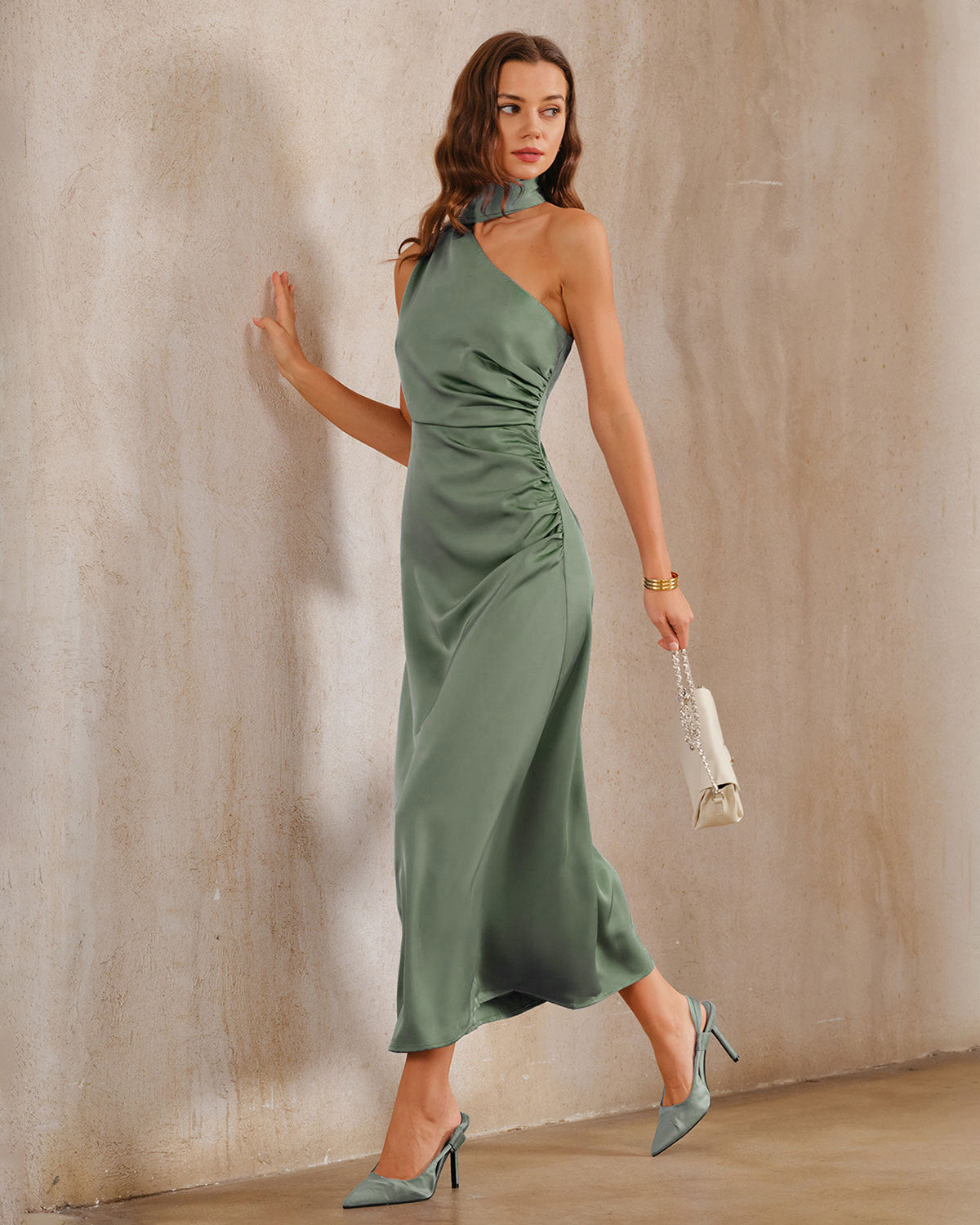
Prom pick
A satin one-shoulder dress that reads formal
The Green Satin One Shoulder Maxi gives prom its cleaner kind of drama: a long A-line silhouette, a sculptural one-shoulder neckline, and a rich green color that looks polished in evening photos. The fabric has no stretch and is lined, so judge the fit sitting and walking, not just standing in front of a mirror.
Color and sparkle: playful brights vs jewel-tone polish
Homecoming is where bright, fun, and slightly playful colors belong, because the event's lower formality gives you room to be bold without looking out of place. Pinks, light blues, reds, and small floral prints all photograph as fresh and youthful at a fall dance. Sparkle is welcome too, but a little goes a long way — a softly shimmering fabric or one sequined detail reads more current than head-to-toe sparkle.
Prom rewards deeper, richer color: emerald green, midnight blue, burgundy, black, and champagne all photograph as sophisticated and hold up better in formal lighting. These jewel and neutral tones are the safest route to looking polished rather than costumey on the big night. If you love sparkle for prom, anchor it — a beaded or sequined gown works best when the silhouette stays clean and the accessories stay minimal, so the dress isn't competing with itself.
Budget and re-wearability: where to spend, what you'll actually wear again
Spend less on homecoming and more on prom, because homecoming dresses are short, versatile, and easy to re-wear, while a prom dress is a bigger one-night statement. A short homecoming dress in the $30–60 range is a smart buy precisely because you'll wear it again — to birthdays, parties, date nights, and graduation events — so the cost-per-wear stays low. Treat homecoming as a dress that earns its keep all year, not a single-use purchase.
Prom is the night where a higher spend is justified, but "wear it again" still matters more than people admit. A satin maxi or polished midi in a jewel tone can be re-worn to weddings, formal dinners, and other evening events long after prom, while a heavily embellished pageant-style gown usually can't. If you want the best of both, choose a prom dress in a clean, elevated fabric and color you can imagine wearing to a wedding next summer — that's the difference between a $50 dress worn five times and a $50 dress worn once. For more budget-specific shopping logic, see the RIHOAS affordable prom dresses guide.
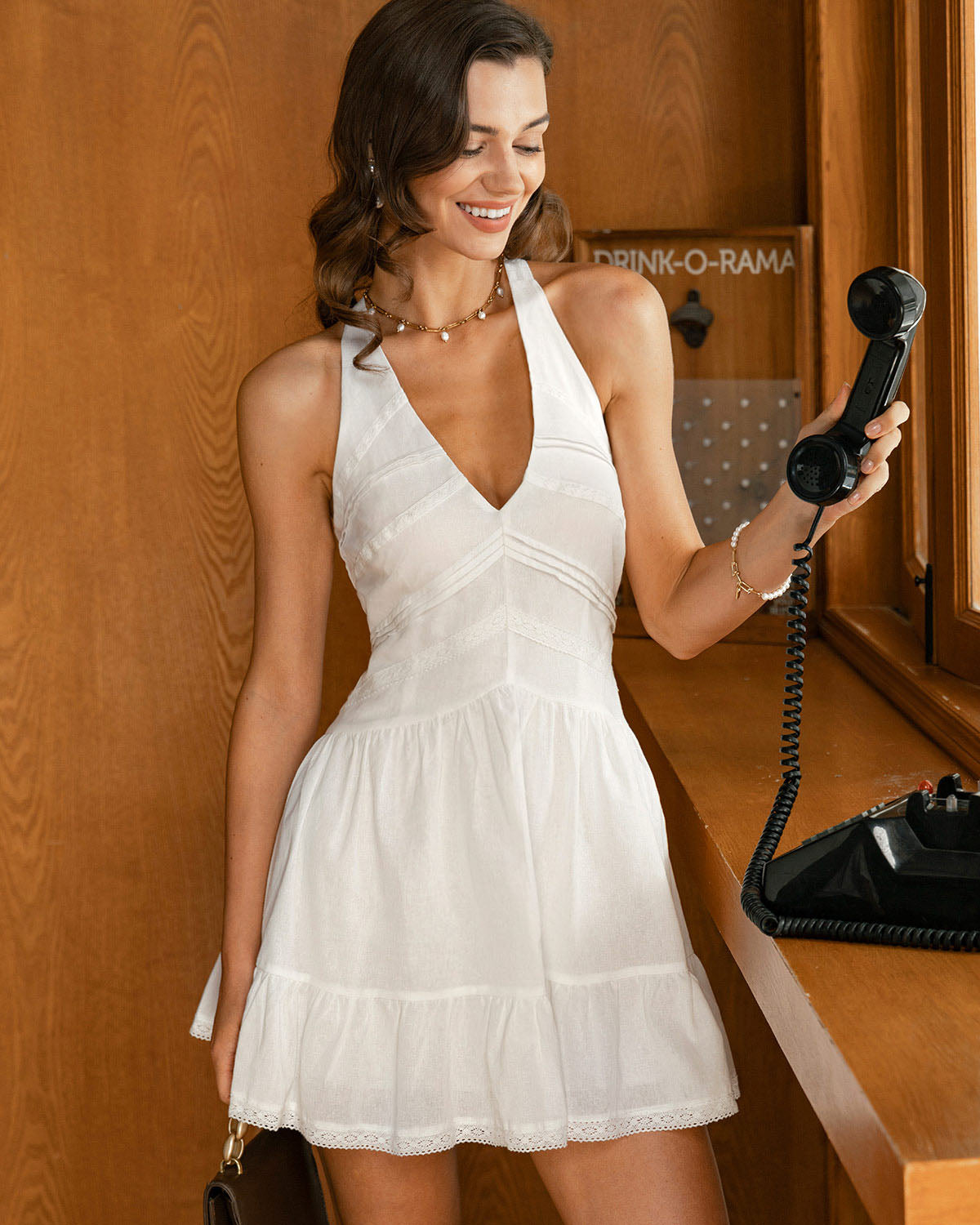
Best for cost-per-wear
A white mini you'll keep wearing
The White V Neck Pleated Backless Mini is the re-wear workhorse: 100% cotton, a natural waist, soft pleats, and a lined skirt that works for homecoming now and graduation, birthdays, and summer events later. It reads more relaxed than satin, which makes it strong for homecoming and slightly casual for a traditional prom.
When to shop for each
Shop homecoming dresses in late summer and prom dresses in late winter, and in both cases the earlier you buy, the better your odds of getting the size and color you actually want. Homecoming lands in September or October, so popular sizes and trending colors start selling out in August — buying early means you get first pick instead of "what's left." Prom runs in spring, so begin looking by late winter to leave room for shipping and any alterations.
Early shopping also buys you the rest of the look. The dress is only one piece — shoes, jewelry, and any tailoring all need coordinating, and doing that the week of the dance is how small problems turn into big ones. If budget matters, off-season browsing is your friend: retailers often mark dresses down well before the rush, so a planner can pay less and stress less at the same time.
Can the same dress work for both homecoming and prom?
One dress can cover both events only if it's a versatile midi in a quality fabric, styled up for prom and down for homecoming — a single short cotton dress won't read formal enough for prom, and a full gown will overwhelm homecoming. A satin or jacquard midi in a jewel tone is the one silhouette flexible enough to bridge the gap: paired with simple flats and minimal jewelry it suits homecoming, and with heels, statement earrings, and a clutch it elevates toward prom. That's the honest middle path if you're trying to buy once.
That said, for most people two dresses serve each night better than one compromise. If the budget only allows one, buy the midi and accept that it will be on the dressier end for homecoming and the simpler end for prom — a deliberate trade-off, not a perfect fit for either. If you can swing two, keep them cheap and re-wearable rather than expensive and single-use.
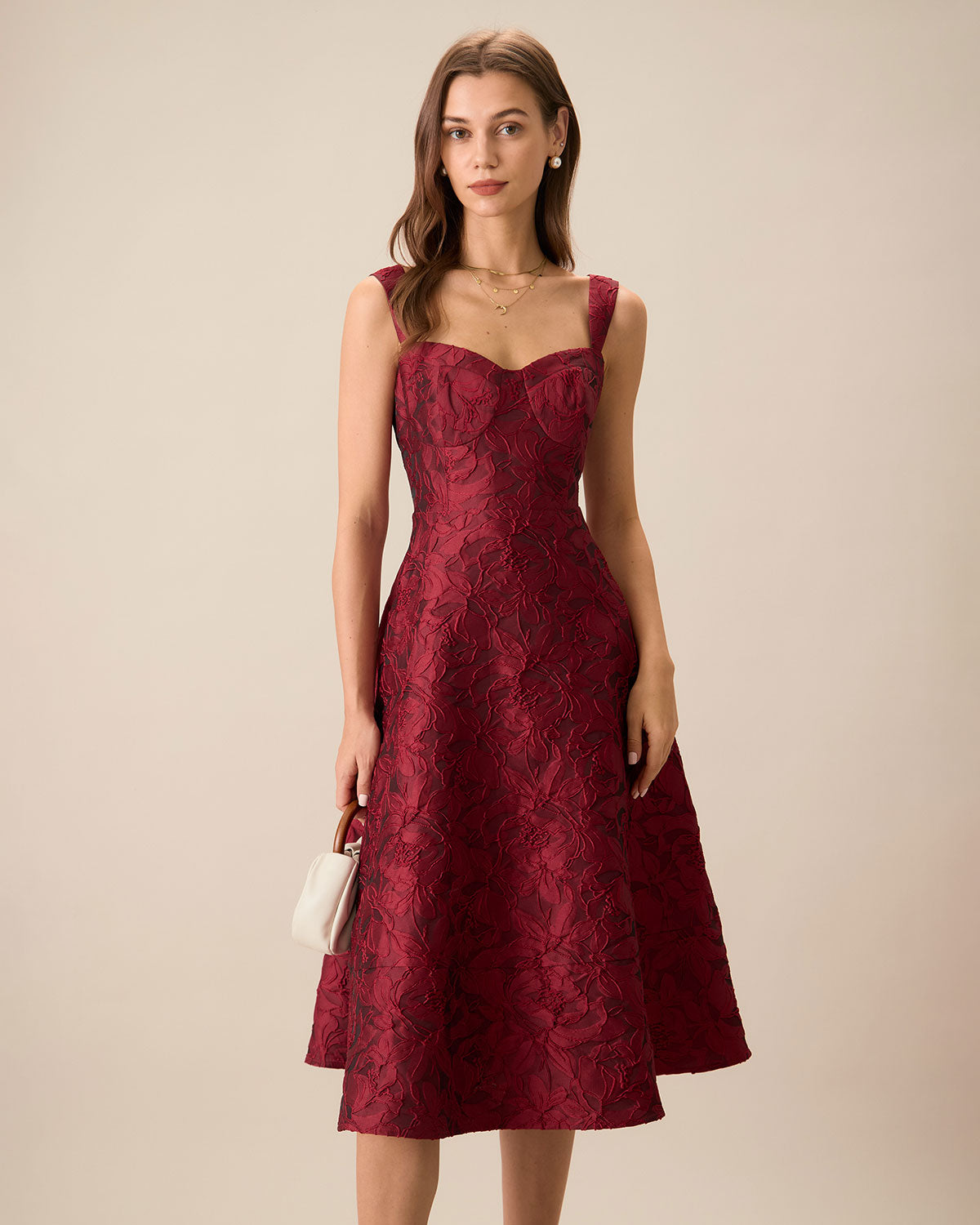
The one-dress bridge
A jacquard midi that styles both ways
The Red Sweetheart Neck Jacquard Midi is the closest thing to a do-both dress: a high-waisted A-line shape, structured jacquard, and a wine-red color that can dress down with flats for homecoming or up with heels for prom. It has no stretch, so the waist seam should sit comfortably before you commit.
Frequently asked questions
Is a homecoming dress shorter than a prom dress?
Yes, in most cases. Homecoming dresses are typically short or mini because the event is semi-formal and dance-focused, while prom dresses are usually floor-length or a polished midi because prom is formal. The length is the quickest visual signal of which event a dress belongs to. Short prom dresses do exist and work when they're in a formal fabric, but the default expectation is long for prom and short for homecoming.
Can I wear a prom dress to homecoming?
Usually not without looking overdressed. A full-length formal gown reads as too much for homecoming's semi-formal, fall-dance setting, where most people are in short dresses. If you want to re-wear a prom dress, a simpler satin or midi style has a better chance of fitting in than an embellished floor-length gown. The reverse — a casual homecoming mini at prom — tends to read underdressed.
What is the dress code difference between homecoming and prom?
Homecoming is semi-formal and prom is formal. Semi-formal means cocktail-level: a short dress, lighter fabric, and a more relaxed feel are appropriate. Formal means the dressiest event of the school year: longer length, structured fabric like satin or lace, and richer color are expected. When you're unsure, match the formality of the fabric and length to the event rather than guessing from the invitation alone.
How much should I spend on a homecoming vs prom dress?
Spend less on homecoming and reserve the bigger budget for prom. A short, re-wearable homecoming dress in the $30–60 range gives you the lowest cost-per-wear because you'll use it again for parties and other events. A prom dress justifies more, but choosing an elevated fabric and color you can re-wear to weddings or formal dinners keeps even the splurge from being single-use.
Are short dresses okay for prom?
Yes, when the fabric and styling are formal. A short dress in satin or with strong tailoring — especially in black or a jewel tone — reads modern and intentional rather than underdressed. Pair it with heels and elevated accessories so the look stays at prom-level formality. If your prom skews traditional, a long dress is still the safer choice.
Final check
Match the dress to the night first
Short and playful for homecoming, long and polished for prom, or a versatile midi that does both — start with the event, then narrow by fabric, color, and how often you'll realistically wear it again.


