
What to Wear a Button-Down Dress With — Real Rules for Every Occasion
RIHOAS Edit · Updated 2026 · 8 min read
A button-down dress is the rare piece that handles a Monday meeting, a Friday dinner, and a Sunday wedding without needing a different silhouette for each one. What changes is the styling — the neckline opening, the shoe weight, the number of buttons left undone, and whether you add a belt. Most styling guides skip those details and tell you the dress is "versatile." This one gives you the actual rules.
How to Pick the Right Button-Down Silhouette for Your Body Type
The buttons themselves are the styling feature — they create a vertical line down the front that lengthens the torso and lets you adjust the neckline opening to your shape. The silhouette around those buttons is what changes by body type.
If you have an hourglass shape, a fitted shirt dress with a defined waist seam works best because the waist seam catches the narrowest point of your torso. Skip belted-over-loose styles — they hide the curve you'd otherwise emphasize.
If you carry weight through the hips and thighs, an A-line button-down with the skirt flaring from the natural waist gives you room through the hip without adding bulk. The skirt should fall in a clean line from the hip, not gather or pleat at the widest point.
If you carry weight through the midsection, a shift-cut or empire-waist button-down skims the stomach instead of cinching it. Look for a dress where the bodice ends just under the bust and the skirt falls straight, not where a waist seam sits at your natural waist.
If you're petite (under 5'4"), a midi dress that ends at the narrowest point of your calf — usually 4–5 inches below the knee — is the most flattering length because it doesn't visually cut your leg in half. The vertical button line adds extra elongation; if you are choosing mainly by length, start with the broader midi dresses edit before narrowing by neckline or sleeve.
If you're tall (5'8" and over), a maxi-length button-down handles your proportions better than a midi, which can land at an awkward mid-calf point. Look for a maxi that hits within 2 inches of the floor when you're wearing flats.
Button-Down Dresses for Work
For a corporate office, a knee-length button-down in navy, black, or charcoal is the safest choice because it reads as "tailored separates" without needing a separate top and bottom. If your dress code is stricter than business casual, compare the shape against RIHOAS officewear pieces: clean collars, tonal buttons, and structured waistlines usually read more professional. The buttons should be the same color as the fabric or one tone deeper — contrasting buttons (white on navy, gold on black) drop the dress into casual territory.
Leave the top two buttons undone and no more. Three is a date-night opening; one is too closed and looks juvenile. If you have a meeting where you'll sit across from a camera or interviewer, button up to leave only one undone — the camera frames a tighter crop than you think.
For business casual Fridays, the same dress works in softer colors (sage, dusty rose, taupe). Swap the structured blazer for a longline cardigan and the pointed-toe heels for block-heel loafers. The mistake is going too casual on the shoes — sneakers with a button-down dress at work signal that you don't take the dress code seriously, even on Friday.
Office pick
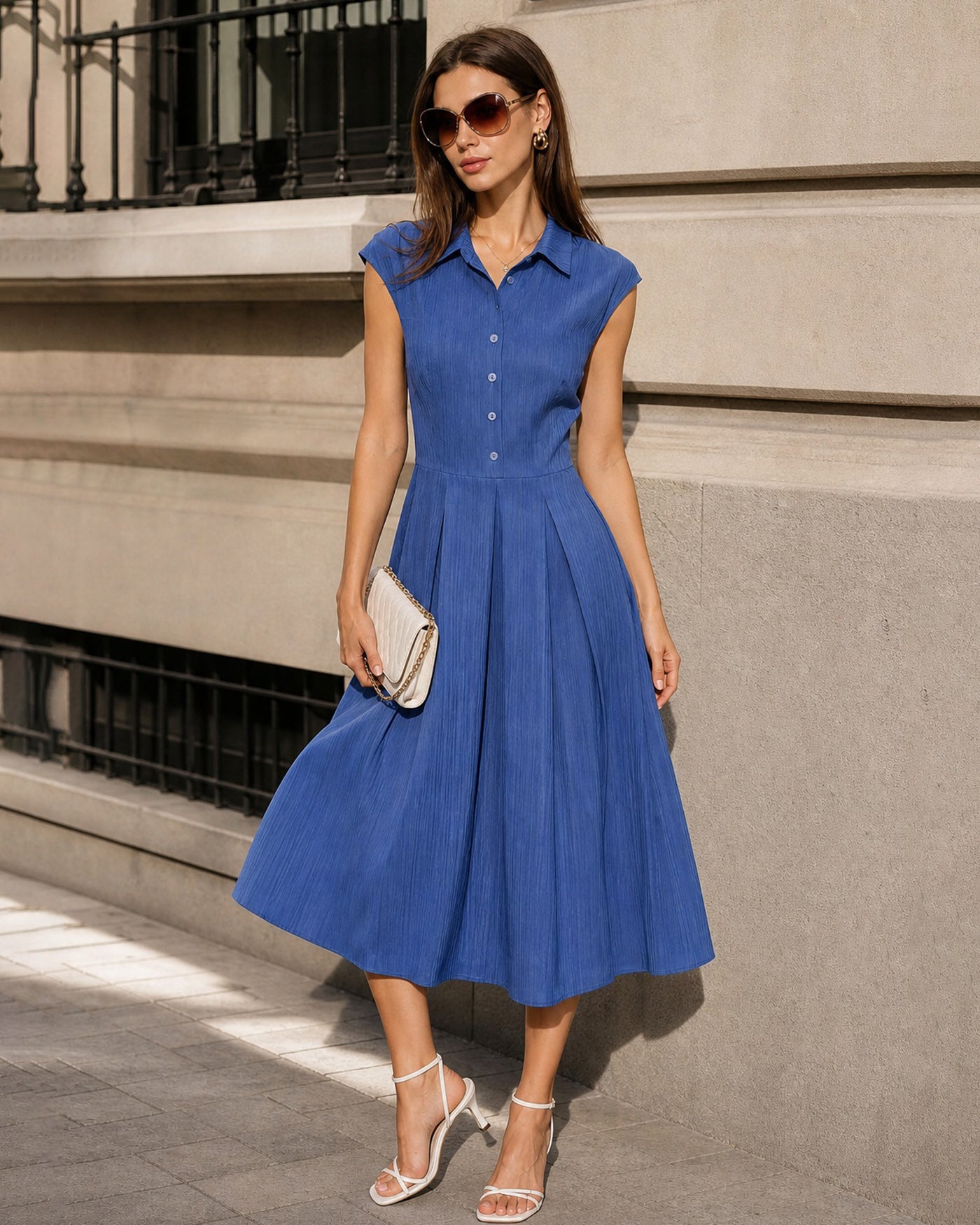
Blue Collar Button Button Midi Dress
The collared neckline and button-front detail make this the cleanest match for office styling. Its A-line midi shape keeps the dress structured without feeling stiff, while the blue tone is softer than black but still polished enough for meetings. Pair it with pointed-toe pumps, low block heels, or loafers.
Button-Down Dresses for Date Night
For dinner or drinks, a button-down dress beats most "going-out" dresses because you control how much skin shows by adjusting the buttons. The rule: leave three buttons undone from the top, and one from the bottom if the skirt has a long button placket. Three top buttons creates a deep V-line that draws the eye up to your face under restaurant lighting; the bottom button adds movement when you cross your legs.
Jewel tones — burgundy, emerald, navy, deep teal — photograph better than black for indoor evening light because they pick up color from candles and warm bulbs without going washed-out. Pure black absorbs all the warm light and can read flat in photos.
Heels under three inches with a thicker block or wedge silhouette are the better choice over thin stilettos for any date that involves walking from a car to the restaurant or standing at a bar. Stilettos that hurt by the second drink end the night an hour early.
Dinner date pick
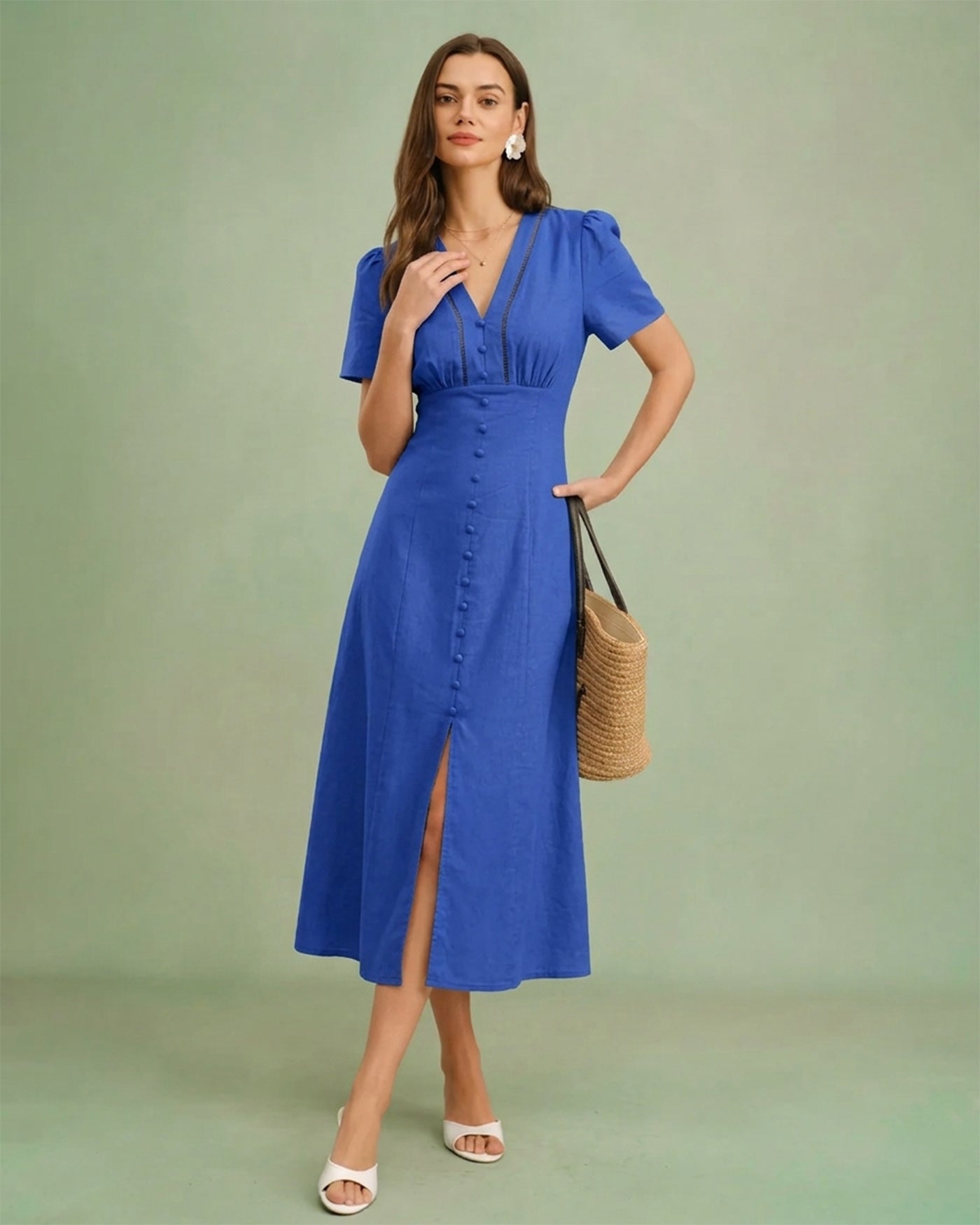
Blue V Neck A-Line Button Midi Dress
The V neckline already creates the evening shape this section recommends, so you do not need to force a deeper opening. The button front gives movement through the skirt, and the blue tone photographs softer than flat black under warm restaurant light.
Button-Down Dresses for Weekend Brunch & Errands
For weekend wear, the right button-down dress saves you from the leggings-and-t-shirt trap without requiring real effort. A printed midi in polka dot, ditsy floral, or gingham reads as "put together" at brunch even when you're wearing flat sandals or canvas sneakers underneath. If you want the print to do most of the styling work, polka dot dresses are the easiest category to keep casual without looking plain.
Leave only the top button undone here — weekend looks photograph better as relaxed-but-modest, not chest-forward. A denim jacket or oversized cardigan layered on top covers the placket and turns the dress into a skirt-and-top illusion, which is useful when you want a different look from the same dress later in the week.
For errands and grocery runs, choose cotton or cotton-blend fabrics over synthetic blends. Cotton wrinkles less obviously in car seats and handles a coffee spill without staining like polyester does.
Brunch & weekend pick
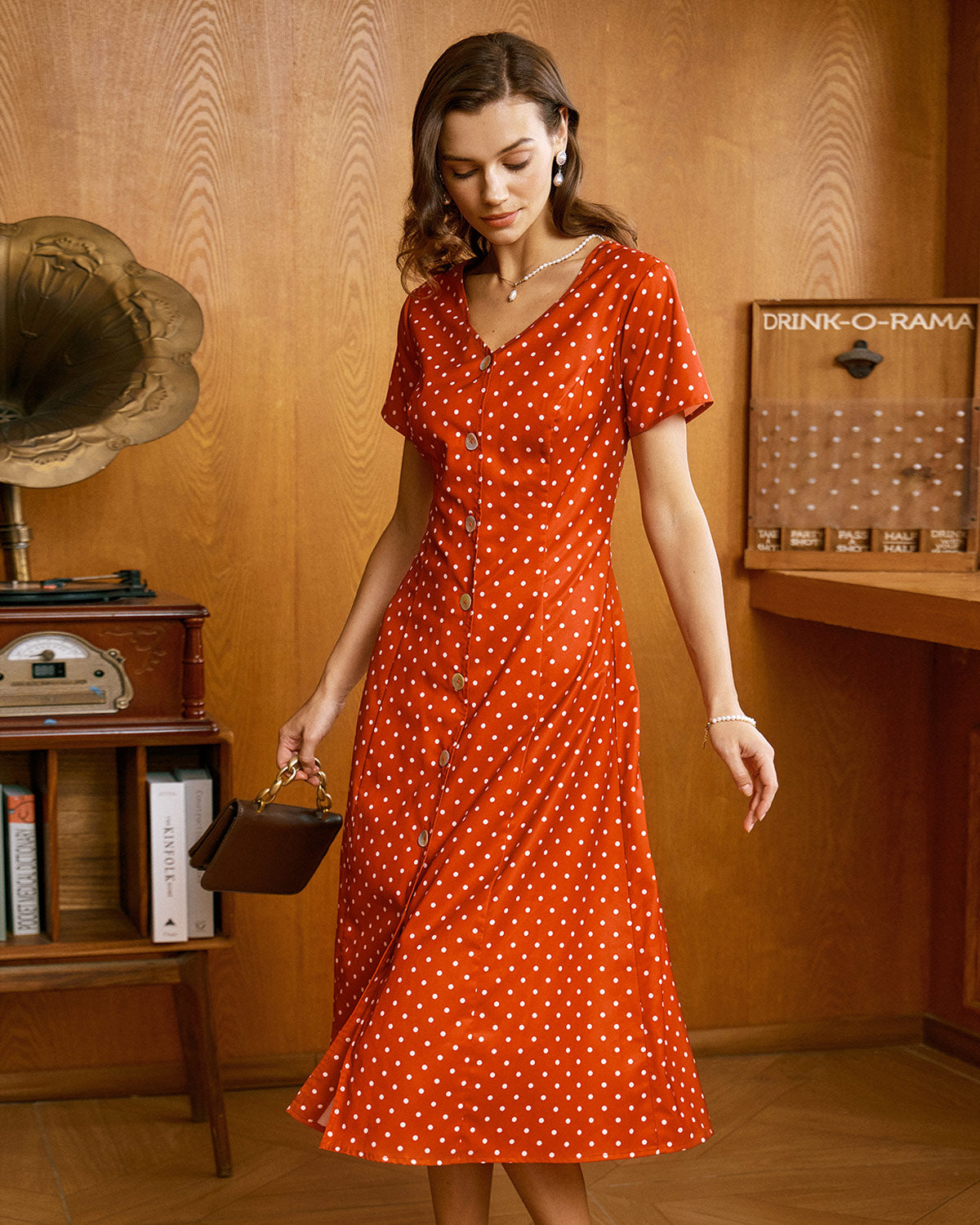
Red Polka Dot Button Midi Dress
A small polka-dot print does the styling work for brunch, errands, and casual photos. The button-down front fits the article topic directly, while the A-line midi shape is easy to wear with flat sandals, canvas sneakers, or espadrilles.
Button-Down Dresses for Wedding Guests & Formal Events
For a wedding guest outfit, a button-down floral midi is one of the most reliable choices because it reads as celebratory without competing with the bridal party. For a wider edit that matches dress codes and venues, browse wedding guest dresses first, then return to button-front details once the formality is clear. The non-negotiable rules: no white, ivory, cream, or champagne (those are the bride's), and no all-black for daytime ceremonies (it reads as funeral wear in outdoor light).
Stick to small-to-medium floral prints in colors that include the season — sage green, dusty pink, terracotta, or cornflower blue work across spring and summer ceremonies. For fall and winter weddings, deeper jewel tones (burgundy, emerald, plum) photograph better than pastels in low light.
The neckline opening should be one button undone, not two. Wedding photos catch you at unflattering angles — bending to hug, leaning to talk — and a deeper opening can show more than you'd want in a photo that ends up on someone else's Instagram. A midi length is the safest because it handles grass at outdoor venues and reads as formal-enough indoors.
Wedding guest pick
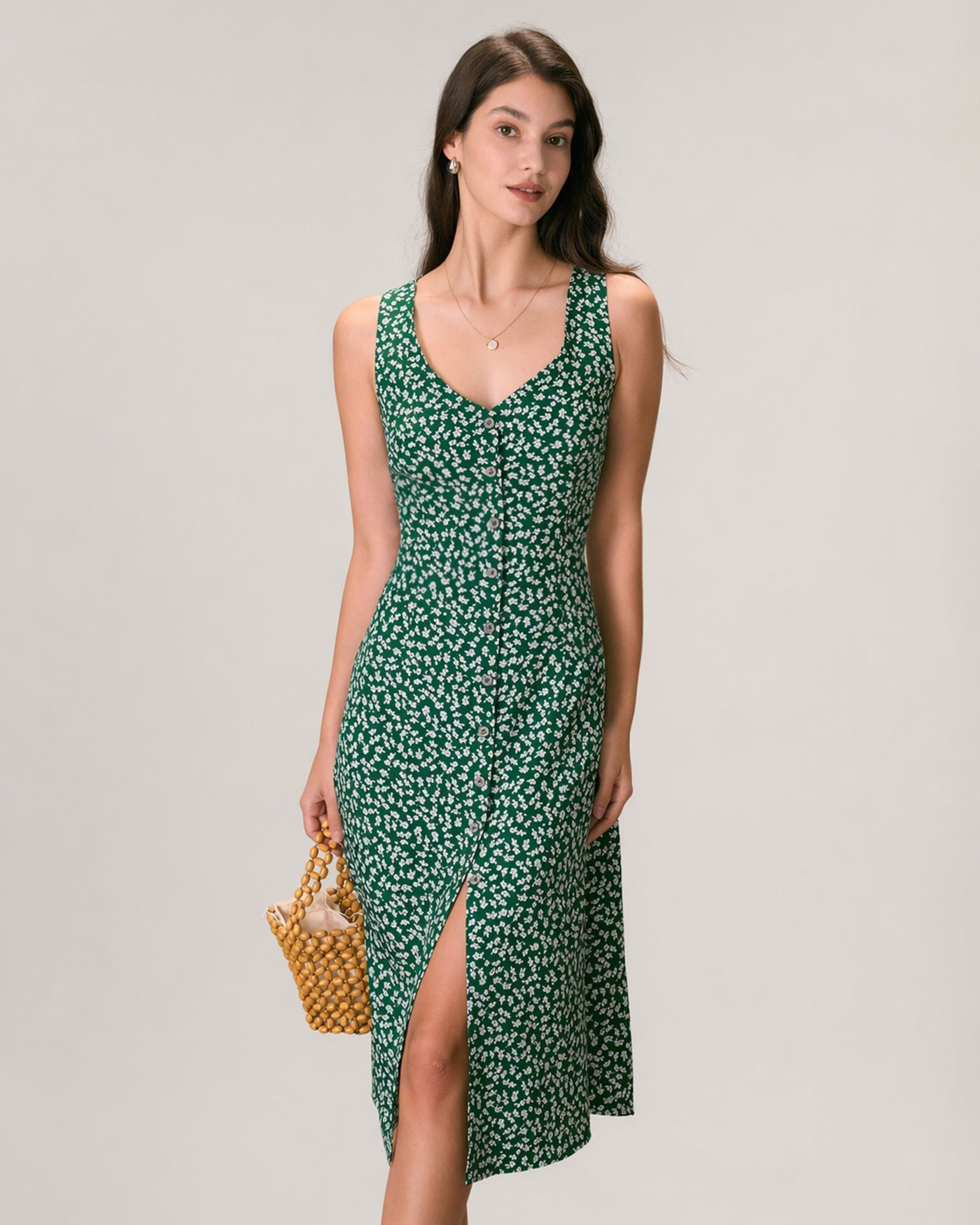
The Green V Neck Floral Button Midi Dress
This is a closer match than the old collection link because it is both floral and button-front. The green base works for garden, spring, summer, and early-fall ceremonies, while the midi length stays practical for grass, stairs, and dancing.
Button-Down Dresses for Summer Heat
For summer above 80°F, a cotton or linen button-down dress beats every other silhouette because the buttons let you open the neckline for airflow and the cut keeps fabric off your legs. Avoid polyester and rayon blends — they trap heat against the skin and show sweat marks under the arms within an hour.
Lighter colors (cream, beige, khaki, soft sage) reflect sunlight; dark navy and black absorb it and run hot on long outdoor days. The trade-off is that light colors show more sweat through the underarm area, so if you're prone to underarm marks, a printed light-color dress (small floral on cream, polka dot on beige) hides the issue better than a solid.
For beach or pool cover-ups, a longer button-down dress in cotton gauze or lightweight linen works as both a dress and a coverup — unbutton fully and wear it open over a swimsuit, then button up over the suit for lunch. This is one of the few summer purchases that earns its closet space twice.
Summer pick
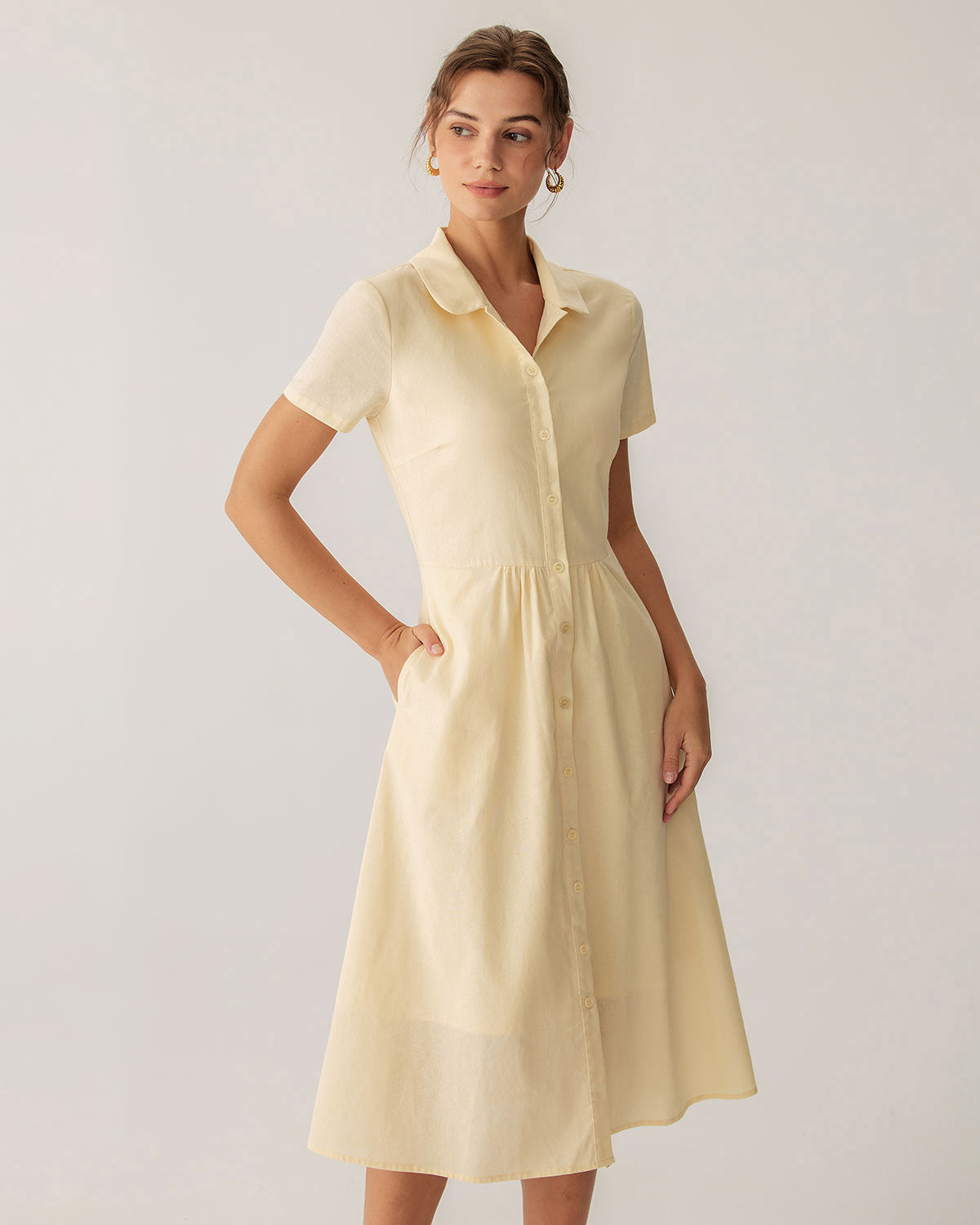
Yellow Button Short Sleeve Midi Dress
This replaces the old round-neck khaki pick because it is actually button-front and uses a cotton-linen blend, which fits the summer-heat angle more naturally. The short sleeves, midi length, and pockets keep it useful for warm-weather workdays, travel days, and outdoor lunches.
How to Style a Button-Down Dress Without Overdoing It
The most common styling mistakes with button-down dresses come from treating the buttons themselves as decoration instead of as styling controls. The buttons are the dress's main feature — every other accessory should serve them, not compete.
The button rule. One button undone reads as conservative; two reads as polished casual; three reads as date-night; four or more starts to show too much. Match the opening to the occasion, not to your mood that morning. The hem rule is simpler: leave the bottom button undone if the dress falls below the knee — it creates a small slit for walking and keeps the skirt from straining when you sit.
The belt rule. A button-down dress already has a vertical line from the buttons. Adding a wide belt at the natural waist cuts that line in half visually and shortens the torso. Either skip the belt and let the buttons carry the styling, or use a thin belt (under 1 inch) in a color that matches the buttons, not the dress.
The shoe rule. Heavy shoes (combat boots, chunky loafers) with a light, drapey button-down dress create a visual mismatch. The dress falls in vertical lines from the shoulder; heavy shoes anchor the eye at the floor and make the whole outfit feel bottom-heavy. Match the shoe weight to the dress weight — block heels for midweight fabrics, sandals or canvas sneakers for light fabrics, boots only with structured cotton or denim button-downs.
Color pairings that photograph well
Color coordination with a button-down dress is mostly about avoiding the trap of too many tones. Pick the dress color first, then accessorize within two adjacent color families.
Color pairings by dress base
Four reliable combinations
Black button-down dress
Pair with gold accessories (warm tones lift black under artificial light) and either pure white or a single jewel tone in the bag or shoe. Avoid silver — it can read cold against black in indoor lighting.
Navy button-down dress
Pair with cognac or tan leather (the warm brown softens navy's coolness) and white or cream as a secondary accent. Skip black shoes with navy — the two compete instead of layering.
Beige or khaki button-down dress
Pair with one bolder accent (terracotta, olive, deep red) and keep everything else neutral. Beige needs at least one anchor color or the whole outfit washes out in photos.
Floral or printed button-down dress
Pull accessories from the smallest accent color in the print, not the dominant one. If the print is mostly green with small pink flowers, pink shoes will look more intentional than green ones.
Frequently Asked Questions
How many buttons should I leave undone on a button-down dress?
Leave one button undone for work or any conservative setting, two for casual daytime, and three for date night or evening events. Four or more starts to show too much chest for most public settings. If the dress hits below the knee, leave the bottom button undone as well to allow movement when walking and sitting.
Are button-down dresses appropriate for weddings?
Yes, a button-down midi in a floral or jewel-tone print is one of the most reliable wedding-guest choices because it reads as celebratory without being attention-seeking. Avoid white, ivory, cream, or champagne (reserved for the bride) and avoid all-black for daytime ceremonies. A small floral print in sage green, dusty pink, or terracotta works across most spring and summer venues.
Can I wear a button-down dress to the office?
A knee-length button-down dress in navy, black, or charcoal is appropriate for most corporate offices when paired with closed-toe heels or block-heel loafers. Keep the top one or two buttons undone — not three — and choose tonal buttons (same color as the fabric) rather than contrasting ones. A structured blazer layered on top handles formal meetings.
What body type looks best in a button-down dress?
Button-down dresses work for every body type when you match the silhouette correctly. Hourglass shapes look best in fitted shirt dresses with defined waists, pear shapes in A-line cuts that flare from the natural waist, apple shapes in shift or empire-waist cuts that skim the midsection, petite frames in midi lengths that end at the narrowest part of the calf, and tall figures in maxi lengths that fall close to the floor.
What shoes go with a button-down dress?
Match the shoe weight to the fabric weight. Light cotton or linen button-down dresses pair best with sandals, espadrilles, or canvas sneakers. Midweight cotton blends work with block-heel pumps, mules, or loafers. Structured cotton or denim button-downs can handle ankle boots or chunky loafers. Avoid heavy combat boots with drapey fabric — the proportions clash in photos.
Can a button-down dress work as a swim cover-up?
A longer button-down dress in cotton gauze or lightweight linen works as a beach or pool cover-up when worn fully unbuttoned and open over a swimsuit. Then button it up over the suit for lunch or a walk to the car. This dual function is one of the few legitimate two-uses-from-one-piece propositions in summer wardrobes — but only with breathable, non-cling natural fibers.
How do I keep a button-down dress from gaping at the chest?
Chest gaping happens when the button placement doesn't match where your bust sits. The fix is a small piece of double-sided fashion tape between the buttons at the bust line, or sewing a hidden snap between the two buttons that bracket the bust. If you're between sizes, size up and have the waist taken in by a tailor rather than choosing the smaller size and dealing with gape.
More outfit inspiration
Planning another wedding-weekend look?
A button-down midi can work for the ceremony, but the rehearsal dinner usually asks for a slightly different level of polish. Use the next guide to match the outfit to your role, venue, and dress code.


