

The single decision that makes a dress read as black tie is its length. Get the hemline right and a simple satin gown can pass at a gala; get it wrong and even a beautiful dress can feel like it belongs to a different dress code. This guide answers the practical question - how long should a formal dress be for black tie - and gives you clear rules for judging the hem on your own body, in the shoes you will actually wear.
How long should a black-tie dress be? The quick answer
For a traditional black-tie event, a floor-length gown is the safest and most formal choice. The hem should skim the floor or sit just above it when you are standing in your event heels. Ankle-length is a modern, widely accepted alternative, especially for venues with stairs, dancing, or outdoor ground. Midi and tea-length dresses only belong at events clearly marked black-tie optional. Anything above the knee is not appropriate for true black tie.
The reason length matters so much is that black tie is an evening dress code built around a long, uninterrupted line. A floor-sweeping hem reads deliberate and formal; a short hem reads cocktail, even when the fabric is expensive. When in doubt, go longer. If you want to browse within the right lane first, start with black-tie dresses before narrowing by fabric, color, and heel height.
Length cheat sheet
Which black-tie dress length fits your event
| Length | Formality | Best for | Skip it if |
|---|---|---|---|
| Floor-length | Highest | Any black-tie event, gala, formal wedding, awards night | Never - this is the default |
| Ankle-length | High | Modern black tie, stairs, dancing, taller guests | The event is very traditional |
| Full-length with slit | High | Fashion-forward black tie, easier walking and dancing | The slit rises too high when seated |
| Midi / tea-length | Conditional | Black-tie optional, daytime formal, cocktail-formal events | The invite says plain black tie |
| Above the knee | Too casual | Cocktail or semi-formal events | Almost every true black-tie event |
Floor-length: the traditional black-tie standard
Floor-length is the standard because it satisfies every version of the dress code, from the strictest gala to a formal evening wedding. If you only own one black-tie dress, make it long. It also photographs well: a clean line from neckline to hem makes the whole look feel composed under evening lighting.
The detail most guests get wrong is the exact hem position. A correct floor-length hem should skim the floor or hover about half an inch above it in your event shoes. If it drags, it becomes a tripping hazard; if it stops above the ankle bone, it is no longer a true floor-length gown. Try the dress with your actual heels before judging the fit, because two inches of heel changes the whole proportion.
For modern black tie, a long satin or polished woven dress in a deep tone does the most work with the least styling. Black, navy, wine, and deep green look formal under low light. If you are choosing by finish, satin dresses are an easy place to start because the fabric naturally reads evening.
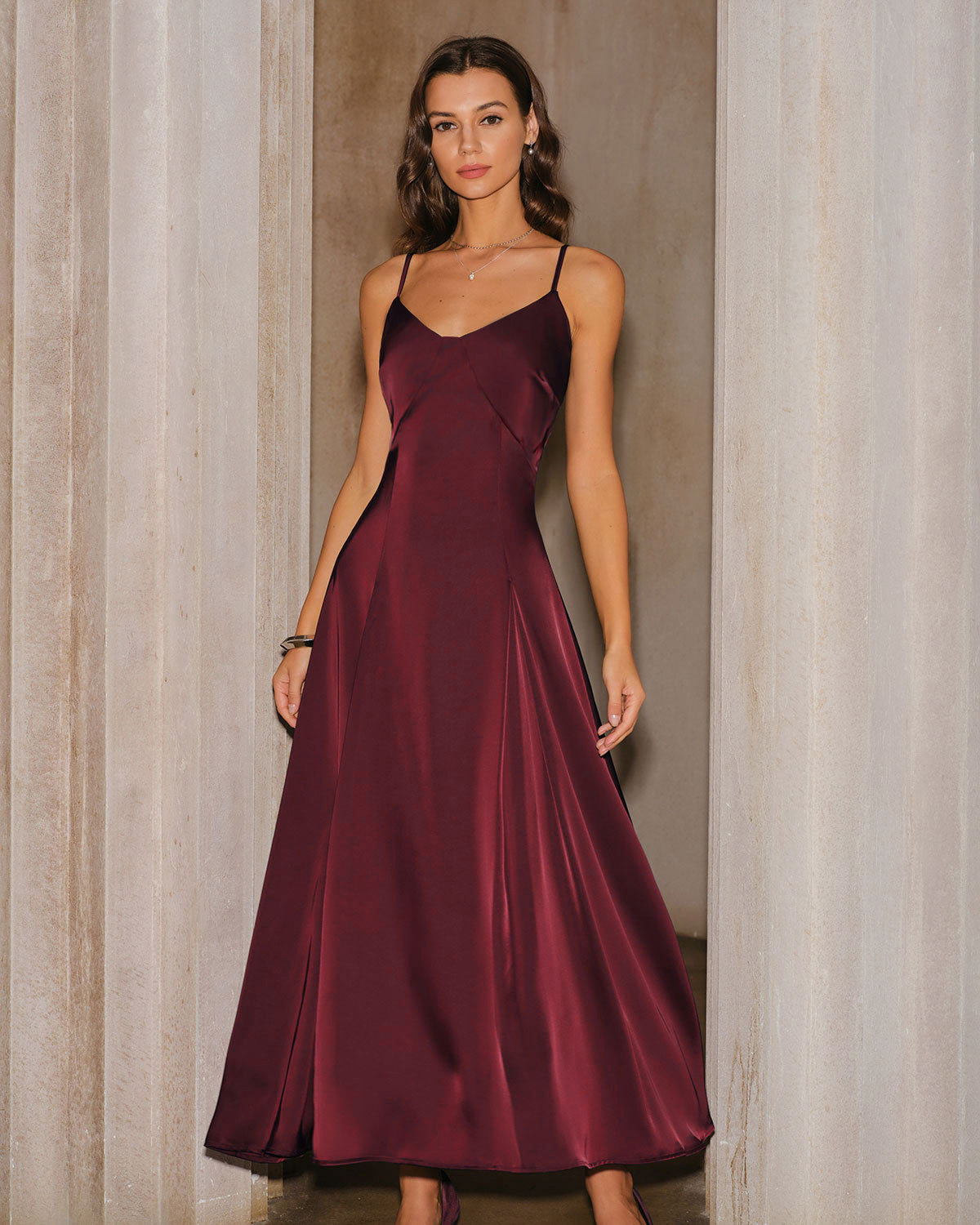
Floor-length pick
A wine satin maxi with a clean evening line
The Wine Red Satin A-Line Slip Maxi Dress fits the most traditional black-tie brief: a long A-line silhouette, deep wine color, and smooth satin finish. The product page lists a polyester body with lining, no stretch, a natural waist, and a zipper closure, so the shape stays polished rather than casual.
Ankle-length: the modern black-tie length
An ankle-length dress, with a hem that ends at or just above the ankle bone, is accepted at many modern black-tie events. It is especially useful when the venue has stairs, a long reception, grass, or a real dance floor. The key is that the dress still needs to look like eveningwear: formal fabric, refined neckline, clean shoes, and minimal daytime styling.
The line between elegant ankle-length and simply too short comes down to finish. Ankle-length works in satin, velvet, crepe, chiffon, jacquard, or another formal fabric. It does not work in casual cotton or jersey for an evening black-tie event. If the dress has a polished shape and the hem lands cleanly at the ankle, it can be the more practical choice without looking underdressed.
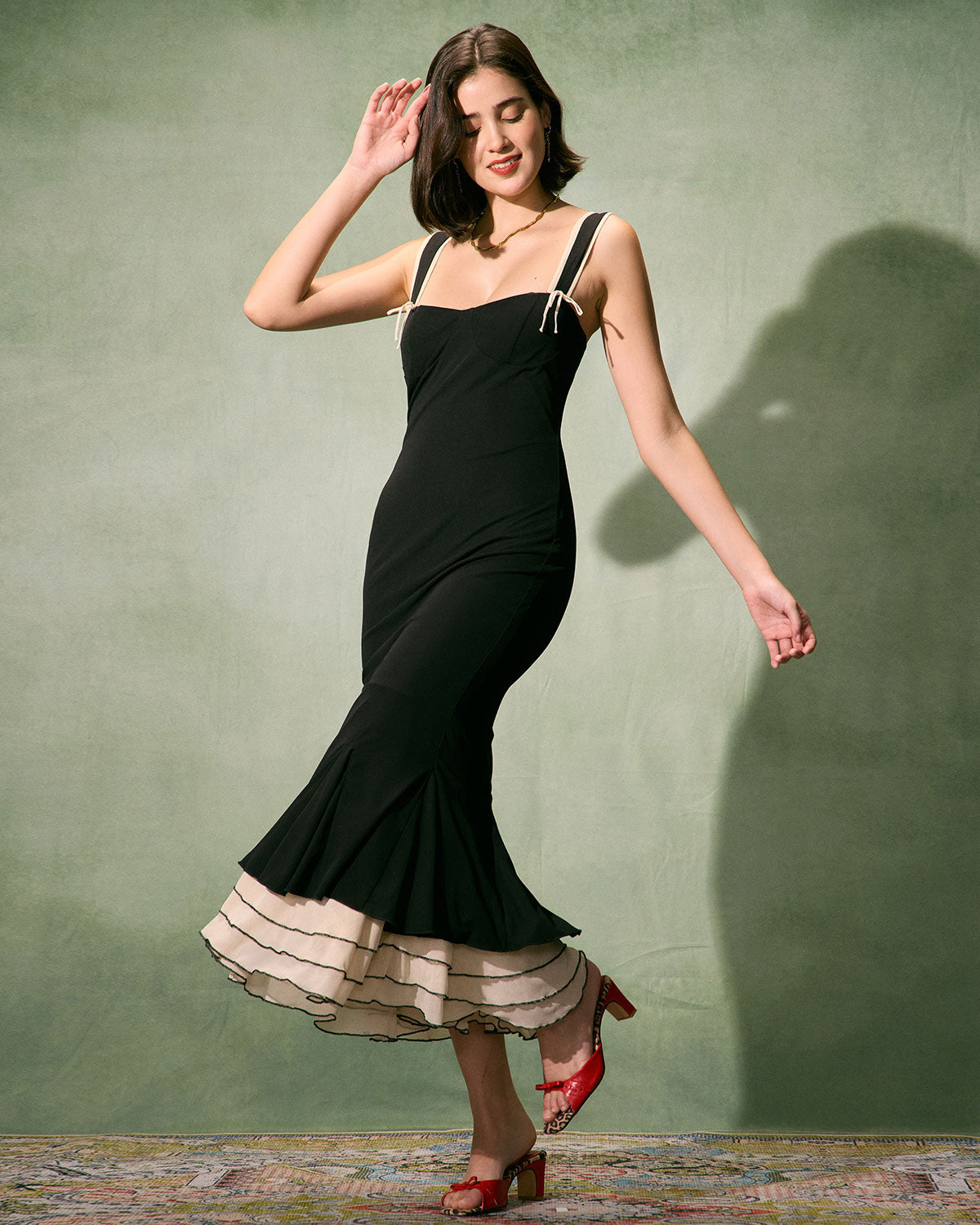
Modern black-tie pick
A black trumpet dress for a cleaner long hem
The Black Sweetheart Neck Bodycon Slip Maxi Dress is best for modern black tie rather than the strictest gala. Its page lists a sweetheart neckline, high waist, trumpet silhouette, medium-stretch polyester-spandex fabric, and lining. The black color and long shape keep it formal, while the closer fit makes it easier to move in than a sweeping gown.
High-slit full-length gowns: drama that stays formal
A slit does not make a long dress less formal. A high-slit gown can still be black-tie appropriate if the overall hem stays floor-length or ankle-length and the slit remains controlled when you walk and sit. The length keeps the formality; the slit simply makes the dress easier to manage on stairs and the dance floor.
The practical rule is simple: sit in the dress before the event. If the slit stays composed when seated, it is formal enough. If it pulls open or rises too high, it belongs in a different setting. Chiffon and other light fabrics move more than satin or jacquard, so fit and lining matter.
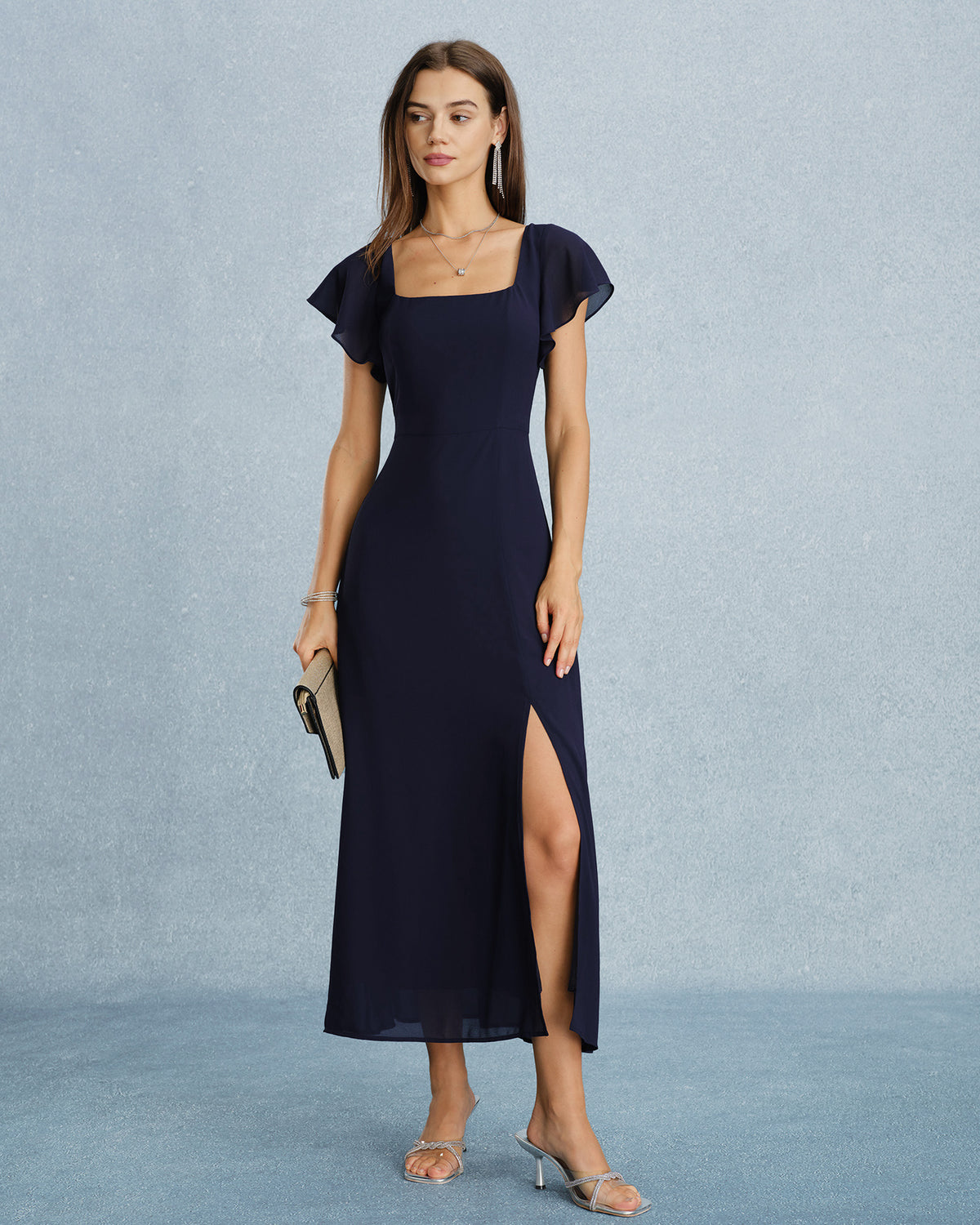
Slit gown pick
A navy chiffon maxi with movement
The Navy Square Neck Slit Chiffon Maxi Dress keeps the long formal line while the side slit adds movement. The RIHOAS page lists a square neckline, A-line shape, no stretch, polyester chiffon, lining, zipper, tie detail, and an open-back design. Navy keeps the look evening-appropriate without feeling as severe as black.
Midi and tea-length: only when the invite says black-tie optional
Midi and tea-length dresses sit below the knee but above the ankle, and they are not traditional black-tie lengths. They are only safe when the invitation says black-tie optional, or when the event is daytime formal rather than a strict evening gala. The deciding factor is the wording on the invitation, not how much you like the dress.
When a midi is allowed, make it look intentional with fabric and styling. Jacquard, satin, lace, or a structured woven fabric can lift a midi into formal territory when paired with heels and a refined clutch. The same length in a casual daytime fabric will not do the job. If you are unsure how to interpret the invitation, the broader black-tie gown guide walks through the dress code in more detail.
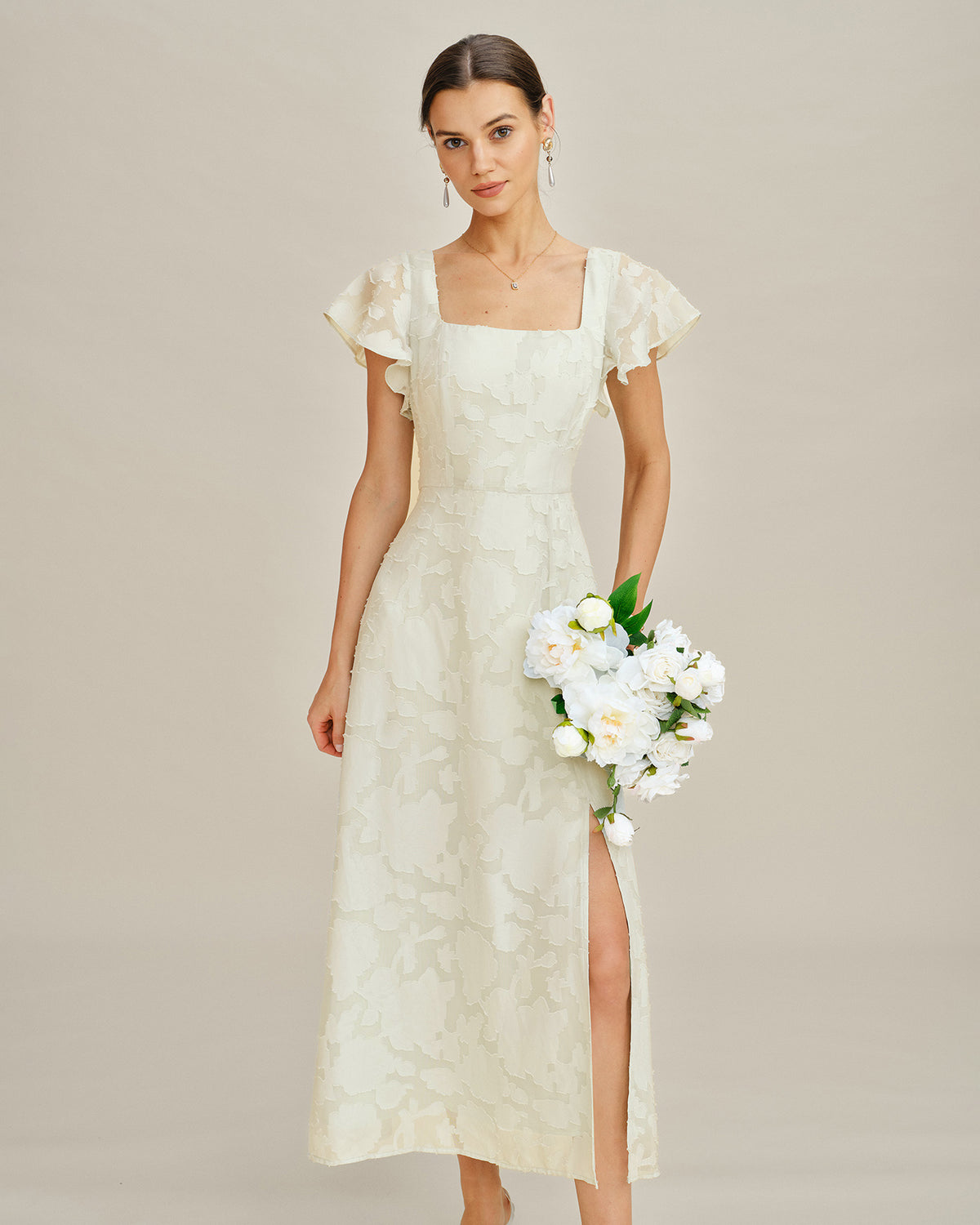
Black-tie optional pick
A jacquard midi for the in-between dress code
The Beige Square Neck Jacquard Midi Dress belongs in the optional lane, not at a strict evening gala. Its product page lists a jacquard finish, square neckline, short sleeves, natural waist, no stretch, polyester shell, and lining. The texture gives it more ceremony presence than a plain day dress, especially with heels and a small clutch.
Short and above-the-knee dresses: when they do not work
A dress that ends above the knee is not black-tie appropriate. A mini or short cocktail dress will read as semi-formal at most, regardless of the fabric, heels, or jewelry. If your event turns out to be cocktail rather than black tie, that is a different dress code. In that case, cocktail dresses are the right category instead of forcing a short dress to do black-tie work.
How to match black-tie dress length to your height
Most length advice ignores the variable that changes everything: your height. The same maxi can land as floor-length on one guest and ankle-length on another, so judge the hem on your body in your event shoes. Both floor-length and ankle-length can work for black tie; you simply need to know which one you are getting.
If you are petite, a floor-length maxi may need hemming so it skims instead of pools. A pooling hem shortens the line and creates a practical problem when you walk. If you are tall, many maxis will land at the ankle, which can look clean and intentional. For more long options to compare by silhouette, use maxi dresses as the length-first category.
How dress length should work with your heels
Length and heel height are one decision. Choose your shoes first, then judge the hem in those shoes. A floor-length gown should skim or hover just above the floor, while an ankle-length dress should reveal the ankle cleanly without looking cropped by accident. A low-to-mid block heel is often the most practical option for standing, dancing, and walking across uneven ground.
If you plan to wear flats or low heels, size toward ankle-length or have the dress hemmed precisely. A gown cut for three-inch heels will drag in flats. Do not switch shoe heights during the event unless the hem works with both pairs; otherwise the dress will either pool or suddenly look too short.
Frequently asked questions
Does a black-tie dress have to be floor-length?
No, but floor-length is the safest choice and the only length that works at every black-tie event. Ankle-length is widely accepted at modern black-tie occasions, especially in a formal fabric. Midi and shorter lengths are only appropriate when the invitation specifically says black-tie optional.
How far off the floor should a black-tie gown sit?
A floor-length black-tie gown should skim the floor or sit about half an inch above it in your event heels. That clearance keeps the hem from dragging while still reading as a true long gown. Always check the hem in your event shoes.
Can I wear an ankle-length dress to black tie?
Yes. Ankle-length is accepted at many modern black-tie events and is often more practical for stairs, dancing, and outdoor venues. Keep it in a formal fabric and pair it with refined shoes and accessories so the shorter hem still reads as eveningwear.
Is a high slit okay for a black-tie event?
Yes, as long as the dress is still long and the slit stays controlled when you sit and walk. A slit on a floor-length or ankle-length gown can be black-tie appropriate because it adds movement without changing the formal hemline.
What length should I choose if I am petite?
Petite guests usually look best in a fitted floor-length dress that has been hemmed to skim the floor, or in a clean ankle-length style. Avoid letting extra fabric pool heavily, because it shortens the vertical line and makes walking harder.
What if I am tall and most maxis hit at my ankle?
That can still work. Ankle-length is a correct and flattering modern black-tie length when the fabric and styling are formal. If you specifically want a sweeping floor hem, check the garment length and model height carefully before choosing.
Can I wear a midi dress to a black-tie wedding?
Only if the invitation says black-tie optional or the event is daytime formal. For a strict evening black-tie wedding, a midi will usually read underdressed. If a midi is allowed, choose a structured formal fabric and style it with heels and polished accessories.
What dress length is too short for black tie?
Anything above the knee is too short for black tie. Mini and short cocktail-length hems belong to cocktail, semi-formal, or party dress codes, not a true black-tie evening event.
Final length check
Let the invitation decide the hem
Plain black tie means long first: floor-length for the safest answer, ankle-length for a modern but still formal one. Midi only belongs in the optional lane, and anything above the knee should be saved for cocktail events.


