

If Kibbe body types still feel confusing after reading a few guides, the problem is usually not you. It is the way most beginner articles explain the system.
Most people start in the wrong place. They jump straight into all 13 Kibbe body types, focus too much on weight or body measurements, and end up treating Kibbe like a body-shape quiz. That is why so many readers still cannot tell where they fit.
A better way to understand Kibbe body types is to stop chasing the perfect label first. Start with your dominant line instead: do you read as long, broad, balanced, compact, or soft? Once that part is clearer, the 13 types become much easier to sort through.
Kibbe is not the same as a standard body-shape system. People search for "Kibbe body types," but the framework is more accurately described as Image Identity: a way of understanding your overall line, balance, and visual impression—not just your bust, waist, and hips.
This guide takes the useful route: what Kibbe body types actually are, why they get confused with body shape, how to narrow down from 13 types to a shortlist that makes sense for you, and how to use Kibbe lines when shopping for dresses, necklines, and layers.

Why Kibbe Body Types Feel So Confusing at First
The biggest mistake beginner guides make is acting like more detail always helps. It does not. If you are new to Kibbe, 13 categories are not clarity. They are noise. Most readers do not need more descriptions. They need a better starting point.
Another reason Kibbe feels confusing is that it gets flattened into "body type" content. That makes people think they are looking for a simple shape label, when the system is actually trying to describe overall line and image. Once Kibbe gets reduced to bust-waist-hip logic, the whole thing starts to wobble.
There is also a practical problem: many people try to type themselves from isolated traits—a soft waist, broad shoulders, a sharp jawline. But Kibbe is not meant to work as a checklist of random features. It works better when you step back and ask what shows up first in the whole picture.
The shift that helps most beginners is simple: stop looking for one trait that proves your type. Start looking for the line that keeps repeating across your whole frame.
Kibbe Body Types Are Not the Same as Body Shape

This needs to be said plainly: Kibbe and body shape are not the same system.
Body-shape advice usually focuses on proportion and measurement. Are your hips wider than your shoulders? Is your waist strongly defined? That kind of guide can be useful, and RIHOAS already has a body-shape article built around that logic.
Kibbe is asking a different question. It looks at how your frame reads overall. Do you come across as long and sharp? Broad and open? Balanced and moderate? Compact and high-contrast? Soft and rounded? Body shape helps with fit and proportion. Kibbe helps explain why the same dress looks polished on one person, flat on another, and too rigid on someone else.
Do not force the two systems to agree. Use body shape for fit decisions and Kibbe for line decisions—they answer different questions about the same wardrobe.
Start with the 5 Kibbe Families, Not All 13 Types
Most beginners make the same mistake: they try to learn all 13 Kibbe body types before they can even tell what their own lines are. You do not need 13 detailed descriptions on day one. You need a smaller filter. If you compare yourself with every subtype too early, you will find something that almost fits in nearly all of them. That is not progress. That is confusion dressed up as research.
The five Kibbe families are the most useful entry point because they cut through the clutter. Instead of asking which of the 13 types you are, ask which broad line direction makes the most sense first.
Dramatic Family
Start here if long, clean, uninterrupted silhouettes usually look better on you than cropped, busy, or heavily detailed ones. The Dramatic family is built around vertical length and sharper lines. People in this family tend to appear taller than they are, with angular bone structure and narrow frames. Clothing that works: long unbroken columns, sharp tailoring, minimal embellishment, strong vertical lines. Clothing that fights you: fussy details, puffed sleeves, cropped shapes that break the vertical line.
Natural Family
Start here if openness, width, or ease shows up before sharpness. The Natural family tends to make more sense on people who look better with relaxed structure, movement, and room in the line. Shoulders may be broad or blunt rather than sharp. Clothing that works: relaxed fits, unconstructed jackets, soft draping, open necklines, natural fabrics with movement. Clothing that fights you: stiff tailoring, sharp darts, anything that restricts through the shoulders or locks the silhouette into a rigid shape.
Classic Family
Start here if balance is the first thing you notice—not sharp, not broad, not especially compact, not strongly rounded. The Classic family works best when moderate, polished, controlled shapes keep outperforming both extremes. Clothing that works: balanced proportions, clean seams, mid-weight fabrics, moderate necklines, symmetrical details. Clothing that fights you: too much drama, too much volume, too many competing details—anything that overwhelms the natural equilibrium.
Gamine Family
Start here if long, plain silhouettes tend to drain you, while shorter, sharper, more broken lines make you look more awake. Gamine is usually easier to spot through contrast and energy than through body measurements. People in this family often read as compact with a mix of sharp and soft features. Clothing that works: cropped lengths, bold color contrast, playful details, shorter hemlines, graphic patterns. Clothing that fights you: long flowing maxi dresses, oversized draping, or anything that creates an unbroken vertical line that swallows the frame.
Romantic Family
Start here if softness and curve are the first things that clothing needs to respect. If severe structure keeps making you look boxed in, and softer shapes with drape or waist emphasis make more sense, Romantic is a stronger starting place. Clothing that works: waist emphasis, soft draping, rounded necklines, fluid fabrics, ornate details in small scale. Clothing that fights you: rigid tailoring, boxy cuts, stiff fabrics, angular or geometric designs that compete with natural curves.
You do not need your exact type first. You need the right family first. Once you can confidently rule out two or three families, the remaining options become dramatically easier to compare.
All 13 Kibbe Body Types at a Glance
The 13 Kibbe body types sit within those five families. Each subtype adds a modifier—more sharpness, more softness, more contrast—to the family's core line. Here is what distinguishes them.
Dramatic Family
Dramatic: The longest, sharpest line in the system. Angular bone structure, narrow frame, strong vertical. Everything reads as elongated. Does best in dramatic, unbroken silhouettes.
Soft Dramatic: The same long vertical as a Dramatic, but with noticeable curve in the bust and hips. The sharpness is still primary, but the body asks for softness in the fabric and shape—draping works better than stiff tailoring here.
Natural Family
Flamboyant Natural: Tall impression with width through the shoulders and a blunt (not sharp) bone structure. The frame has a strong, athletic presence. Relaxed, open silhouettes respect the width without fighting it.
Soft Natural: Width plus softness. The frame still reads broad, but the flesh is softer and the curves are more visible. Unconstructed shapes with gentle waist definition work best—enough structure to acknowledge the curves, not so much that it restricts the natural width.
Classic Family
Dramatic Classic: Balanced with a subtle lean toward sharpness. The overall impression is moderate and polished, but there is slightly more definition in the bone structure than in a pure Classic. Slightly more tailored, slightly more angular.
Soft Classic: Balanced with a subtle lean toward softness. The bone structure is moderate, but the flesh and overall impression have a gentler quality. Works best with the same balanced shapes as Classic but in softer fabrics and slightly more rounded details.
Gamine Family
Flamboyant Gamine: Compact frame with more yang (sharpness) in the mix. The contrast reads as bold and graphic. Angular features, often with a strong jawline, paired with smaller proportions. Crisp, high-contrast outfits with clean edges work best.
Soft Gamine: Compact frame with more yin (softness) in the mix. The contrast is still there, but softened—rounder features, more curve. Playful details and softer textures work well, but the shorter, broken lines of the Gamine family still apply.
Romantic Family
Theatrical Romantic: Softness and curve with a hint of sharpness—usually visible in the bone structure of the face or the narrowness of the frame. The overall impression is delicate and detailed. Ornate, intricate, small-scale details in clothing feel harmonious here.
Romantic: The fullest expression of yin in the system. Everything reads as soft, rounded, and curved. The frame is often smaller, the features are rounded, and the flesh is soft. Fluid fabrics, waist emphasis, and gentle draping are essential—anything stiff or angular disrupts the natural softness.
Note: David Kibbe has deprecated the three "pure" middle types (Natural, Classic, Gamine) in his updated system, folding them into the blended versions. Most online resources still reference all 13. If you land squarely in a middle position within a family, either adjacent subtype will give you useful clothing guidance.
A Quick 3-Step Filter to Find Your Kibbe Family
Full Kibbe quizzes with 15 questions have their place, but many beginners get stuck on individual questions and end up more confused than when they started. This faster filter works by elimination rather than identification—you are ruling out families that clearly do not fit, which is easier than trying to prove which one does.
Step 1: What Is Your Vertical Impression?
Stand in simple clothing and look at a full-length photo (not a mirror—photos are more reliable). Do you appear taller than your actual height, shorter than your actual height, or right about where you measure? A long vertical impression points toward Dramatic or Natural families. A compact or shorter impression points toward Gamine or Romantic. If neither extreme stands out, Classic is more likely.
Step 2: Are Your Dominant Lines Sharp or Soft?
Look at your shoulders, jawline, and overall bone structure in the same photo. Sharp, angular edges point toward Dramatic or Flamboyant Gamine. Blunt, broad edges point toward Natural. Rounded, soft edges point toward Romantic. A moderate blend of both points toward Classic. If your edges are sharp but your flesh is soft, you may be in one of the "Soft" subtypes (Soft Dramatic, Soft Natural, Soft Classic, Soft Gamine).
Step 3: Test With Clothing
Put on a long, uninterrupted, clean-line dress. Then put on a shorter, higher-contrast outfit with breaks in the line. Which one makes your features come alive? If the long clean line works, explore Dramatic and Natural. If the shorter broken line works, explore Gamine. If both feel slightly too much and a moderate middle ground is more comfortable, explore Classic. If softness, draping, and waist emphasis outperform everything else, explore Romantic.
This filter will not give you your exact subtype, and it is not meant to. It is meant to narrow 13 options down to 3 or 4, which makes the rest of the process manageable instead of overwhelming.
How to Use Kibbe When You Are Actually Shopping
This is the only reason most people should care about Kibbe in the first place: it can make shopping less random. If a style framework does not help you buy better clothes, it is just another internet hobby. Kibbe becomes useful when it helps you narrow choices by line instead of buying what looks convincing on someone else.
If Long, Clean Lines Usually Help You (Dramatic Family)
Start by testing silhouettes with less interruption. A midi or maxi dress with a single clean line from shoulder to hem will do more for you than a cropped top and skirt that breaks the vertical. For Dramatic family types, the single most reliable shopping rule is: choose the piece with fewer seams, fewer details, and a longer unbroken silhouette. Browsing slip dresses is a strong starting point because those shapes naturally deliver the vertical line this family needs.
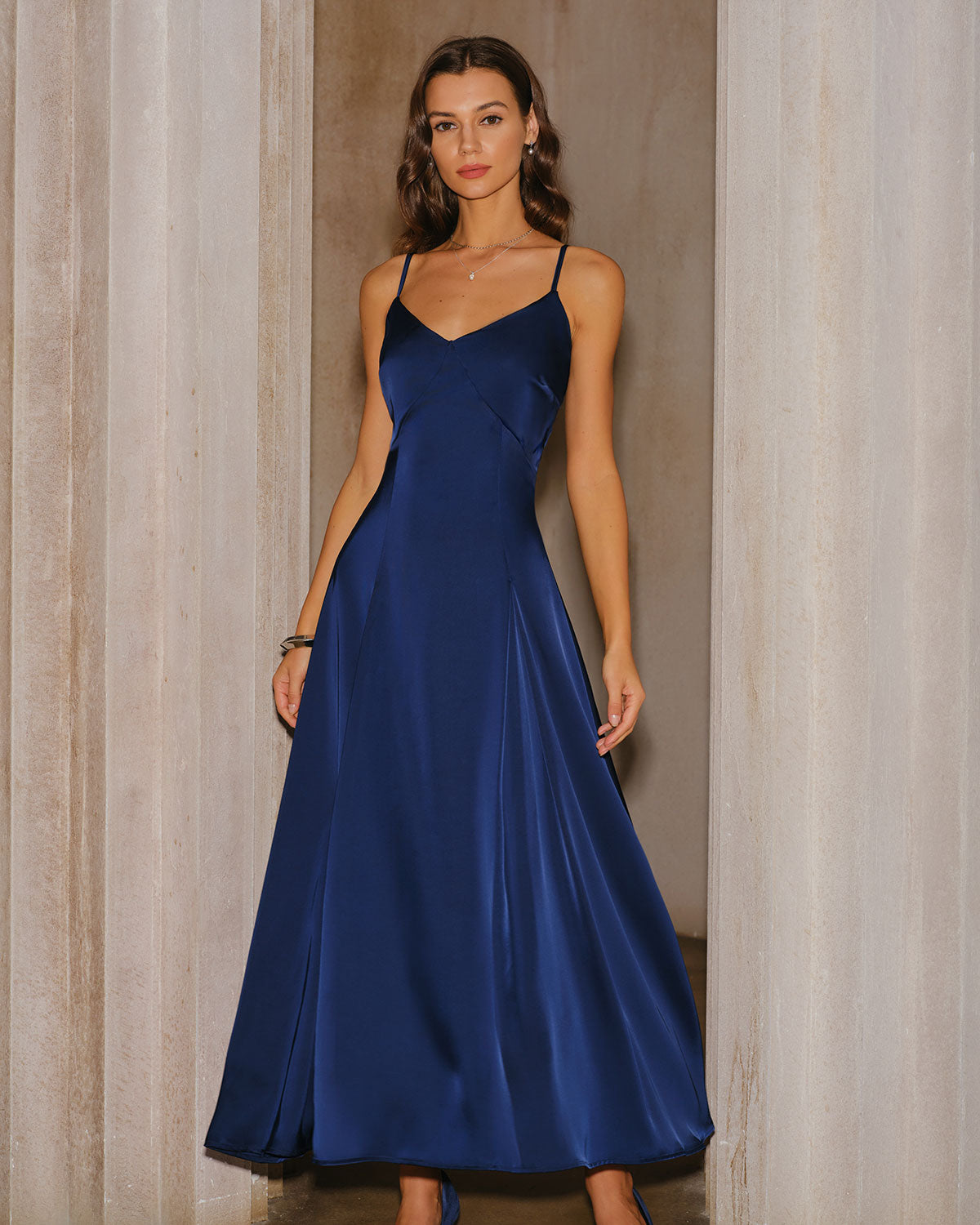
Dramatic family pick
A navy slip maxi that keeps the line clean
The Navy A-Line Slip Maxi Dress keeps the eye moving from neckline to hem with a solid color, slim straps, sleeveless cut, and long A-line slip silhouette. The product page lists it as natural-waisted, no-stretch, polyester, and lined, so it is better for a clean vertical line than for someone who needs stretch or heavy surface detail.
If Ease and Width Usually Help You (Natural Family)
Start with movement, openness, and unconstructed shapes. A Natural family type in a stiffly darted blazer will look confined, but the same person in a relaxed linen jacket with dropped shoulders will look effortlessly put together. For Natural types, a relaxed-fit maxi dress in a natural fabric works better than a bodycon midi because the frame needs room to breathe through the shoulders and torso. Explore jackets and coats with easier shoulders before buying another tightly fitted layer.
If Balance Keeps Winning (Classic Family)
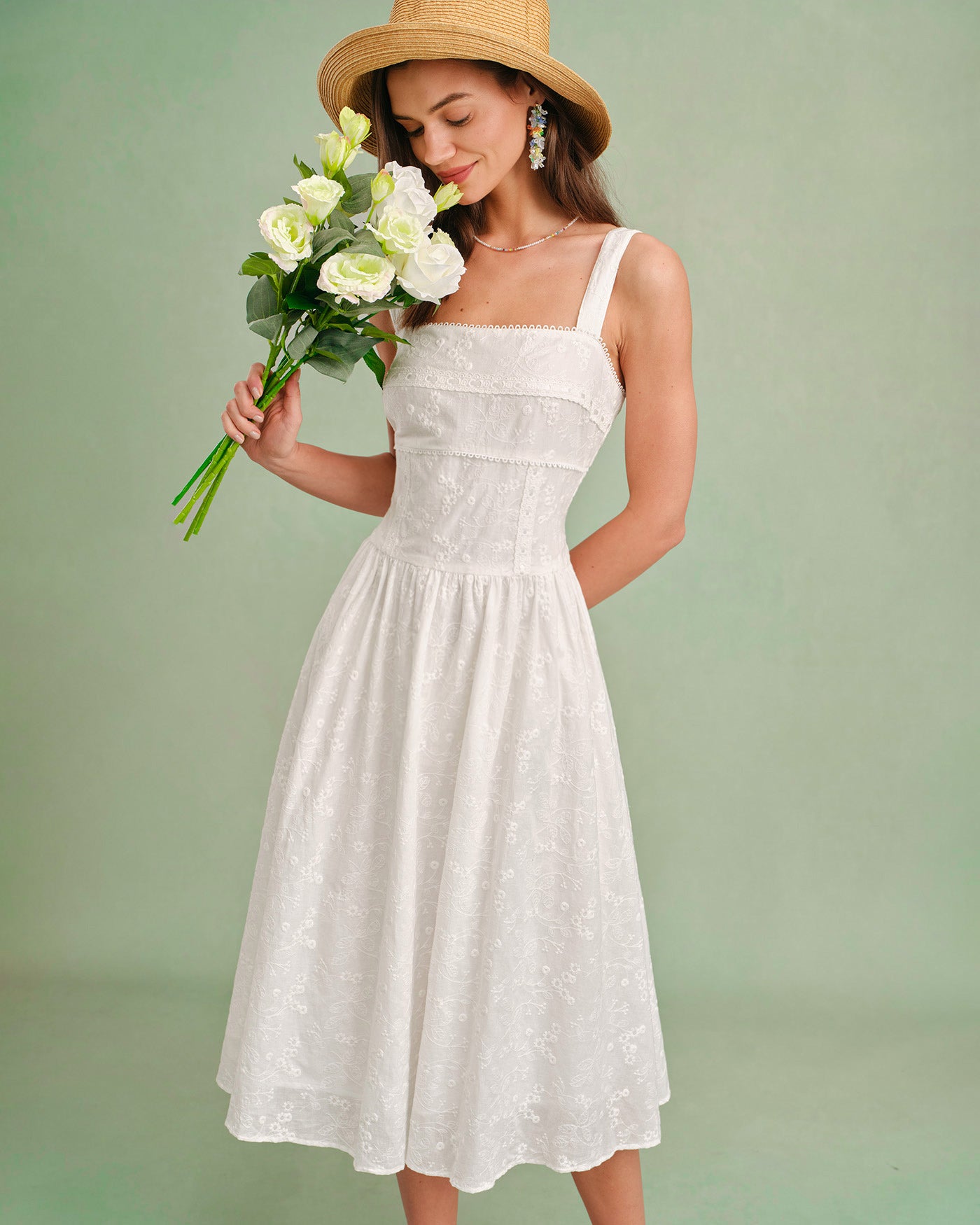
Do not over-style it. Moderate proportions, cleaner seams, and controlled shapes are often enough. When balance is your strength, too much drama starts to look like costume and too much softness starts to look sloppy. A knee-to-calf-length dress with a defined waist and a moderate neckline is the Classic family's safest and most versatile piece.
Classic family pick
A square-neck cotton midi with balanced proportions
The White Square Neck Slip Midi Dress is a natural-waisted A-line slip with a square neckline, solid color, textured detail, and lining. It gives enough definition to look polished, while the midi length and clean shape stay moderate instead of dramatic, oversized, or overly ornate.
If Short, Broken Lines Usually Help You (Gamine Family)
Test shorter silhouettes, sharper finishing detail, and outfits with more visual rhythm. If long, plain shapes flatten you, do not keep buying them just because they look elegant on the hanger. For Gamine types, a cropped top with a high-waisted skirt or a shorter dress with graphic pattern contrast will usually outperform a long flowy maxi. Explore mini dresses and pieces with bold color or print contrasts.
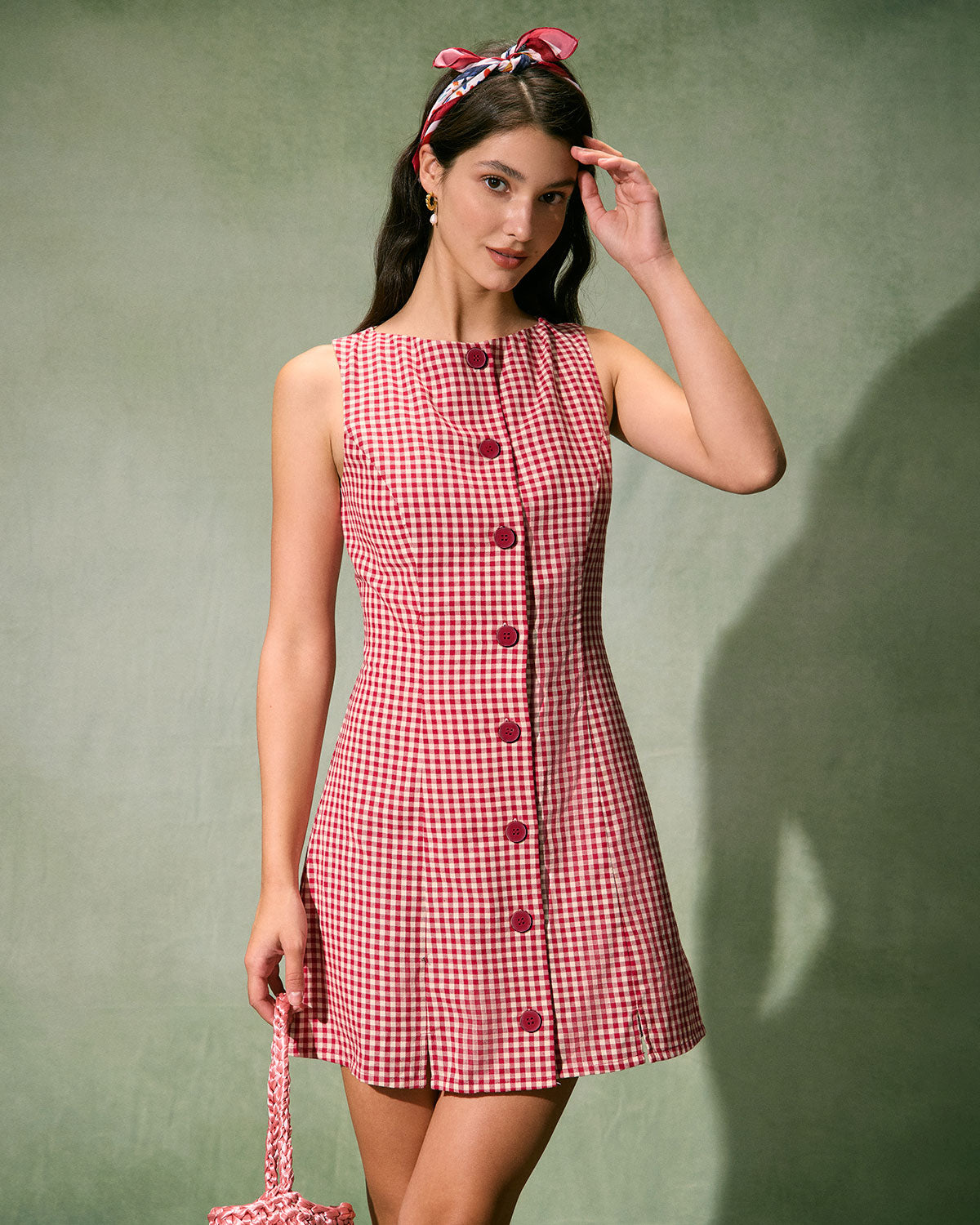
Gamine family pick
A plaid mini with short, crisp energy
The Red Boat Neck Plaid Mini Dress pairs a compact mini length with a high waist, A-line shape, boat neckline, and graphic plaid. The product page lists it as 100% cotton with no stretch, so it reads crisp and defined rather than long, loose, or softly draped.
If Softness Needs to Be Respected (Romantic Family)
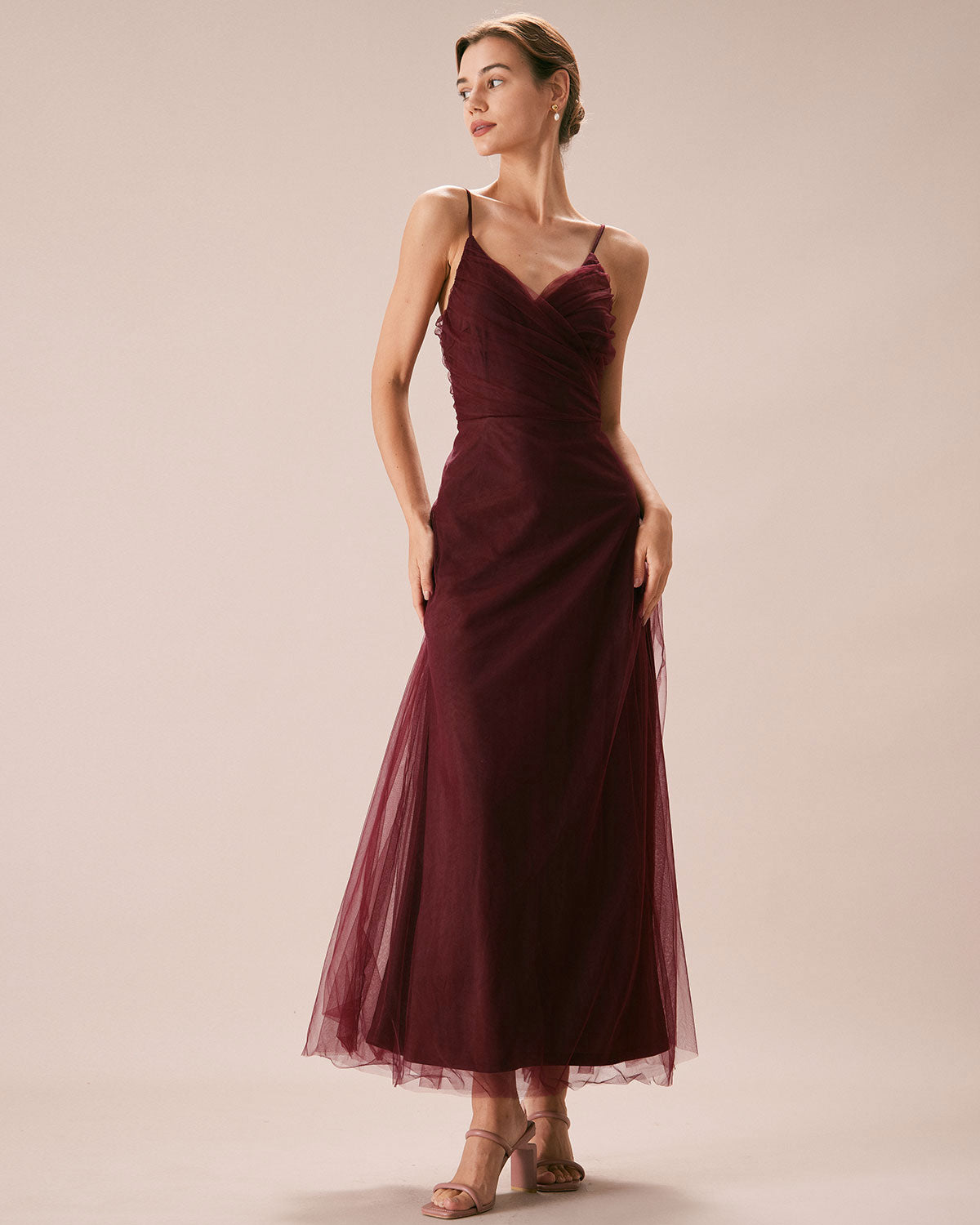
Start with drape, curve-aware shapes, and pieces that do not fight softness with too much stiffness. For Romantic types, a V-neck dress in a fluid fabric with gentle waist definition will always outperform a boxy shift or a sharp-shouldered blazer. The fabric should move—chiffon, soft jersey, or lightweight crepe all respect Romantic lines better than stiff cotton or structured wool. Start with V-neck, wrap, ruched, or softly draped dresses before trying anything rigid or boxy.
Romantic family pick
A ruched V-neck wrap that follows curve
The Wine Red V Neck Mesh Wrap Maxi Dress combines a V-neckline, wrap shape, ruching, mesh, A-line skirt, and slight stretch. Those details create softness and waist emphasis without the hard edges of a boxy shift or sharply tailored dress.
The point is not to build a uniform for each family. The point is to stop shopping against your own line.
Necklines Can Tell You More Than Quizzes
A lot of women keep trying to type themselves from full-body descriptions when the neckline is giving them the answer much faster.
If a square neckline keeps making you look more defined and settled, that tells you something about where you fall on the Kibbe spectrum—likely Classic or Dramatic. If a soft V-neck works every time but a high, closed neckline makes you look boxed in, that points toward Romantic or Soft subtypes. A wide, open neckline that lets the shoulders breathe suggests Natural. A high-contrast neckline (think sharp square or sweetheart) that energizes your face suggests Gamine.
This is one of the easiest ways to test Kibbe in real life because neckline response is usually easier to notice than subtype theory. RIHOAS has a neckline guide that breaks down how different necklines change the line of a dress. A square neckline tends to read more defined and architectural, while a softer V-neck opens the upper body differently. The useful question is which one keeps looking more natural on you—that pattern is more reliable than any quiz answer.
Frequently Asked Questions
What are Kibbe body types?
Kibbe body types are 13 style identities within a system created by David Kibbe in 1987. The system focuses on your overall line, balance, and visual impression rather than body measurements alone. Each type falls along a spectrum from sharp and angular (yang) to soft and rounded (yin), and the goal is to find clothing silhouettes that harmonize with your natural lines rather than working against them. The 13 types are grouped into five families: Dramatic, Natural, Classic, Gamine, and Romantic.
Is Kibbe the same as body shape?
No. Body shape systems (pear, apple, hourglass) focus on the proportional relationship between your shoulders, waist, and hips. Kibbe looks at a different set of qualities: overall line, frame width, vertical impression, softness vs. sharpness, and balance vs. contrast. Two women with the same hourglass body shape can be completely different Kibbe types because one has sharp angular features and a long vertical while the other has soft rounded features and a compact frame. Use body shape for fit decisions and Kibbe for style line decisions.
Why do Kibbe body types feel so confusing?
Kibbe feels confusing mostly because beginner guides dump all 13 types at once and encourage readers to self-diagnose from written descriptions. That approach generates false matches because most people can see bits of themselves in multiple types. The faster path is to start with the five families first, rule out the ones that clearly do not fit, and then compare the remaining subtypes. It also helps to judge by clothing results rather than body descriptions—what consistently works on you is more reliable than what sounds like you on paper.
Should I start with the 5 Kibbe families or all 13 types?
Start with the five families. Narrowing to a family first gives you a working filter that immediately improves your shopping decisions, even before you know your exact subtype. If you can confidently say "I am in the Natural family," you already know to reach for relaxed structure over sharp tailoring and open necklines over high-closed ones. The specific subtype (Flamboyant Natural vs. Soft Natural) is a refinement you can work out over time as you test clothes and notice patterns.
How do I narrow down my Kibbe type faster?
Look at what stands out first in your line: vertical length, width, balance, compactness, or softness. Then compare that with the silhouettes, necklines, and layers that consistently work on you. The most reliable shortcut is the clothing test: try a long, clean-line dress and a shorter, high-contrast outfit back to back. Which one makes your features come alive? That answer narrows the field more than any quiz question about whether your shoulders are blunt or sharp.
What is Kibbe Image ID?
Many people search for "Kibbe body types," but David Kibbe himself now refers to the system as Image Identity rather than body type. The distinction matters because "body type" implies the system is about your physical measurements, when it is really about your overall visual impression—how your body, face, and movement come together to create a line. The Image Identity approach emphasizes self-discovery through testing clothing lines rather than measuring body parts, which is why quiz-based typing can feel inaccurate.
Can necklines help you find your Kibbe type?
Yes, and they are often more useful than full-body analysis for beginners. A neckline changes how the upper body reads, and most women can tell quickly whether a specific neckline feels right or slightly off. If square necklines consistently make you look sharper and more defined, that points away from Romantic and toward Classic or Dramatic. If V-necklines consistently soften and open your face, that supports a Romantic or Soft subtype. Test three to four different necklines in the same fabric and notice which one settles most naturally.
Do I need to know my exact Kibbe type to dress better?
No. Most beginners improve faster by identifying their main family first instead of forcing an exact subtype too early. If you already know that balance helps you more than drama, or softness helps more than rigid structure, you are already making better decisions than someone who memorized all 13 types and still shops blindly. The exact subtype becomes useful when you are refining details—but the family-level filter is where the biggest wardrobe improvements happen first.


