

Last updated: July 2026
Most A-line dress advice sounds comforting and then leaves you to guess. "Universally flattering" is the usual line. It is also where people get into trouble, because an A-line dress can make your waist look cleaner, or it can make the whole outfit look wider than you expected.
The difference is not the word A-line. It is where the dress begins to move away from the body. A skirt that opens from the natural waist behaves very differently from one that falls loose from the shoulder. A slip dress that skims through the bust before widening will not solve the same fit problem as a structured mini with sleeves. So start there. Find the flare point, then decide if the dress is doing what you need it to do.
Fast fit check
Do not buy an A-line dress until you know where it flares
| If the dress flares... | It usually suits... | The thing to check |
|---|---|---|
| From the natural waist | A cleaner waist, pear shapes, office or event outfits | The seam has to sit at your real waist. An inch too high changes the whole dress. |
| From under the bust | Petites, stomach comfort, soft wedding guest looks | The seam should sit under the bust, not across the fullest part of it. |
| From the shoulder | Easy minis, sleeve coverage, hot weather | The shoulder needs to fit. If it slips or droops, the dress reads sloppy. |
| After a fitted bodice | Date nights, vacation dinners, semi-formal plans | Sit down in it. If the bodice pulls, the skirt will not save the fit. |
First, what counts as an A-line dress?
An A-line dress is narrower near the top and wider at the hem. Simple enough. The problem is that online stores use the term for a lot of dresses that behave differently on the body: waist-seamed dresses, trapeze minis, slip dresses with a gentle skirt, one-shoulder maxis, even some fit-and-flare styles.
For shopping, the label matters less than the shape. Look at the side seam. Does the dress leave the body at the waist? Does it fall loose from the shoulder? Does it stay close through the hip before opening? Those are not small differences. They decide whether the dress gives your hips room, hides the stomach a little, shortens the torso, or needs a specific bra.
Here is the rule I would actually use: if the skirt opens gradually and gives the lower body room without turning into a bodycon or mermaid shape, you can treat it as an A-line. If it grips through the thigh and only kicks out near the knee, shop it like a fitted dress instead.
The try-on test: three places to look before you care about color
Start with the waist. A waist-seamed A-line dress should meet your natural waist, the narrow point that bends when you lean sideways. If that seam floats above it, the dress can make the torso look short. If it drops below it, the skirt often starts widening exactly where you do not want extra width.
Then check the upper body. A good A-line dress still needs a secure bodice. Buttons should not gape. Straps should not drift outward. A square neck should lie flat instead of buckling near the collarbone. A V neck should open the chest without collapsing. The skirt gets most of the attention, but the bodice is where the dress either looks intentional or cheap.
Last: sit down. This is the part product photos never tell you. If the waist rides up, the bust pulls, or the hem suddenly feels too short, you have learned more in ten seconds than a size chart can tell you. For event dresses, do the sit test before the tag comes off.
Mini A-line dresses: good for petites, unforgiving at the shoulder
Mini A-line dresses can be excellent on petite frames because they leave more leg visible. They also expose mistakes quickly. A loose shoulder, too much sleeve, and a flared skirt can make a short dress look childish rather than polished. The top half needs discipline.
Boat necks, square necks, small pearl details, lace sleeves, and clean cuffs all help. They give the eye somewhere to land before the skirt opens. Shoes matter too. A pointed flat, Mary Jane, low heel, or slim boot usually works better than a bulky sneaker if you want the dress to feel grown-up.
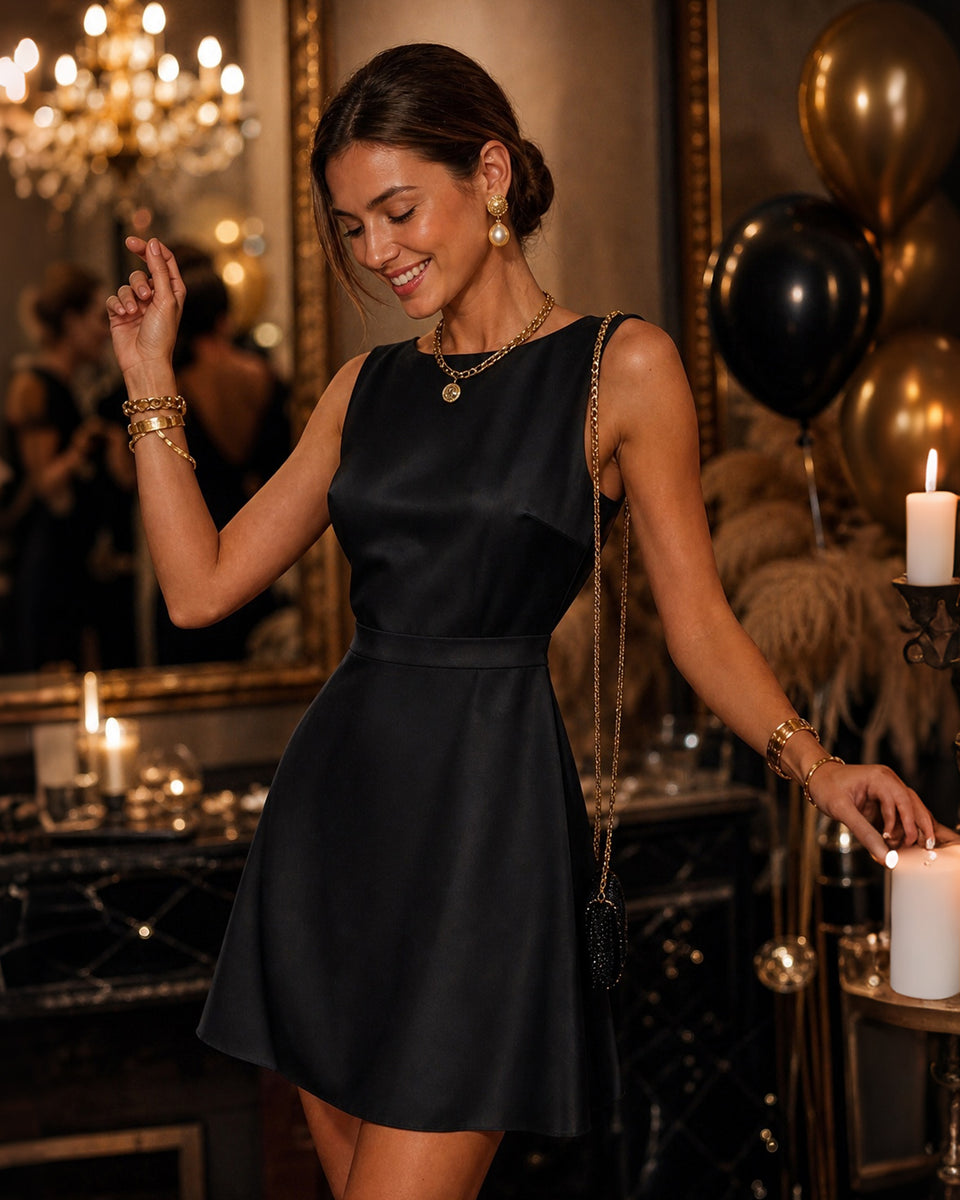
Petite-friendly mini
A short A-line that does not look bare
The Black Boat Neck Pearl A-Line Mini Dress has enough neckline detail to keep the mini length polished. It makes sense for petites, graduation dinners, and dressy weekends. Available in XS-XL. Do check the shoulder width: a boat neck that slides outward will make the dress feel wider than it is.
If you want your arms covered, do not just grab the first long-sleeve mini. Sleeves change the whole weight of a short dress. Lace or bell sleeves can look romantic because they are visibly designed; a plain loose sleeve can look like extra fabric. The wrist matters more than people think. If the sleeve ends cleanly, the whole dress feels more deliberate.
Sleeve coverage
When the sleeve is the point
The Black Lace Bell Sleeve A-Line Mini Dress is better for shoppers who want coverage without losing the lightness of a mini. The lace sleeve gives the dress a reason to have volume. Available in XS-XL. Keep the shoes quieter here; the sleeve already has plenty to say.

Midi A-line dresses: the safest length, until the hem hits the wrong spot
Midi A-line dresses are useful because they can go almost anywhere: office, brunch, travel, garden wedding, dinner. But a midi hem is picky. If it cuts across the widest part of your calf, the dress can make your legs look shorter even when the fit is otherwise right.
The fix is not always a heel. Sometimes it is a better waist, a cleaner neckline, or a vertical detail that keeps the eye moving. Buttons help. A V neck helps. Ruching can help if it sits where your body actually needs softness, not just where the designer put it. If a midi dress looks oddly heavy in the mirror, check the calf line before blaming your body.
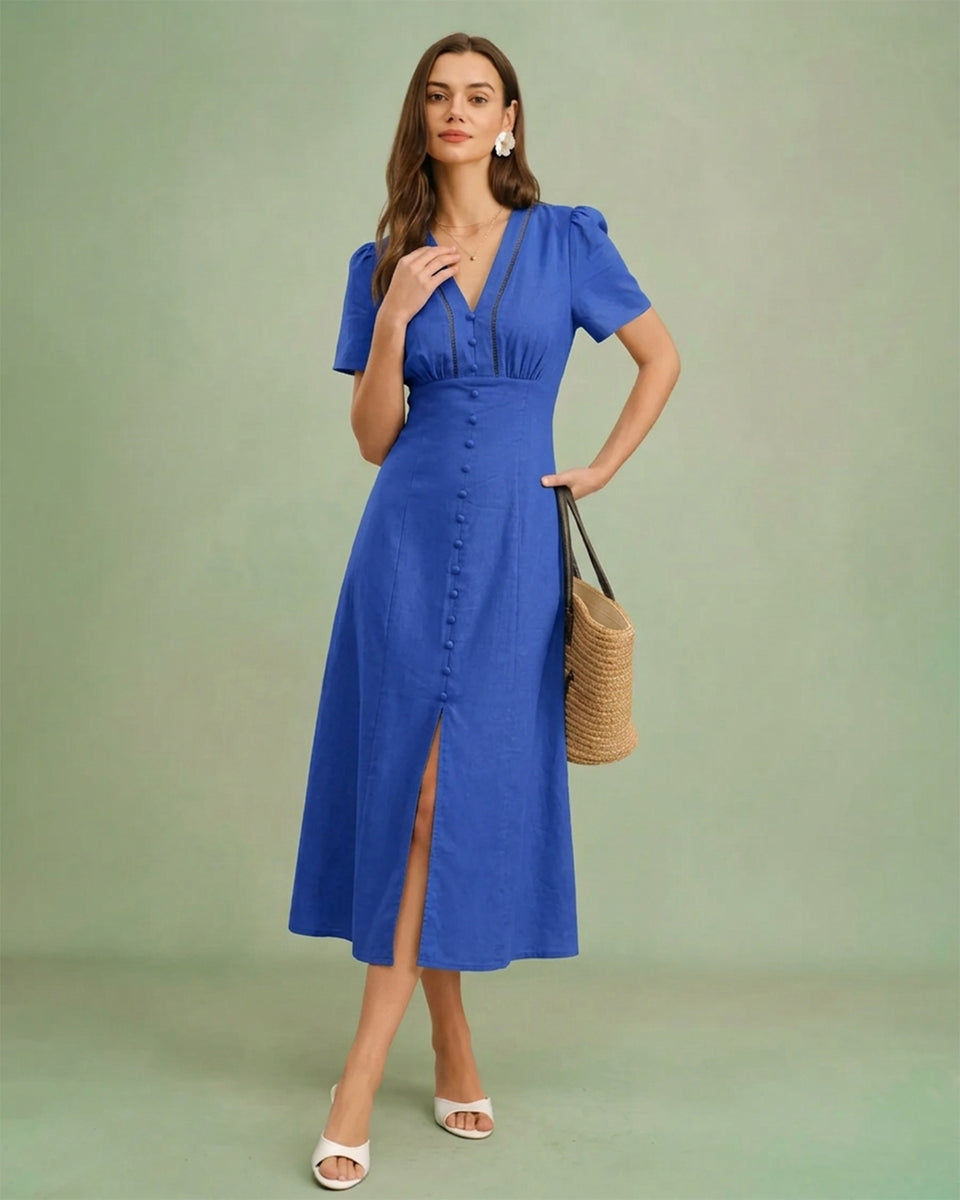
Everyday midi
A button line that does real work
The Blue V Neck A-Line Button Midi Dress is useful because the V neckline and button front break up the length. It can move from work to weekend without needing much styling. Available in XS-XL. Check the waist seam and calf length together; either one can make or break a midi.
Satin midi dresses are a separate category. They look dressier, yes, but they also tell on you. A satin bodice that is slightly too tight will show pressure across the bust. A satin skirt that clings will crease exactly where you sit. Choose satin when the fit has a little ease and the neckline opens the upper body.
Satin without the squeeze
A softer formal option
The Apricot Satin V Neck A-Line Midi Dress is for dinners and semi-formal plans where you want shine but not a tight dress. The V neck helps the satin feel lighter. Available in XS-XL. Do not size down in satin. Smooth beats snug every time.

Maxi A-line dresses: beautiful, but only if the top half holds the dress
A long A-line skirt needs an anchor. Without one, the dress can turn into a lot of fabric and not much shape. The anchor might be a one-shoulder neckline, a button front, ruching, a fitted upper panel, or a strong V neck. Something has to tell the eye where the body is.
For daytime and vacation, a ruched or button-front maxi feels easier than a bare formal gown. For weddings and evening events, a one-shoulder or satin maxi can look cleaner because the neckline is doing the styling. Petites should be especially strict here: open neckline, higher waist, lighter skirt. Otherwise the dress will swallow height.
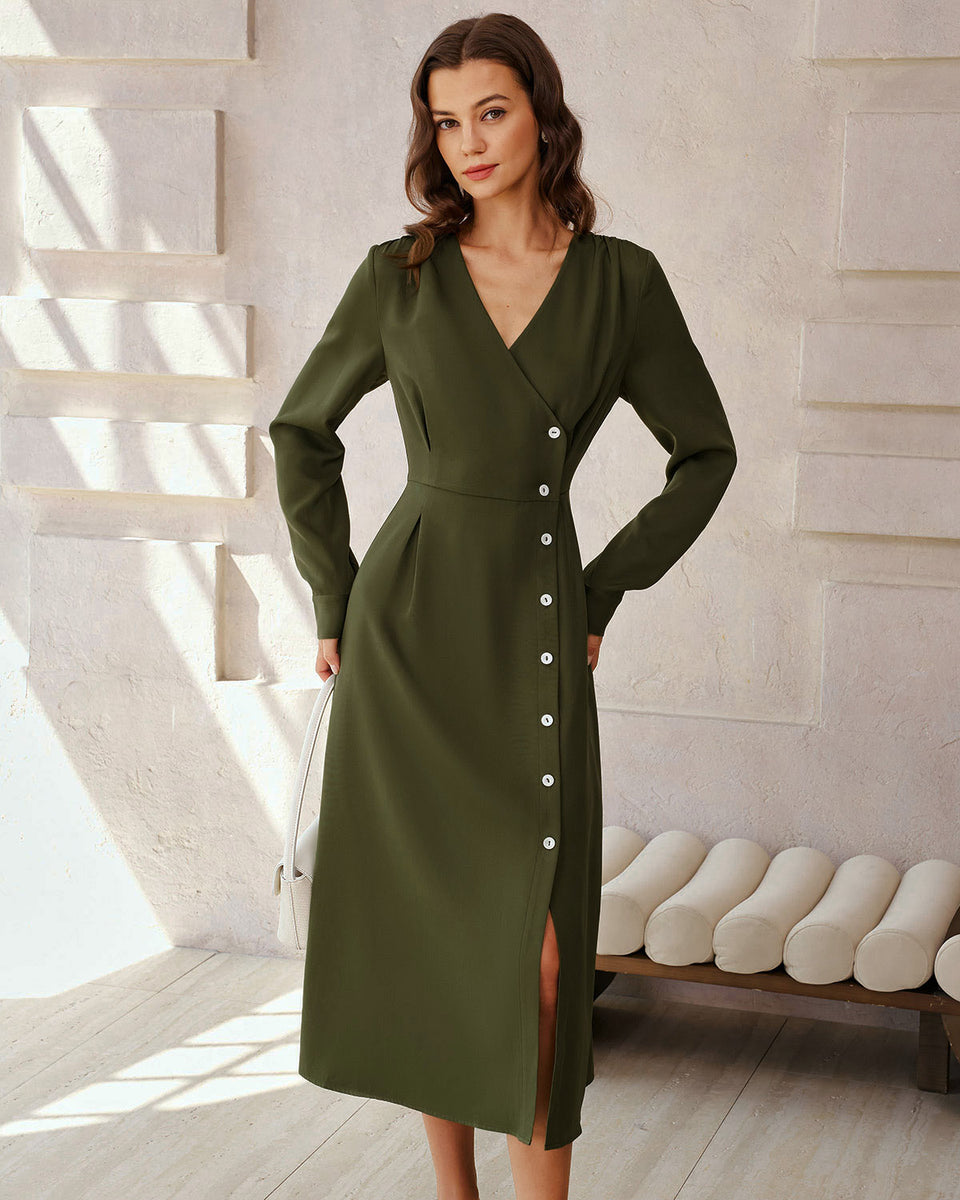
Easy maxi
A long dress with a visible front line
The Green Ruched Button A-Line Maxi Dress works for vacation dinners and outdoor plans because the front detail keeps the length from looking plain. Available in XS-XL. Keep the shoe light. A heavy platform can make this kind of skirt feel bottom-loaded.
One-shoulder maxis are not low-effort dresses. They need the right bra solution, and they do not love heavy necklaces. But when the fit is right, they photograph well because the eye goes straight to the shoulder line before it reads the skirt.
Event maxi
A dress that needs a bra plan
The Blue One Shoulder A-Line Satin Maxi Dress is the event option in this edit: clean neckline, long skirt, enough shine for evening. Available in XS-XL. The tradeoff is support. Plan for a strapless or adhesive option before the event, not five minutes before leaving.

Does an A-line dress actually hide the stomach?
Sometimes. Not automatically.
An A-line dress helps with the stomach only when it skims before it widens. If the dress is tight across the midsection and then flares below it, the pull lines will point straight at the area you wanted to soften. Look for one of four things: a flare that starts just under the bust, gentle ruching, a matte fabric, or a vertical line such as buttons. Those details give the eye somewhere else to go.
Shiny satin is tricky here. It can look gorgeous, but it reflects light across every tight spot. If stomach comfort is the main concern, matte woven fabric, chiffon, or a printed dress is usually more forgiving. Prints help because they break up shadows. They do not erase fit problems, but they are kinder than a flat, pale, shiny surface.
Fit map
Pick the detail that solves your actual fit issue
Wider hips
Look for a natural waist, open neckline, and a skirt that starts moving before it reaches the widest part of the hip.
Stomach comfort
Skip tight waist panels. Try ruching, empire seams, vertical buttons, darker prints, or fabric with movement.
Petite height
A mini is easiest. If you want a midi or maxi, choose a higher waist and a neckline that opens the upper body.
Fabric is where a lot of A-line dresses win or fail
A-line is a shape. Fabric decides whether that shape holds.
Cotton and cotton blends are good for daytime because they give the skirt a clean line. Chiffon moves better and feels right for summer weddings or vacations, but it needs a bodice that fits securely. Satin looks dressier, but it is less forgiving. Lace and textured fabric can make a simple silhouette look finished, though they need more care and simpler accessories.
Prints are not just decoration. A small floral can soften a dress and hide minor creasing. A large floral needs a calmer shape. Polka dots and contrast trim give a retro mood, which can be charming or too costume-like depending on the shoe. If you are buying for an event, decide whether the fabric should be the quiet part or the main event.

Print that earns its place
A floral dress for people who do not want to over-style
The Floral Ruched Slip A-Line Midi Dress already has the outfit built in: print, ruching, and an easy skirt. Available in XS-XL. This is the kind of dress that looks better with restraint. Plain sandals, small earrings, done.
Wedding guest, work, vacation: the dress has to pass a different test each time
For work, the test is whether the dress still looks clean after sitting. A structured midi with a defined neckline is safer than a wispy skirt that wrinkles immediately. Add pointed flats, loafers, or a low heel. If the skirt is very full, keep the top and shoes quiet.
For a wedding, the test is venue. A garden wedding can handle a floral midi. A formal evening wedding needs a sharper neckline, longer length, or richer fabric. A beach or destination wedding needs movement and shoes that will not sink into grass or sand. Also, no white unless the invitation says so. You know this, but it still needs saying.
For vacation, the test is whether you would wear it twice. If the dress needs steaming, a special bra, and a very specific heel, it is not really a vacation dress. A printed A-line midi or relaxed maxi earns its suitcase space because it can do daytime flats and dinner sandals without becoming a different outfit.
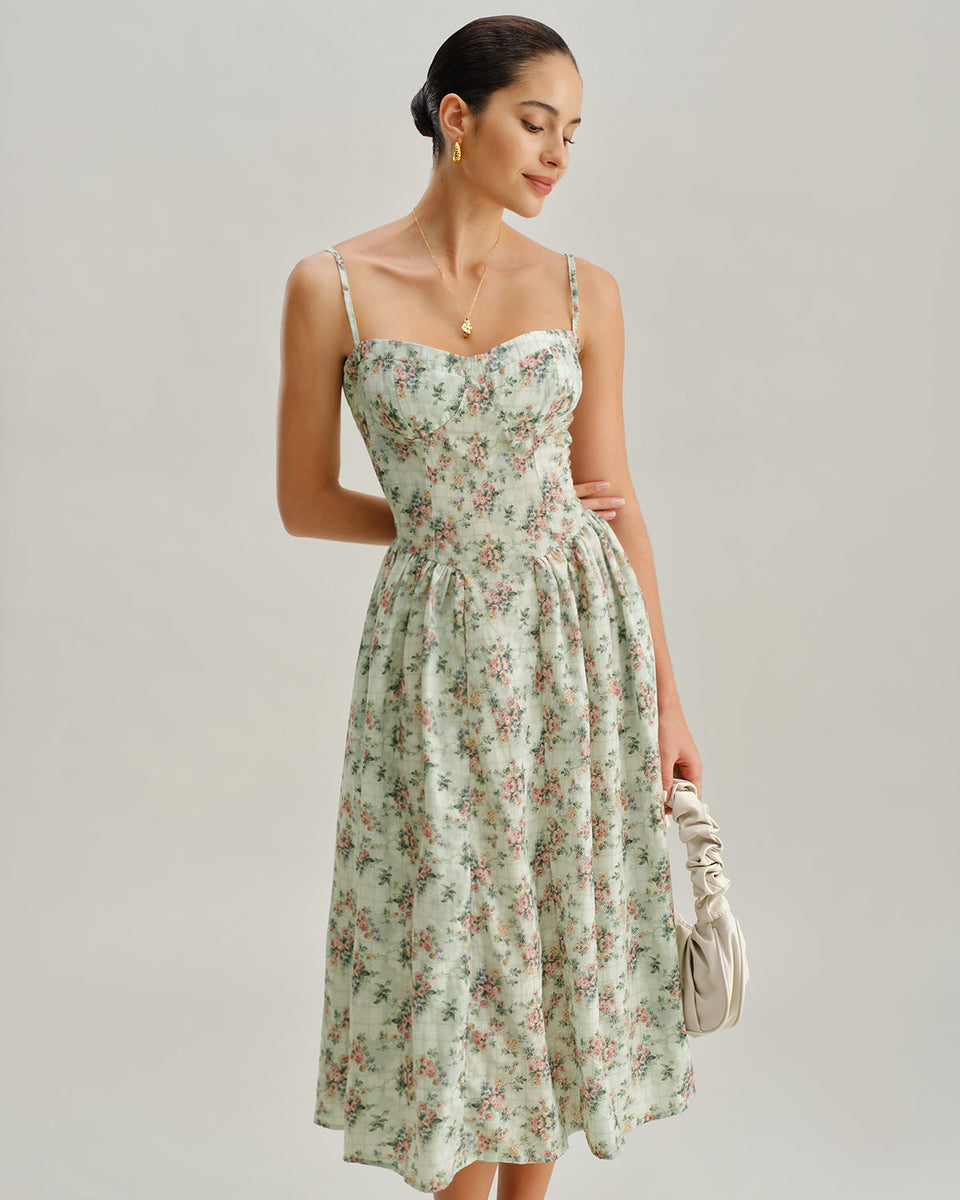
Outdoor wedding
Romantic, but not fussy
The Green Floral Sweetheart Neck Pleated Slip Midi Dress makes sense for garden weddings and outdoor dinners. The sweetheart neckline softens the upper body, and the skirt has movement without needing a dramatic heel. Available in XS-XL. Keep the styling light so the print does not turn sugary.
Shoes and accessories: stop fighting the skirt
A-line dresses already have movement. The shoe should not compete with it.
Mini A-line dresses can take Mary Janes, ballet flats, low heels, slim boots, or neat sandals. Midi A-lines are pickier: choose shoes that leave the ankle visible, like slingbacks, pointed flats, strappy sandals, or a low block heel. Maxi A-lines need either a flat sandal that looks intentional or enough heel to keep the hem from dragging.
Accessories should follow the neckline, not the dress category. A V neck can take a small pendant. A square neck usually looks better with earrings. A one-shoulder dress does not need a necklace at all. Belts are not automatic. If the dress already has a waist seam, a belt may help. If it is a trapeze shape, a belt can ruin the fall of the fabric.
Common A-line dress mistakes I would avoid
The first mistake is buying the word A-line instead of the dress. The label sounds safe, so shoppers ignore the hard parts: seam placement, neckline, fabric, calf length, bra plan. That is how a supposedly easy dress becomes the one you never reach for.
The second mistake is using the wrong fix. If the stomach is the issue, a full skirt alone will not help. You need the fabric to skim before it flares. If the hips are the issue, a closed neckline can make the whole look bottom-heavy. If height is the issue, a midi hem in the wrong place will do more damage than the skirt shape can repair.
The third mistake is over-styling. A printed A-line does not need a printed bag, a statement necklace, a belt, and complicated shoes. Pick one point of interest. Let the rest behave.
A-line dress buying checklist
Before you buy, ask these questions in this order:
Before checkout
The five checks that catch most bad buys
1. Flare point
Where does the dress leave the body, and is that where you want softness?
2. Bodice
Will it sit smooth when you sit, walk, and raise your arms?
3. Hem
Does it hit a good part of the leg, or will it need a specific shoe?
4. Fabric
Will it crease, cling, shine, or move the way the occasion needs?
5. Underwear
Does the neckline or back need a strapless, adhesive, or smoother bra?
FAQ: A-line dress fit and styling
Does an A-line dress hide the belly?
It can, but only if the fabric skims before it widens. Choose soft ruching, an empire seam, matte fabric, or a vertical front detail. Avoid dresses that pull across the stomach and then flare below it, because the tension lines will be more obvious than the skirt shape.
What body type looks best in an A-line dress?
There is no single "best" body type for A-line dresses. Pear shapes often do well with a defined waist and open neckline. Apple shapes usually need ruching, an empire seam, or a softer waist. Rectangles may want a seam, belt, or structured bodice so the dress creates shape instead of hanging straight.
What is the difference between A-line and fit-and-flare?
An A-line dress widens more gradually toward the hem. A fit-and-flare dress is usually tighter through the bodice and waist, then opens more noticeably at the skirt. Fit-and-flare tends to feel more playful; A-line usually reads cleaner and easier.
Are A-line dresses good for petites?
Yes, if the length and waist placement are right. Minis are the easiest. High-waist midis and V-neck maxis can also work. The risky choice is a heavy midi with a low waist seam and a hem that cuts across the widest part of the calf.
Can you wear an A-line dress to a wedding?
Yes. A-line is one of the easiest wedding guest silhouettes because it gives movement without looking too tight. Choose the version by venue: floral midi for garden weddings, satin or one-shoulder maxi for evening weddings, and lighter woven or chiffon styles for outdoor summer plans.
How should an A-line dress fit at the waist?
If it is a waist A-line, the seam should sit at your natural waist and then open into the skirt. If the seam is too high, the torso can look cropped. If it is too low, the skirt may start widening at the hip instead of above it.
Find your A-line shape
Shop by the fit problem, not just the occasion
Start with the flare point, then choose length, neckline, and fabric. That order saves more bad buys than any trend rule.
A-Line Dresses Mini Dresses Midi Dresses Maxi Dresses Wedding Guest Dresses


