

If you have searched "old money aesthetic" expecting a clear answer and instead found a hundred near-identical lists telling you to buy a navy blazer, this guide is built differently. Below is what the look actually consists of — the specific colors, fabrics, and outfit formulas — followed by how to build the wardrobe for a fraction of what the mood boards imply, and a short, honest section on why this style took over in the first place.
What Is the Old Money Aesthetic?
The old money aesthetic is a way of dressing built on quality fabric, muted color, and precise fit, with no visible logos and nothing that looks like it is trying. It borrows the dress codes of inherited, multigenerational wealth — the kind associated with Ivy League campuses, European country houses, and figures like Jackie Kennedy and Princess Diana — and strips them of the actual price tags.
Here is the part most guides skip. The original old money families never dressed to impress anyone; they dressed to recognize each other. A specific cashmere weave, the patina on a worn loafer, the absence of branding — these worked as quiet social passwords, not fashion statements. That single idea explains every styling rule that follows: in this aesthetic, the goal is to look expensive only to people who would know the difference, and completely unremarkable to everyone else.
The practical takeaway is simple. You achieve the old money look through fabric, fit, and a restrained palette — not through spending more. A well-cut wool-blend blazer over a crisp cotton shirt reads as old money; a logo-covered designer bag does not.
The Old Money Palette and Fabric Code
Two things separate a genuine old money outfit from a closet that simply contains beige clothes: the color logic and the fabric.
The palette is a system, not a mood. Stick to navy, cream, camel, charcoal grey, ivory, chocolate brown, forest green, and burgundy. These colors share the same undertone family, which means almost any two of them combine without clashing — that is the entire point. Build a wardrobe in these shades and getting dressed becomes mixing pieces that already agree with each other, instead of hunting for a match. The most reliable old money color formula is a single outfit built from no more than three neutrals in the same temperature — for example, cream, camel, and chocolate, with everything else (jewelry, a belt, shoes) kept to gold-toned or tan leather.
Fabric does more work than any single garment. The fastest way old money dressers identified one another was texture: a wool flannel trouser versus a polyester one, a silk blouse versus a satin-finish synthetic. The difference is invisible in photos and unmistakable in person. For this look, prioritize natural and natural-blend fibers — cotton poplin, wool, linen, silk, cashmere — over shiny synthetics. They drape better, hold their shape over years, and photograph with a matte richness that polyester cannot fake.
Quick reference
Old money yes / no
Reads as old money
Tailored blazers, trench coats, cotton button-downs, fine-gauge knits, pleated or straight trousers, midi skirts and dresses, loafers, structured no-logo bags, gold or pearl jewelry, silk scarves.
Breaks the look
Visible logos, body-con synthetics, neon or high-saturation color, distressed denim, anything overtly trend-of-the-month, shiny "satin" finishes, and head-to-toe beige with no contrast.
How to Dress Old Money: Four Outfit Formulas
Instead of a list of items to buy, here are four repeatable formulas — one for each situation you actually get dressed for. Each one works because it follows the palette and fabric rules above, not because of any single "key piece."
1. The everyday formula
Dark straight-leg trousers or well-fitting dark denim, a fine cotton or knit top, and one structured layer thrown over the top — a blazer, a cardigan, or a trench depending on the weather. Finish with loafers or flat leather shoes and a single piece of gold jewelry. The layer is what does the work: a tailored jacket over a plain top is the single fastest way to move an outfit from casual to old money. Keep the top simple so the cut of the jacket and the quality of the fabric carry the look.
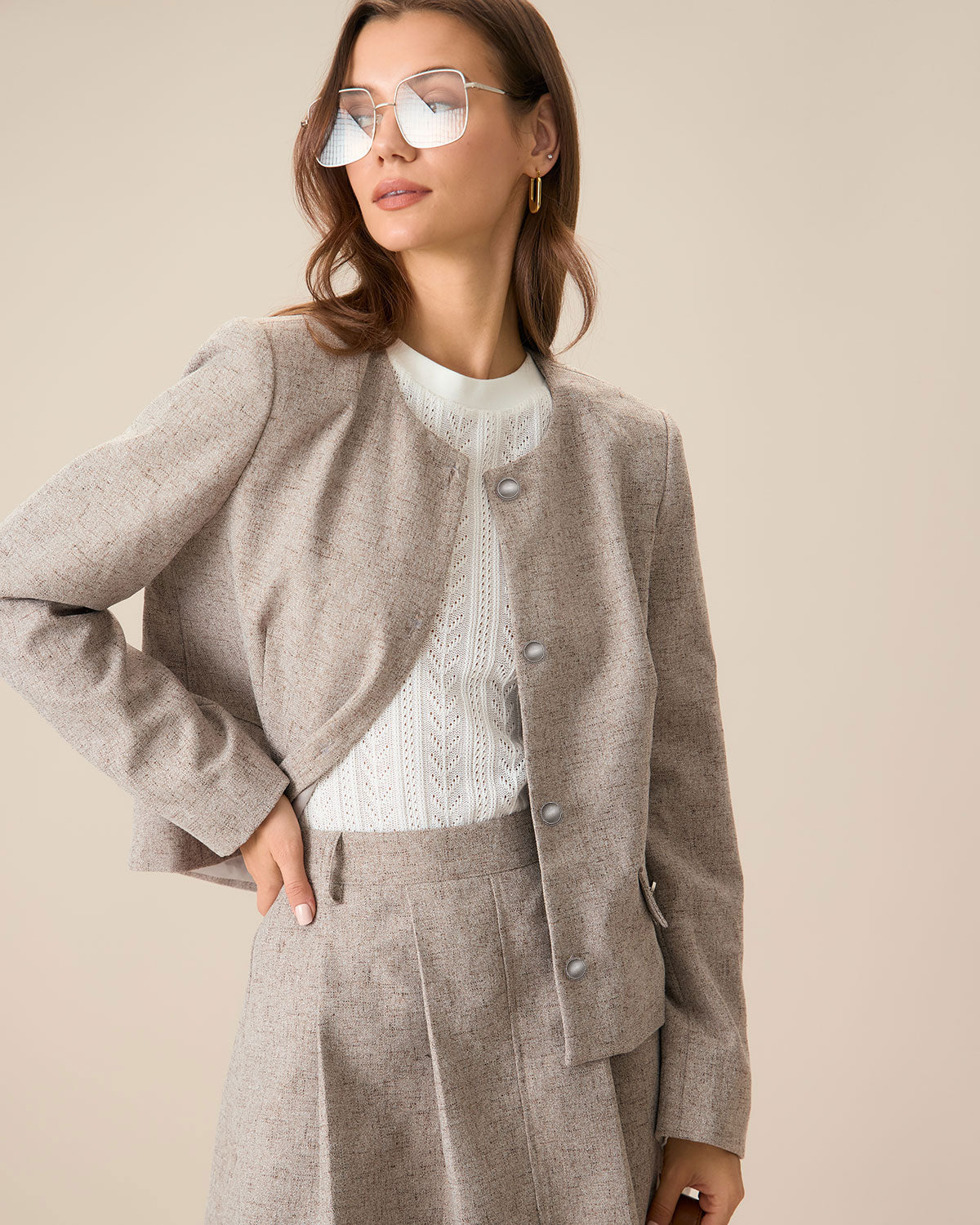
The everyday layer
Round Neck Khaki Single-Breasted Jacket
This waist-length, single-breasted khaki jacket is cut for office wear and made from a cotton-polyester blend. Its round neckline and tailored shape give a clean finish over a white tee, fine knit, or button-down without adding visible branding or a busy print.
2. The workwear formula
Tailored trousers or a midi pencil or A-line skirt, a tucked button-down or fine knit, and a blazer that matches or deliberately contrasts within the neutral palette. This is where old money and office dressing overlap almost completely. For work, a midi skirt or full-length trouser in wool or a wool blend is a safer old money choice than anything fitted or short, because length and drape read as deliberate rather than revealing. A silk-feel blouse under the jacket adds quiet polish without a single logo.
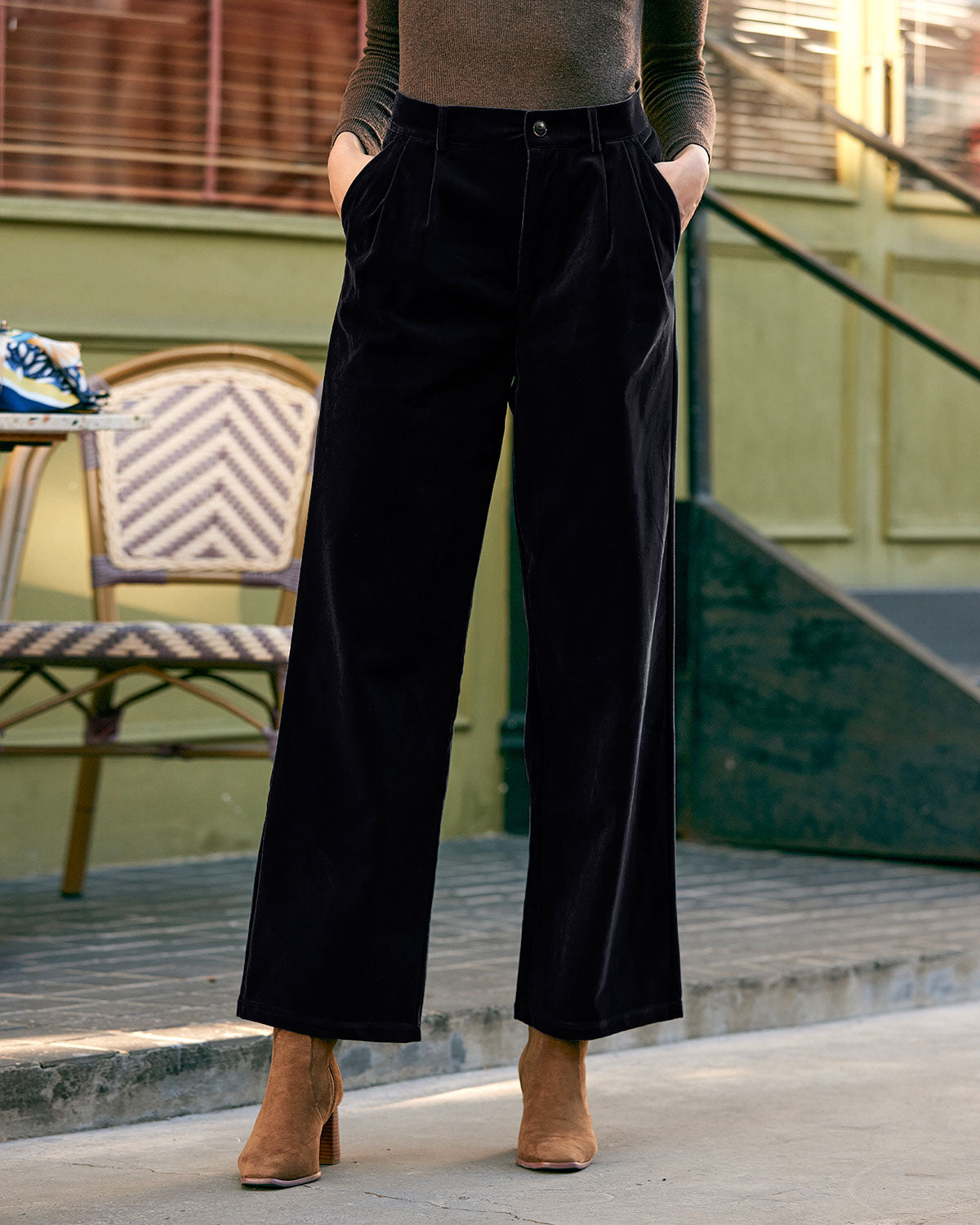
The workwear base
Black High Waisted Pleated Wide Leg Pants
A high waist, front pleats, wide leg, pockets, belt loops, and zip fly make these trousers a precise match for the workwear formula. Let the long line do the styling: add a tucked white blouse and the khaki jacket above, then keep shoes and bag clean and low-logo.
3. The warm-weather formula
The look does not disappear in summer; it lightens. Swap wool for linen and cotton, and structured layers for an unlined midi dress or a linen shirt over tailored shorts or trousers. For hot weather, a lined woven midi dress in a solid neutral is the most reliable old money choice because it stays opaque, moves in heat, and needs no styling beyond flat sandals and gold jewelry. Keep prints minimal — a subtle stripe or a small, low-contrast floral reads far more old money than a loud pattern.
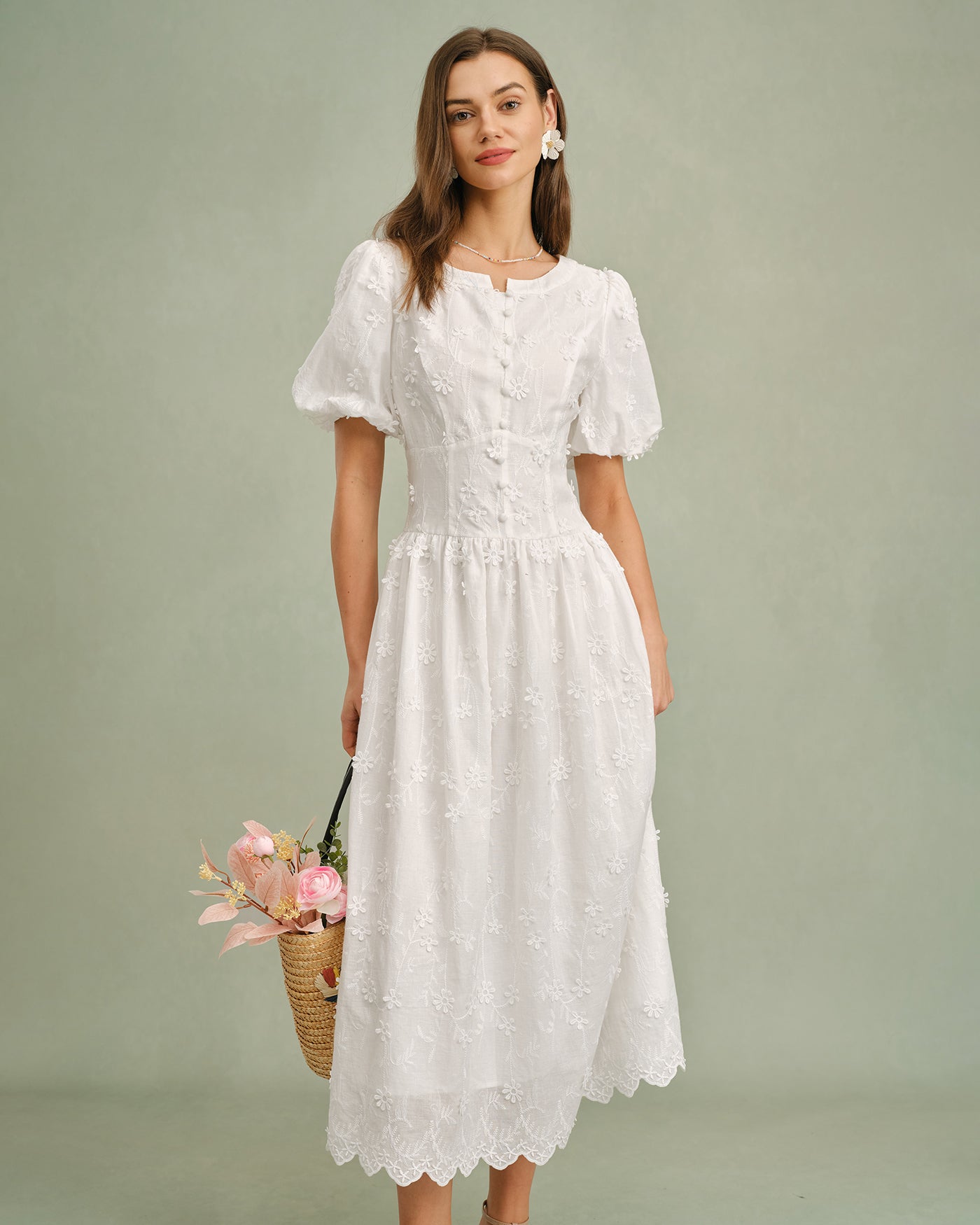
The warm-weather one-piece
White Round Neck Floral Midi Dress
The shell is 100% non-stretch cotton, with a round neckline, button front, natural waist, lined A-line skirt, and lower-calf hem. Its white textured floral is a more restrained warm-weather print than a high-contrast pattern; pair it with flat leather sandals and a simple woven or structured bag.
4. The evening formula
For dinners and events, the old money move is restraint, not sparkle. A column or A-line black midi dress, or a version in navy, burgundy, or forest, with one good piece of jewelry and a structured clutch. A simple silhouette in an expensive-feeling fabric will always look more old money than an embellished dress, because visible decoration signals effort and effort is the thing this aesthetic hides. If you want interest, let it come from the fabric's texture or a single architectural detail, not from beading or shine.
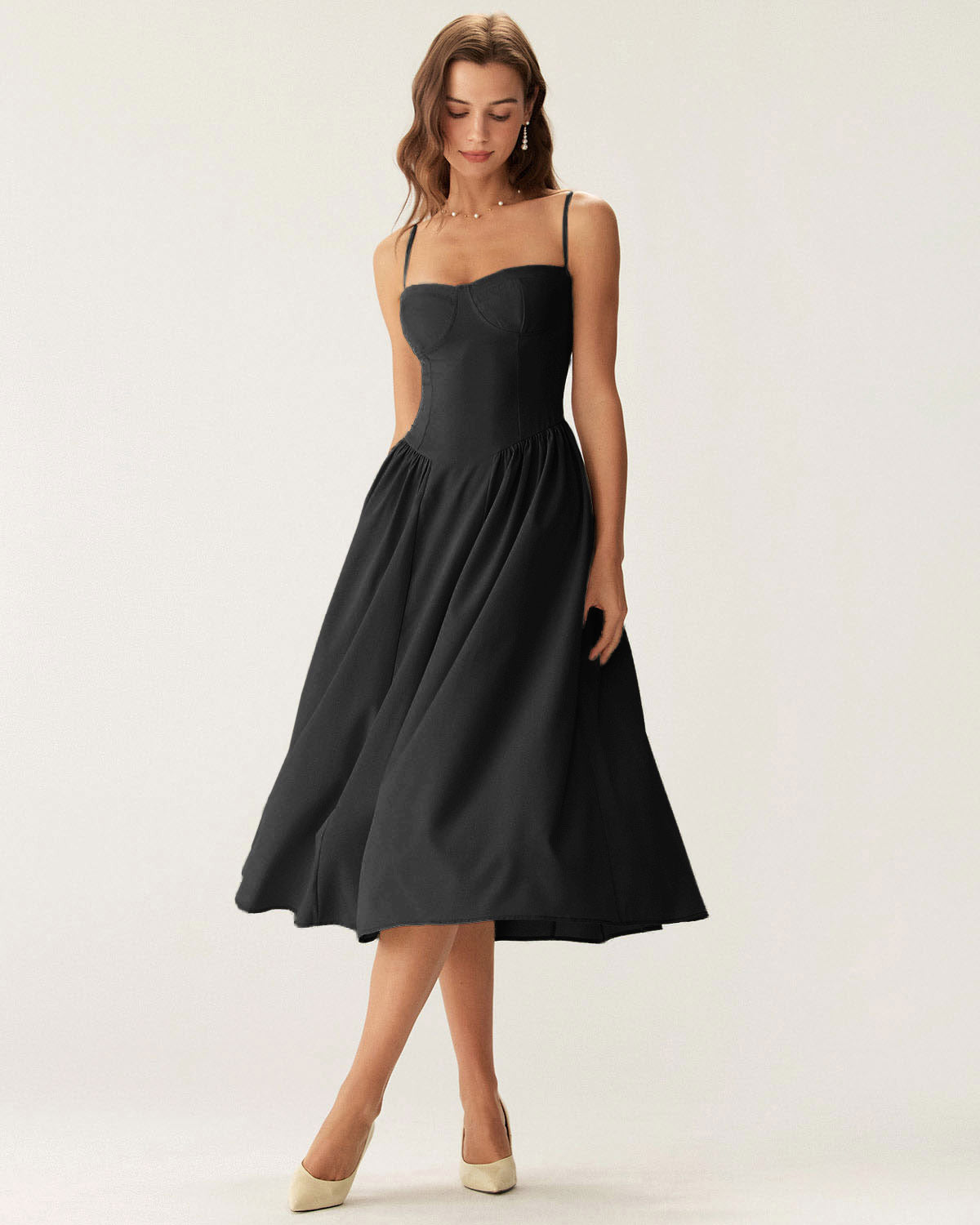
The evening foundation
Black Square Neck Pocket Slip Midi Dress
This daily, no-stretch black midi has a square neckline, natural waist, A-line shape, and pockets. Its clean line gives you the restrained base the evening formula calls for; keep the clutch structured and jewelry to one considered piece.
The Old Money Capsule Wardrobe: What to Actually Own
The most useful thing about this aesthetic is that it is genuinely cheaper over time. A wardrobe of around thirty pieces that fully coordinate will serve you better, and cost less across five years, than a closet of a hundred and fifty impulse buys. Here is how to build it without a trust fund.
Start with what you already own. Pull out every solid neutral in a natural fabric — a good white cotton tee, dark well-fitting jeans, a knit that has held its shape. Most people own more old money building blocks than they think. These are the foundation, not the things to replace.
Add structure before you add color. One tailored blazer or coat shifts a whole wardrobe's register. It does not need to be expensive; it needs to fit at the shoulder and lie flat across the back. If it does those two things, it will read as ten times its price.
Buy heritage pieces secondhand. This is the single most effective old money tactic, and it is backed by the market: the secondhand luxury market was valued at roughly $37 billion in 2024 and is growing faster than the new luxury market, with more than half of resale buyers under 35. A pre-owned silk scarf, a vintage leather bag, or a classic watch carries exactly the patina this aesthetic prizes — at a fraction of retail, and as the most sustainable option available.
Invest where the fabric touches your skin. The pieces closest to the body — blouses, knits, trousers — are where material quality makes the biggest tactile difference. A cashmere-blend sweater over an acrylic one, a cotton poplin shirt over a polyester one: this is where spending a little more translates directly into how the clothing feels all day.
Why "Quiet Luxury" Took Over in the First Place
The old money aesthetic is not a normal micro-trend, and the numbers behind it explain why. On TikTok, #OldMoney has surpassed 2.5 billion views, with #QuietLuxury close behind, and resale platform Depop reported searches for collared shirts and trench coats jumping roughly 70% in step with the wave. But unlike cottagecore or mob-wife, this one is anchored in economics, not just imagery.
The short version: luxury got more expensive without getting more accessible. Bain & Company found the personal luxury market reached around €1.48 trillion in 2024, but most of the growth came from price increases rather than new buyers. At the same time, more than half of consumers across the U.S. and Europe now shop secondhand luxury. When a 22-year-old thrifts a cable-knit and pairs it with pressed trousers, that is a rational response to those conditions, dressed up as a lifestyle.
There is also a century-old idea underneath it. The economist Thorstein Veblen described how, once logo-driven status becomes available to everyone, the wealthiest differentiate themselves through inconspicuous consumption instead — spending on a cashmere sweater that looks, to the untrained eye, like an ordinary one. That is the real engine of quiet luxury: it is about looking expensive only to people who can read the signal, and unremarkable to everyone else. In a decade of three-week trend cycles and economic uncertainty, a wardrobe that does not expire has obvious appeal.
The Criticism Worth Addressing
It would be dishonest to cover this aesthetic without naming its uncomfortable side. Its historical roots are tied to specific, exclusionary demographics, and the muses on every mood board — Jackie Kennedy, Princess Diana, the fictional families of prestige TV — are overwhelmingly white and wealthy. Critics who argue the look risks romanticizing that history are pointing at something real: aesthetics carry their origins with them.
What has actually happened, though, is more interesting than a straight reproduction of that world. The principles — quality fabric, clean lines, muted sophistication — have been adopted and rewritten globally, from Lagos to Seoul to Mumbai, by people interpreting them through their own styling codes. The useful move is to take the principles — invest in quality, build a cohesive wardrobe, choose timelessness over trend-chasing — without importing the class fantasy attached to them. The aesthetic is most worthwhile when it stops being about performing wealth and becomes about owning fewer, better things.
Where RIHOAS Fits In
RIHOAS was built around a specific gap: the space between the feel of designer fabric and the disposability of fast fashion. We are not a heritage luxury house and will not pretend to be. Our price point sits between designer and fast fashion on purpose, because that is where the interesting work happens — finding fabrics that feel good against skin and cutting silhouettes rooted in European elegance, without pretending they are something they are not.
That lines up with the best version of the old money aesthetic: not performing wealth, but choosing clothes with intention, wearing them with ease, and keeping them longer than a trend cycle. A structured jacket, a draped blouse, a midi dress that moves from office to evening without a costume change — these are pieces chosen to last, which is the whole point.
Old Money Aesthetic FAQ
What colors are best for the old money aesthetic?
Navy, cream, camel, charcoal grey, ivory, chocolate brown, forest green, and burgundy. These neutrals share an undertone family, so they combine without clashing. The most reliable approach is to build each outfit from no more than three of them in the same temperature, keeping shoes, bag, and jewelry to tan leather and gold.
How do I dress old money on a budget?
Start with the neutral natural-fabric pieces you already own, add one well-fitting blazer or coat, and buy heritage items like scarves and leather bags secondhand. The aesthetic is defined by fabric, fit, and a restrained palette — none of which require designer prices. Spending a little more only matters on the pieces that touch your skin, like knits and blouses.
Is old money the same as quiet luxury?
They overlap but are not identical. Quiet luxury describes the logo-free, understated way of signaling wealth; old money describes the broader style and lifestyle it draws from, including its history of inherited wealth. In practice, both point to the same wardrobe: natural fabrics, muted colors, clean tailoring, and no visible branding.
What fabrics say old money?
Natural and natural-blend fibers: cotton poplin, wool, wool flannel, linen, silk, and cashmere. They drape better, hold their shape over years, and have a matte richness that synthetics cannot imitate. Avoid shiny "satin-finish" polyester, which reads as the opposite of the look regardless of the silhouette.
Can you wear the old money aesthetic in summer?
Yes — the look lightens rather than disappears. Swap wool for linen and cotton, and structured layers for an unlined midi dress or a linen shirt over tailored shorts. A lined neutral midi dress is the most reliable hot-weather option because it stays opaque, moves in heat, and needs almost no styling.
Build the look
Start your old money wardrobe
The pieces that do the most work in this aesthetic are the layer, the bottom, and the dress. Start with one featured piece above, then build outward in neutral tones.


