
How to wear a dress to an interview
A midi dress in a solid, neutral tone is the strongest dress choice for a job interview. It signals professionalism, attention to detail, and confidence before you say a single word. The right interview dress removes wardrobe uncertainty so you can focus on the conversation.
The safest formula is simple: choose a dress that falls at or below the knee, has a modest neckline, fits close without clinging, and comes in a color that feels professional. Navy, black, charcoal, brown, and deep burgundy are usually easier to style than bright colors or large prints.
This guide explains how to choose, style, and accessorize a dress for different interview settings, from corporate offices to business casual teams and creative companies. For more polished options, start with RIHOAS work dresses.
What Makes a Dress Interview-Appropriate?
An interview-appropriate dress is one that looks intentional, not casual. It should support your qualifications instead of competing with them. The goal is to look prepared, comfortable, and aware of the setting.
| Detail | Best interview choice | What to avoid |
| Length | Knee-length or midi | Very short mini dresses or floor-length occasion gowns |
| Neckline | Crew neck, boat neck, modest V-neck, lapel, notched neck, or mock neck | Plunging, strapless, halter, or very open necklines |
| Fabric | Crepe, ponte, tailored cotton, cotton blends, viscose, or structured polyester | Sheer fabric, thin jersey, very shiny party fabric, or anything that wrinkles heavily |
| Fit | Skims the body and lets you sit, walk, and gesture comfortably | Clinging fabric, pulling seams, gaping buttons, or a hemline that rides up |
RIHOAS Interview Dress Picks
The best dress depends on the company culture. A formal interview usually needs a cleaner, darker dress. A business casual interview can allow subtle texture, plaid, or a softer brown tone. Use these RIHOAS examples as practical starting points.

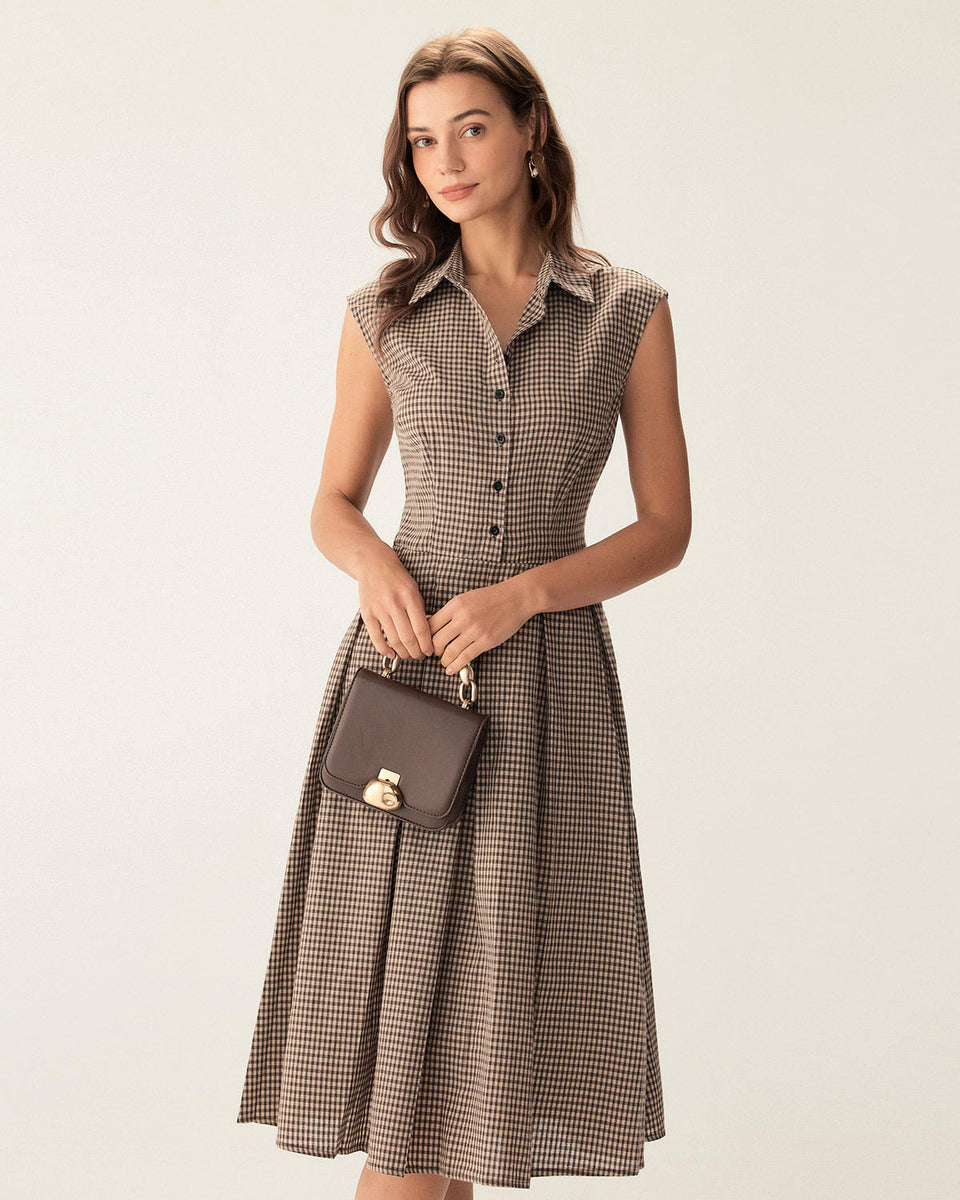
The black belted midi dress is the safer choice for corporate, finance, law, consulting, and senior-level interviews. The brown plaid dress works better when the office is still polished but less formal, especially in marketing, education, healthcare, or business casual environments.

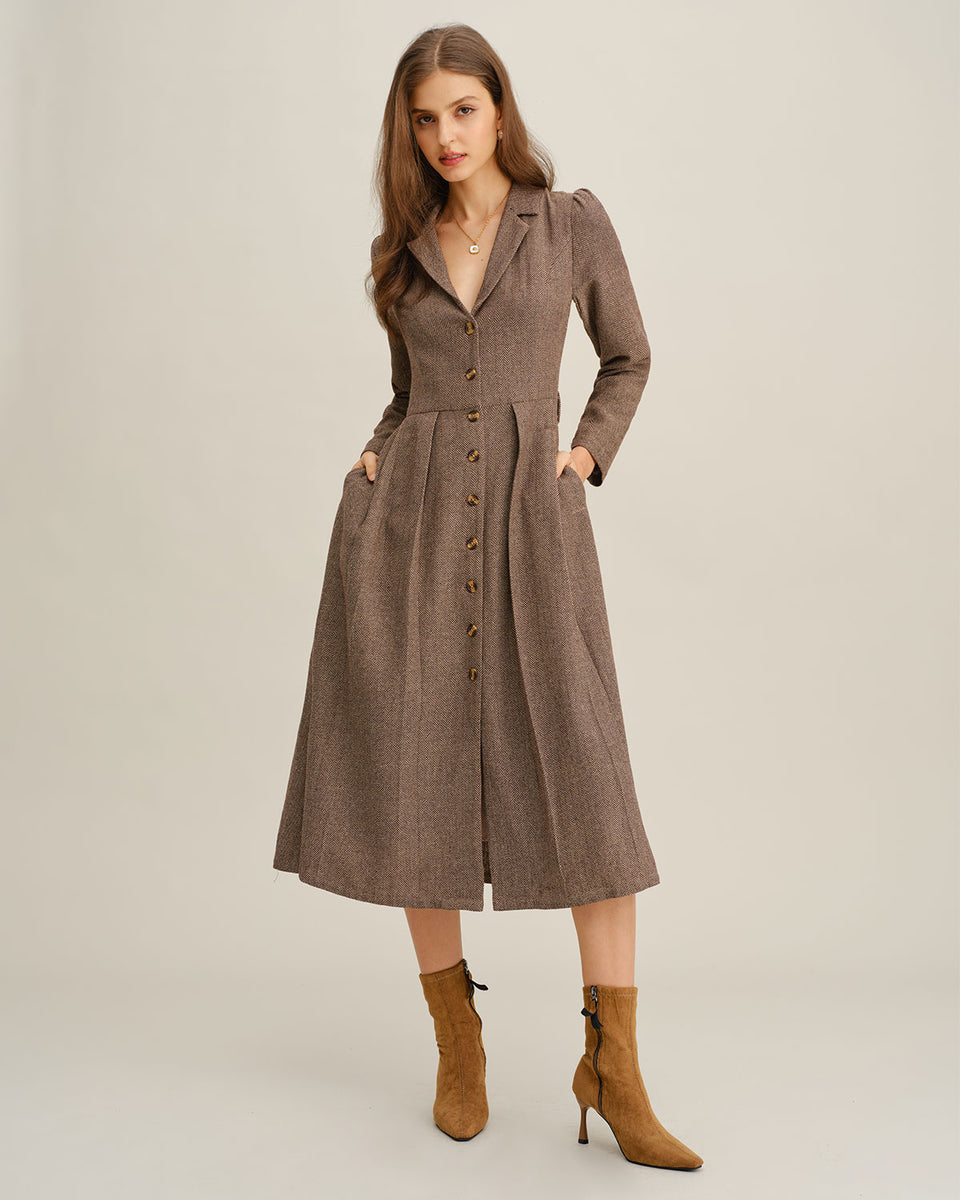
The lapel midi dress gives a cleaner office shape because the neckline feels structured. The brown pleated A-line dress is useful when you want the outfit to feel professional but not severe. With either option, check the live product page for current size, color, and availability before planning the final outfit.


Blue and navy are strong interview colors because they feel calm and reliable without looking as severe as black. These button-front midi dresses work especially well for first-round interviews, office roles, and interviews where you want the outfit to feel approachable but still structured.


Green is a useful alternative when you want color without brightness. The black V-neck tunic midi dress is a stronger option for offices that expect a more traditional look. For both, keep shoes and accessories simple so the outfit stays interview-focused.
Which Dress Length Is Best for an Interview?
Midi-length dresses are the most versatile and interview-safe choice. They give enough coverage when sitting, standing, and walking, which means you will not spend the interview adjusting your hemline.
| Dress length | Interview suitability | Best for |
| Mini | Usually too casual | Only very casual or creative settings, usually with opaque tights |
| Knee-length | Classic and professional | Corporate, finance, law, consulting, and formal offices |
| Midi | Most versatile | Nearly all industries and interview formats |
| Maxi | Can read too casual or too event-focused | Limited use in fashion, arts, or very relaxed creative settings |
Before wearing the dress, sit down in it. If the hemline rises more than two inches above the knee, choose a longer option.
What Colors Should You Wear to an Interview?
Navy blue, black, and charcoal gray are the safest interview dress colors. They feel calm, polished, and professional. Brown, deep burgundy, and forest green can also work when the cut is modest and the styling is restrained.
- Navy blue: reliable, calm, and easy to pair with black or nude shoes.
- Black: formal, authoritative, and especially strong for corporate interviews.
- Charcoal gray: professional but softer than black.
- Brown: warm, grounded, and useful for business casual offices.
- Deep burgundy or forest green: distinctive without becoming distracting.
Avoid neon shades, bright red, loud prints, and large florals for most interviews. Subtle plaid, small dots, tonal texture, and fine stripes are easier to manage because they add interest without taking over the outfit.
How Should an Interview Dress Fit?
An interview dress should fit close to the body without feeling tight. The fabric should lie smoothly through the shoulders, bust, waist, and hips. If you notice pulling, gaping, or constant adjusting, the dress is not the right interview choice.
- Shoulders: seams should sit at the edge of the shoulder, not droop or pull inward.
- Bust: fabric should lie flat without gaping buttons or visible tension lines.
- Waist: a defined waist should meet your natural waistline.
- Hips: the skirt should drape smoothly without riding up.
- Length: the hemline should stay in place when sitting and walking.
A common mistake is buying one size too small because the dress looks sharper on the hanger. In real life, a too-tight dress restricts movement and makes discomfort visible. If the dress is mostly right but needs a small adjustment, tailoring the hem, waist, or shoulder area can make it look more intentional.
How Do You Style a Dress for Different Interview Types?
The dress can stay simple while the styling changes. A blazer, shoe, bag, and jewelry choice can make the same midi dress feel corporate, business casual, or creative.
| Interview type | Dress direction | Styling notes |
| Corporate interview | Solid black, navy, charcoal, or dark neutral midi dress | Add a tailored blazer, closed-toe pumps, structured tote, and minimal jewelry |
| Business casual interview | Midi dress with subtle texture, button detail, or refined plaid | Use a cardigan, knit blazer, loafers, pointed flats, or low heel |
| Creative interview | Midi dress with an interesting neckline, softer pleats, or restrained print | Add a cropped jacket, slingbacks, polished loafers, or one stronger accessory |
For a first interview, dress one level more polished than the company's everyday dress code. You can usually add more personality in later-stage interviews once you understand the culture better.
What Shoes and Accessories Go With an Interview Dress?
Closed-toe shoes with a low-to-mid heel are the easiest interview standard. They work with most dress lengths and most professional settings. The shoes should be clean, scuff-free, and comfortable enough for walking through a lobby, office, campus, or parking area.
| Shoe type | Formality | Best pairing |
| Pointed-toe pumps | Most formal | Sheath, A-line, and belted midi dresses |
| Block-heel pumps | Professional and more comfortable | Midi dresses, pleated dresses, and A-line dresses |
| Pointed-toe flats | Business casual | Most knee-length and midi dresses |
| Loafers | Smart casual | Button-front, plaid, or softer business casual dresses |
| Sleek ankle boots | Creative or casual | Midi dresses in less formal industries |
Keep accessories quiet. One watch, small earrings, one ring, and a structured bag are enough. Avoid noisy bangles, oversized earrings, heavy fragrance, and bags that look overfilled.
What Are Common Interview Dress Mistakes to Avoid?
The biggest mistake is wearing something for the first time on interview day. New clothes can surprise you with tightness, wrinkles, tags, static, or uncomfortable seams. Do a full dress rehearsal at least 24 hours before the interview.
- Wearing a dress that is too tight or revealing: the interviewer should be focused on your answers, not your outfit.
- Skipping steaming or pressing: wrinkles can make even a strong dress look careless.
- Over-accessorizing: more than a few pieces of jewelry can look cluttered.
- Ignoring company culture: check the company website, social media, and team photos for dress-code clues.
- Choosing only by product label: a dress can be work-coded online but still be too short, too low, or too fitted for your body and interview setting.
- Forgetting weather: bring a polished coat, trench, or umbrella if the forecast calls for it.
Your Pre-Interview Outfit Checklist
- Dress is clean, pressed, and free of lint, pet hair, and loose threads.
- Hemline stays at or below the knee when sitting.
- Neckline stays in place when standing, sitting, and leaning slightly forward.
- Undergarments are invisible.
- Shoes are clean, scuff-free, and comfortable for walking.
- Jewelry is minimal, quiet, and coordinated.
- Bag is organized and professional.
- Nails are clean and neat.
- You have tested the full outfit while sitting, standing, and walking.
- All tags are removed.
Where to Start on RIHOAS
For wider outfit planning, use the officewear edit to keep the full look polished. Look for midi length, modest necklines, defined waists, and fabrics that hold shape.
The best interview dress makes you feel prepared, not distracted. Choose a well-fitting midi dress in a neutral color, keep accessories restrained, and match your styling to the company culture. That formula works whether you are interviewing at a law firm, a tech startup, or a creative agency.
FAQ
Can I wear a dress to a job interview?
Yes. A dress is appropriate for many job interviews when it has a modest neckline, professional length, polished fabric, and a fit that lets you sit and move comfortably.
What type of dress is best for an interview?
A knee-length or midi dress in navy, black, charcoal, brown, or another restrained neutral is usually best. A-line, sheath, belted, and structured button-front dresses are the easiest to style professionally.
Is a sleeveless dress okay for an interview?
A sleeveless dress can work if the cut is modest and the office is not highly formal, but a blazer, cardigan, or lightweight jacket is usually safer for the first interview.
What shoes should I wear with an interview dress?
Closed-toe pumps, block heels, pointed flats, and polished loafers are the safest choices. Avoid shoes that are hard to walk in, visibly worn, or too casual for the setting.
What color dress should I avoid for an interview?
Avoid neon shades, very bright red, loud prints, and anything sheer or overly bridal. If you want color, choose a restrained tone such as navy, burgundy, forest green, or brown.


